|
|
Written by Eric Jensen, Senior Research Scientist for Population Estimates and Coverage Measurement, Population Division; and Christine Hartley, Assistant Division Chief for Estimates and Projections, Population Division
Each year, the population of the United States grows and evolves. Births, deaths and migration are the three components of population change. A myriad of factors can affect the magnitude and speed of the changes.
For example, economic uncertainty can affect attitudes toward fertility and mobility, a global pandemic can cause mortality to spike, and policy changes can shape the number of people moving in or out of the country.
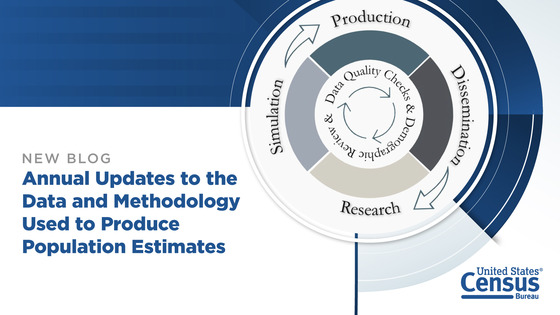
Through it all, staff in the U.S. Census Bureau’s Population Estimates Program (PEP) produce annual estimates of the population that reflect year-to-year changes. We ensure the estimates account for the various factors influencing the population by incorporating the most current data and refined methods.
In this blog, we take a deeper dive into the process for developing the annual estimates.
|
|
📌 You May Be Interested In
|
|
About the Census Bureau
We serve as the nation’s leading provider of quality data about its people and economy. The Census Bureau is the federal government's largest statistical agency. As the world’s premier statistical agency, we are dedicated to making our nation a better place. Policy-makers, businesses, and the public use our data to make informed decisions.
Resources for Media
For media interviews, please contact the Public Information Office Toll Free at 877-861-2010, 301-763-3030, or [email protected].
 Subscribe | Manage Subscriptions | Unsubscribe | Help
|
|
|
|