Image

Daily News Brief

January 15, 2026

Welcome to CFR’s Daily News Brief. Today we’re covering developments regarding the second phase of U.S. President Donald Trump’s Gaza peace plan, as well as...

  • Canadian Prime Minister Mark Carney’s visit to China

  • A U.S. freeze on immigrant visa processing for seventy-five countries
  • New defense pacts between Japan and the Philippines


Top of the Agenda

Trump’s Gaza peace plan has moved into a second phase of “demilitarization, technocratic governance, and reconstruction,” U.S. envoy Steve Witkoff announced yesterday on social media. Mediators Egypt, Qatar, and Turkey said that former Palestinian Authority official Abdel Hamid Shaath would head a fifteen-person technocratic committee charged with managing Gaza day-to-day. The composition of the rest of the committee was not yet announced, though a U.S. official who briefed reporters said yesterday that the full list would be released this week. The official added that invitations were sent out to world leaders yesterday for membership in a Board of Peace meant to supervise the technocratic government. It will be headed by Trump, with Bulgarian diplomat and former UN official Nickolay Mladenov as its director-general. 


What they’re saying. Senior Hamas official Taher al-Nunu told the Washington Post that Hamas will support the transfer of “all governmental and official functions” to the new technocratic committee, including security. Israeli Prime Minister Benjamin Netanyahu’s office called the establishment of a technocratic committee a “declaratory move” in a statement yesterday and said that Israel’s focus remained on the return of the final deceased hostage body still in Gaza, an unfinished tenet of the peace plan’s first phase. Witkoff wrote that Washington expects the “immediate” return of the body. 


Open questions. The move to phase two of the peace plan comes despite strikes continuing during the truce that defined phase one. While Witkoff said phase two would include “the disarmament of all unauthorized personnel,” Israel has repeatedly voiced skepticism about Hamas’s willingness to disarm. Washington will work to bridge the gaps between Israel and Hamas on demilitarization, a U.S. official told reporters. Trump’s peace plan also envisions the deployment of an international security force in Gaza, though few countries have voiced willingness to be a part of it. 


“To avoid being bypassed by Israel or shot at by Hamas, any future government will need to be acceptable to both, a feat currently hard to fathom.”

—Georgetown University’s Daniel Byman, Foreign Affairs


How 2026 Could Decide the Future of AI

People use augmented reality headsets during the World Artificial Intelligence Conference (WAIC) in Shanghai on July 28, 2025.

Hector Retamal/AFP/Getty Images

Six CFR fellows examine how governance, adoption, and geopolitical competition will shape AI—and society’s engagement with it—in this article.


Across the Globe

Visa processing freeze. The U.S. State Department said it would suspend the issuing of immigrant visas to nationals of seventy-five mostly non-European countries on January 21 to ensure immigrants do not “take welfare from the American people at unacceptable rates” in an announcement yesterday. The list includes several major non-NATO U.S. allies and marks the Trump administration’s most recent immigration restriction since expanding a travel ban last month. 


Greenland meeting results. Denmark, Greenland, and the United States still have a “fundamental disagreement” over the future of the Arctic island following White House talks yesterday, Denmark’s foreign minister said. The parties will create a working group to continue trying to resolve their differences, he added. In a show of support for Denmark, NATO allies such as France, Germany, Norway, and Sweden are sending small numbers of military personnel to Greenland this week for joint exercises. 


Iran denies execution plan. Iran’s judiciary denied today that antigovernment protester Erfan Soltani has been sentenced to death. The case had garnered international attention. A Norway-based human rights group reported that an execution order shared with Soltani’s family has been postponed. Trump said yesterday that “the killing in Iran is stopping,” though he didn’t clarify what this could mean in the context of his threats to strike the country. The U.S.-based Human Rights Activists News Agency said yesterday it had verified more than 2,600 deaths in the protests so far, but cautioned that an ongoing communications blackout made evidence harder to check. 


Carney in China. Carney and Chinese Premier Li Qiang both hailed warming ties between their countries as Carney began a visit to China—the first in eight years by a Canadian leader. When asked if Canada still considers China a “disruptive” power as previously stated, Canadian Foreign Minister Anita Anand said it was “a new foreign policy and a new geopolitical environment,” adding that Canada was seeking to diversify its trade. Among other agreements, Canada is seeking the reduction of canola tariffs, while China hopes for a reduction in car tariffs. 


Limited tariff on chip imports. The White House announced yesterday a 25 percent tariff on certain types of semiconductor imports, with exemptions for chips used in the domestic artificial intelligence (AI) industry. The tariff will affect chips that are imported to the United States and then re-exported to third countries such as China.  


U.S.-Venezuela talks. Trump told reporters yesterday that he is “getting along very well” with Venezuela following a phone call with acting President Delcy Rodríguez. Despite those warming words about Rodríguez, the former vice president to captured Venezuelan strongman Nicolás Maduro, Trump is scheduled to have lunch today with Venezuelan opposition leader María Corina Machado. The United States has already brokered its first sale of Venezuelan oil, a Department of Energy spokesperson confirmed to the New York Times yesterday.  


Japan-Philippines security deals. Japan pledged $6 million in new security assistance for the Philippines yesterday as the two countries agreed to boost the exchange of military supplies at a Manila ceremony. It is the latest sign of their deepening military cooperation, after a joint military basing agreement took effect last September. Japan’s foreign minister said the countries also reaffirmed the importance of trilateral cooperation with the United States. 


Courting 1.5 degrees. Last year was the third-hottest on record and global temperatures for the past three years have averaged 1.5℃ (2.7℉) above preindustrial levels, the European Union climate service Copernicus announced yesterday. The 2015 Paris Agreement committed countries to trying to limit warming to 1.5℃, as measured in decades. Current trends suggest that limit could be reached by 2030, more than ten years earlier than predicted when the Paris Agreement was signed, Copernicus said.


A Senseless Election in Uganda

Ugandan Presidential candidate Robert Kyagulanyi, also known as Bobi Wine, of the National Unity Platform party, addresses his supporters during a campaign rally ahead of the general elections in Kampala, Uganda on December 15, 2025.

Abubaker Lubowa/Reuters

President Yoweri Museveni's efforts to ensure an electoral victory will almost certainly be successful, but will only exacerbate simmering resentment, CFR expert Michelle Gavin writes for Africa in Transition.


What’s Next

  • Today, Uganda holds general elections.
  • Today, Italian Prime Minister Giorgia Meloni begins a visit to Japan.

  • Tomorrow, former South Korean President Yoon Suk Yeol is due to be sentenced in Seoul over charges resulting from his December 2024 imposition of martial law.


Beyond the Council

As China quietly reshapes the world, its influence ripples through every corner — from the flow of global trade and the race for innovation, to the government decisions and shareholder meetings that touch daily life around the globe. Launching soon, Semafor China unpacks how China is influencing technology, markets, and energy. Don’t miss the first edition — subscribe for free.


A Guide to the Countries on Trump’s Travel Ban List

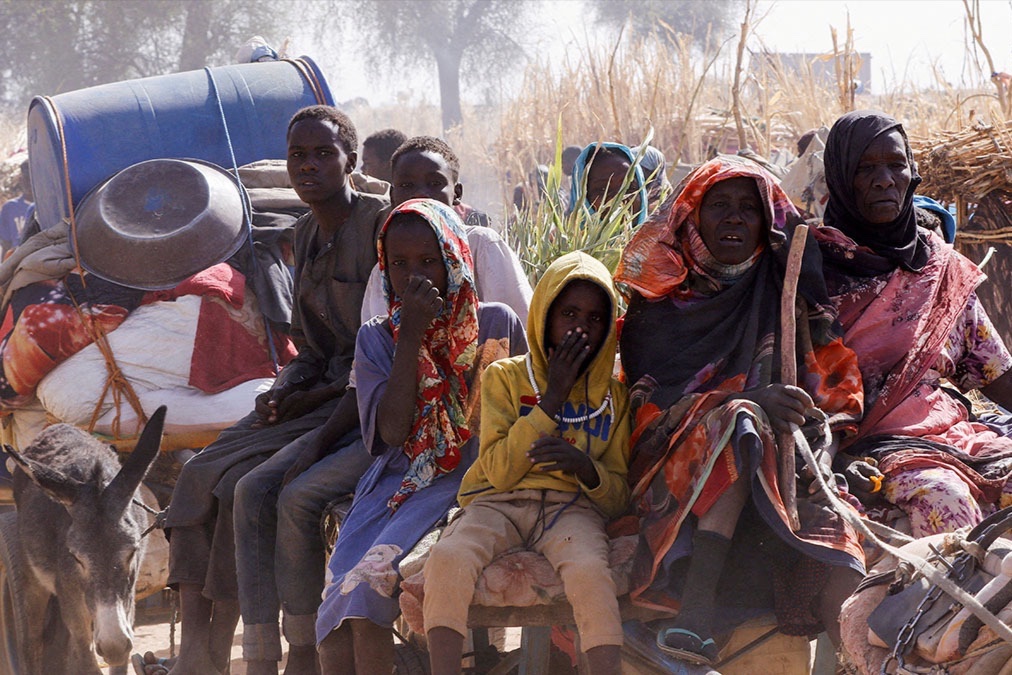
Displaced people ride an animal-drawn cart, following attacks on the Zamzam displacement camp, in the town of Tawila in Sudan on April 15, 2025.

Reuters

The White House’s latest freeze on immigrant visa processing for seventy-five countries follows previous travel bans in 2025, CFR’s Mariel Ferragamo writes in this article. 


Council on Foreign Relations

58 East 68th Street, New York, NY 10065

1777 F Street, NW, Washington, DC 20006

Was this forwarded to you? Subscribe to the Daily News Brief

FacebookTwitterInstagramLinkedInYouTube

Manage Your Email Preferences

View in Browser