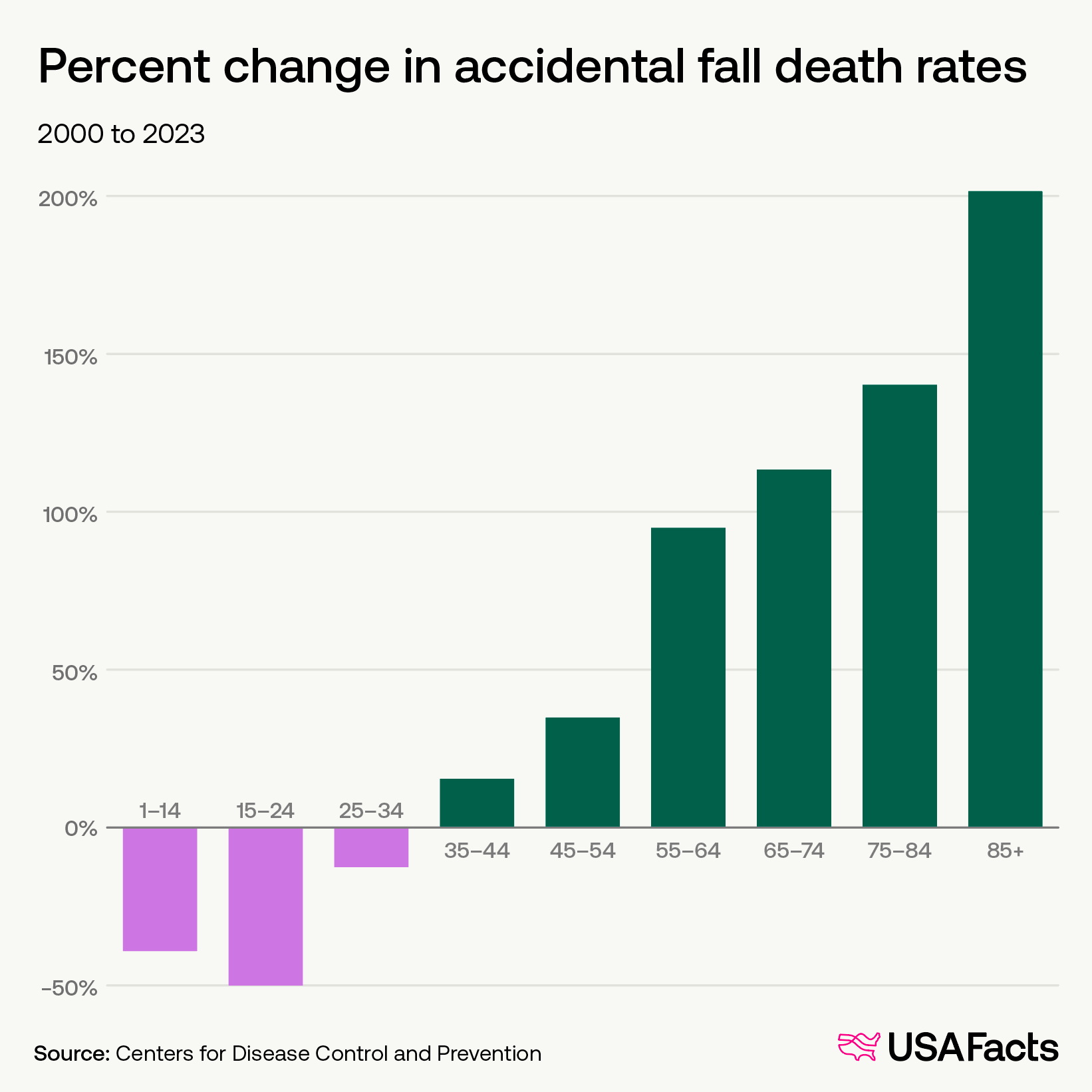
Accidental falls have quietly become one of the deadliest threats to older Americans, surpassing many other major causes of death. Despite widespread efforts to prevent them, fall-related deaths have increased over the past two decades. |
|
- In 2023, more Americans died from accidental falls (47,026) than motor vehicle accidents (44,762), reversing a pattern from 2000.
- While an aging population contributes to the rise, fall death rates have still more than doubled on an age-adjusted basis, with rates rising in every senior age bracket.
|
|
- States with the highest fall death rates tend to have older populations and colder climates; Wisconsin had the highest rate in 2023 (25.3 falls per 100,000 people), while Alabama ranked lowest (5.2 falls per 100,000).
- Age is one predictor of state-level differences in death rates from accidental falls. Maine and Vermont have the highest percentages populations over the age of 65, and they ranked second and third in death rates for falls. But weather also matters: eight of the 10 states with the highest age-adjusted death rates are snowy in the winter.
- Despite prevention efforts like safety campaigns and homes using more guardrails, risk factors such as increased prescription drug use and alcohol consumption may be offsetting progress.
|
|
How marriage varies by states and age |
|
Americans are marrying later than in previous decades, but what’s considered early in one state might be late in another. And some states consistently report longer average marriages, while others have higher rates of both marriage and divorce. Where does your state rank? |
|
- Utah had the nation’s highest marriage rate in 2024: 24.5 new marriages for every 1,000 people. Second highest was Washington, DC, with 22.1, followed by Idaho with 21.2.
- The median age at first marriage was 30.2 for men and 28.6 for women, and these ages have steadily risen over the past decades. In 1956, the median marriage age for men was 22.5; for women, it was 20.1.
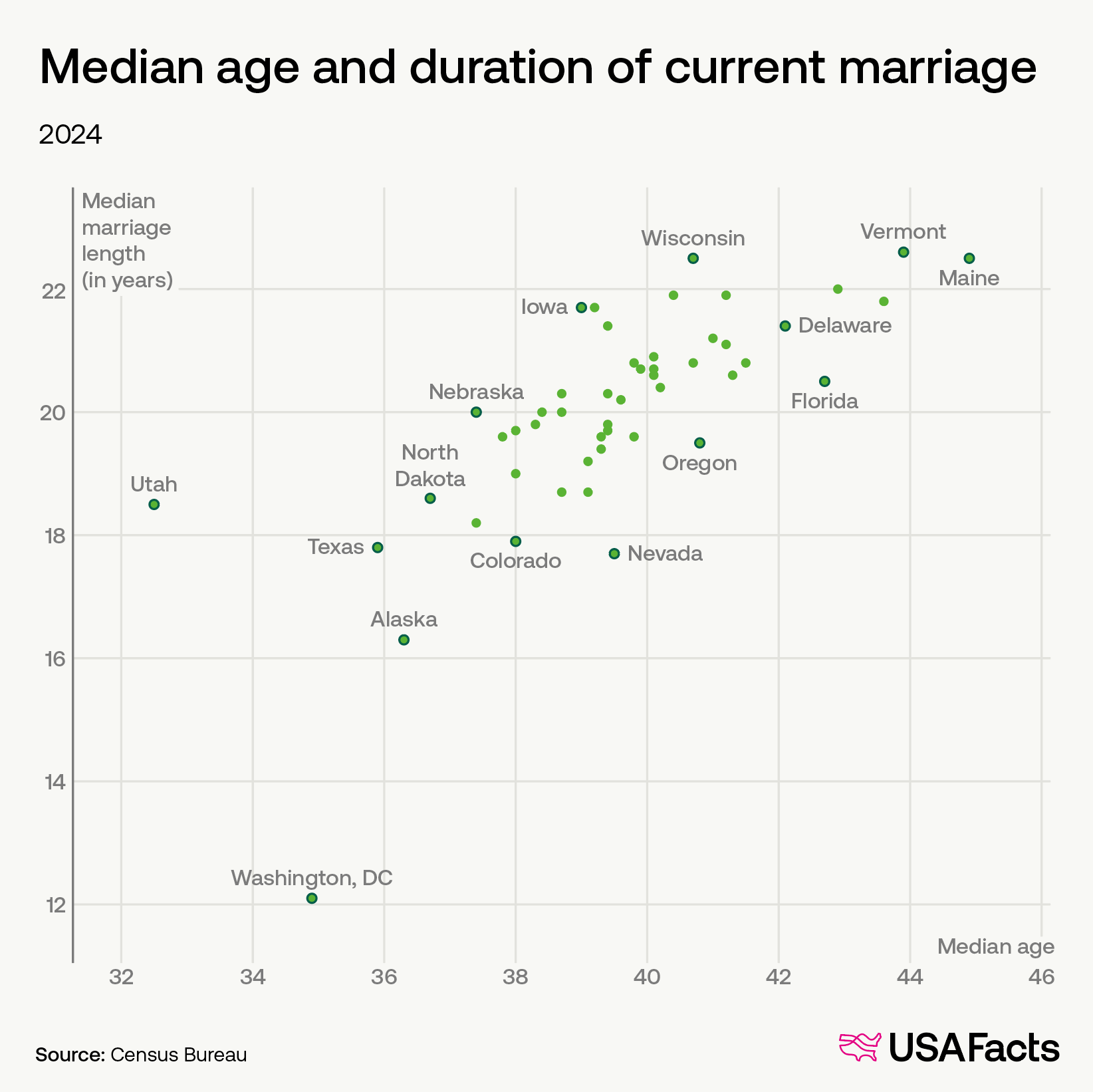
- Median marriage duration varies by state, too: longest in Vermont (22.6 years), Maine, and Wisconsin (both around 22.5 years) and shortest in Alaska, Nevada, and Texas (ranging between 16 and 18 years).
- The nation’s highest divorce rate was in Oklahoma, where there were 9.7 divorces per 1,000 people in 2024. Rhode Island had the lowest rate of any state at 5.1, while Washington, DC, had a lower rate than any state at 4.9.
- States with longer-lasting marriages tend to have older populations; marriages in Washington, DC, are notably shorter than expected given median ages. Utah’s also an outlier for longer marriages relative to its younger population — which it owes in part to the fact that the median age at marriage is lowest in Utah.
|
|
Think you know the data? Take our poll! |
|
| How have Americans' sleeping habits changed in past 20 years? | | | | | | | | | | |
|
Energy Secretary Chris Wright said last week that the United States will control Venezuela’s oil sales “indefinitely.” For context against domestic production, the US has exported more oil than it imported every month since August 2021. The Centers for Disease Control and Prevention recently updated its vaccine recommendations for children, removing six shots from its “universally recommended” category, instead recommending those shots for children with certain high-risk factors. We have the data on child vaccinations, including information on the update. The Labor Department released monthly data on the state of the job market last Friday. The national unemployment rate was 4.4% in December, up 0.3 percentage points from a year before. But the rate fell in some states — was yours one of them? |
|
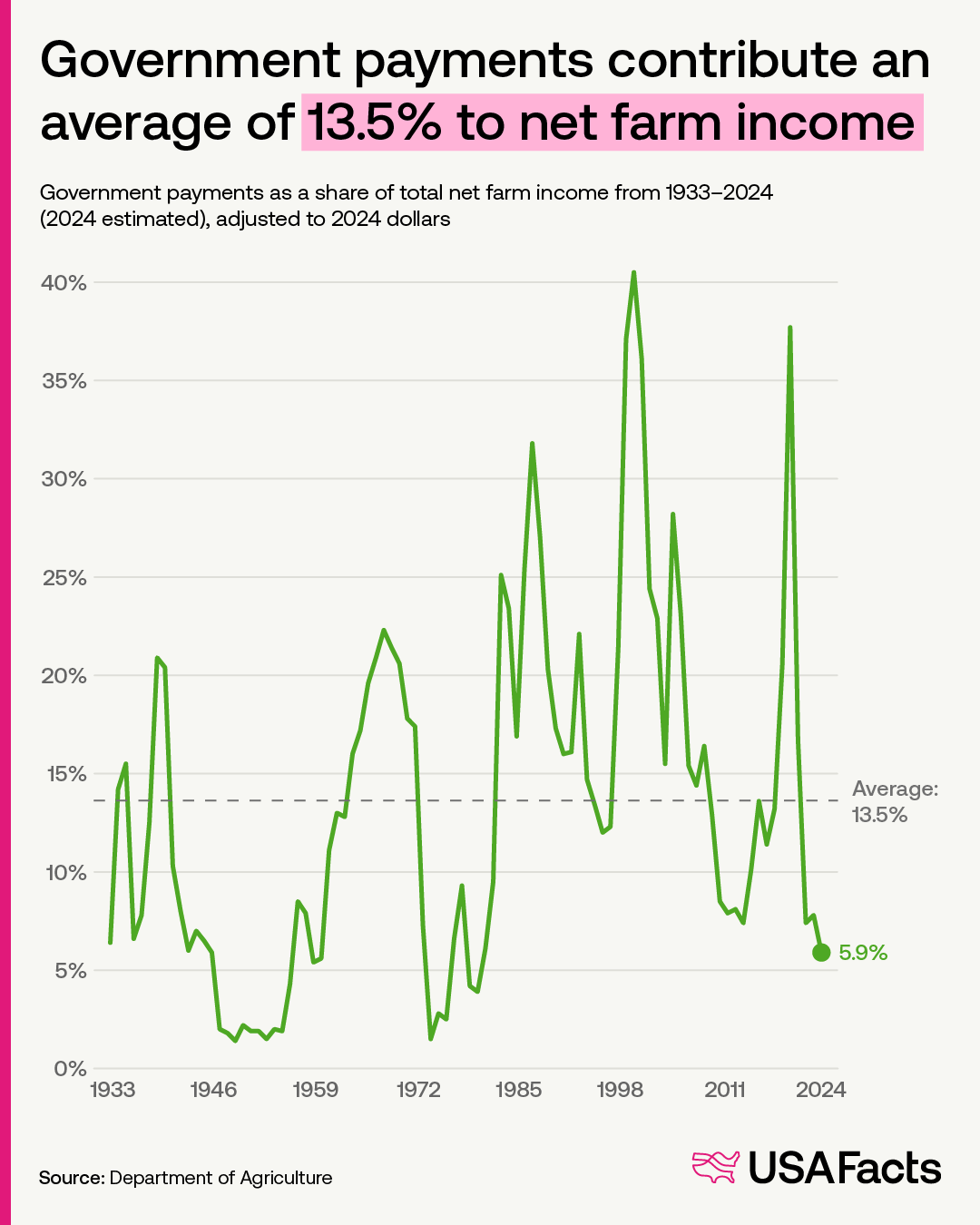
Farm subsidies have contributed an average of 13.5% of net farm income nationwide since they began in 1933. In 2024, they accounted for 5.9% of farm income, a 7.6 percentage-point difference from the 91-year average. |
|
|
|
|