 |
|
|
|
After a medical discharge brought Parker Noland back home from the Army, he set his sights on starting a small debris-hauling business targeting underserved construction sites around Flathead County, Montana. He secured a loan, bought a few dumpsters and a specialized truck, and posted ads to drum up customers—but within a few days, the state issued a cease-and-desist letter abruptly derailing his plan.
According to the state, Parker couldn’t haul construction debris without first obtaining a certificate of public convenience and necessity (CON)—a government permission slip that, in practice, gives incumbent waste companies the power to block new competition. Undeterred, Parker turned to the courts, challenging Montana’s CON laws as unconstitutional under the Montana Constitution and the Fourteenth Amendment. On December 23, 2025—just before Christmas—the Montana Supreme Court delivered a major win, breathing new life into Parker’s fight.
|
|
|
|
|
|
 |
|
|
|
In November 2025, the Alabama-based organization Tennessee Riverkeeper filed a lawsuit against the City of Luttrell, Tennessee—alleging that Luttrell’s wastewater facility had exceeded the limits of its discharge permit. Under the Clean Water Act’s “citizen suit” provision, Tennessee Riverkeeper has filed dozens of similar lawsuits throughout the region, wielding what PLF attorney Sean Radomski describes as an “unconstitutional delegation of executive power.”
While many cities and small businesses that find themselves in Tennessee Riverkeeper’s crosshairs choose to settle out of court—rather than risk years of costly litigation—Luttrell chose to fight back. With PLF’s help, the City filed a motion to dismiss the lawsuit, and just two weeks later, Tennessee Riverkeeper backed down and voluntarily dismissed its case.
|
|
|
|
|
|
 |
|
|
|
John Carbin spent his career working on complex machinery. As a federally certified aircraft mechanic and former Black Hawk crew chief, he is qualified to inspect, maintain, and overhaul airplane engines—high-stakes projects where failure is not an option.
When John began building his dream retirement home in rural Massachusetts, he expected to handle much of the work himself. Instead, he ran into a surprising barrier: Massachusetts law forbids homeowners from performing their own plumbing work unless they hold a State-issued plumbing license. Now, John’s fighting back with PLF’s help, arguing that the State’s ban violates his fundamental right to repair his own home.
|
|
|
|
|
|
 |
|
|
|
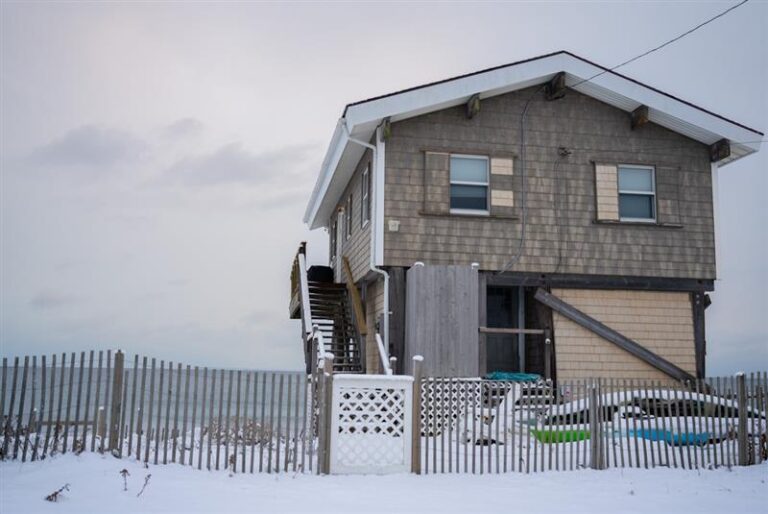
PLF client David Welch—a coastal Rhode Island property owner—secured a major victory last month when a judge entered final orders granting a preliminary injunction that prevents the State’s Coastal Resources Management Council (CRMC) from attaching unconstitutional conditions to a permit request.
PLF senior attorney J. David Breemer applauded the judge’s orders, noting that “property owners shouldn’t have to choose between maintaining their homes and protecting their constitutional rights.”
This isn’t the first time Welch has fought back against Rhode Island’s attempts to curtail his property rights. He’s at the center of a related lawsuit against the State that’s now before the Rhode Island Supreme Court, where briefing will occur this spring.
|
|
|
|
|
|
|
|
|
After Hurricane Irma swept across Florida in 2017, retired widow Carol Edwards applied for a permit to repair a dock on her property in Altamonte Springs. The City informed her that no repair permit was needed, so Carol set to work.
Little did she know, a bureaucratic nightmare would soon unfold, leading to a $250,000 fine that’s growing by the day.
|
|
|
|
|
|
|
|
|
Imagine owing over $8.2 million in taxes and maintenance fees for property you cannot use or sell—simply because your local government decided it might one day build a road in the area.
Shockingly, that’s the exact situation our client SW Nashville, a Tennessee-based property development company, has been dealing with for years. Now, they’re fighting back.
|
|
|
|
|
|
|
|
|
Elliot Goldberg has worked as a Pennsylvania-based financial advisor for over 20 years. When the State’s Department of Banking and Securities accused him of violating provisions of the Pennsylvania Securities Act of 1972, rather than bringing its case in an independent court and proving its allegations to a jury, the Department prosecuted the case before a Department-appointed hearing officer.
When the hearing officer sided with the Department, Goldberg’s only option was to appeal to the Department itself—which ultimately adopted the hearing officer’s findings and affirmed the decision, imposing nearly $1 million in civil penalties.
Now, Elliot’s taking a stand. Yesterday, with the assistance of PLF and his local attorney, William Uchimoto, Elliot asked the Pennsylvania Supreme Court to consider whether the Pennsylvania Constitution guarantees his right to a jury trial when state agencies seek to impose severe financial punishment.
|
|
|
|
|
|
|
|
|
When Lindsay Hoopes took over her family’s winery—purchased by her father four decades ago—she expected the collaborative partnership her family had enjoyed with Napa County officials to continue. After all, one would expect a local government to support local agriculture and the regional economy.
But when the County abruptly changed its stance on the Hoopes family’s permitting—imposing a fine and labeling the winery’s routine operations a “public nuisance”—Lindsay was perplexed. As she fought for her rights in court, the County’s fine kept growing, and by November 2025, it had ballooned to more than $3.5 million in fines and attorney fees—exceeding the property’s total lifetime revenue.
Thankfully, Lindsay and her team refuse to be fined into submission, and with PLF’s help, they are fighting back to save their winery—and to prove that the government can’t use excessive fines as a revenue tool against those who dare to run a business.
|
|
|
|
|
|
|
|
|
Philip Serpe loves horses. Throughout his life, he’s done whatever it took, even volunteering for free, to be a part of the horse-training world. His hard work and dedication have paid off, too—he’s reached the pinnacle of the sport, racing in some of the top competitions in the country. But Philip’s now on the verge of losing his career because of false accusations from an unregulated, private entity.
With PLF’s help, Philip is suing in federal court to vindicate his right to an independent judge and jury, and to be free from the coercive power of a private organization that was unconstitutionally exercising the government’s power.
|
|
|
|
|
|
|