|
Jan. 9, 2026
Contact: Jillian Reese (MHC), 517-335-2588
Explore Michigan connections, Latino history of black velvet paintings at new museum exhibit
Visit Michigan History Museum now through November – with free admission Jan. 17 – to learn about black velvets’ cultural impact
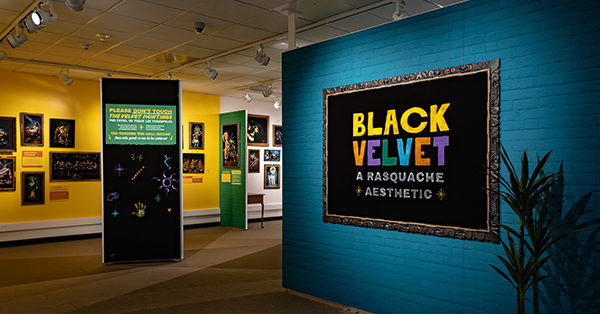
History and art join in the Michigan History Museum’s latest special exhibit, “Black Velvet: A Rasquache Aesthetic” – open now through late November. The exhibit explores black velvet paintings and their place in Latino history.
“The exhibit showcases more than 100 black velvet paintings on loan from Michigan collectors Diana Rivera, Elena Herrada and Minerva Martinez,” said Jillian Reese, curator of exhibits for the Michigan History Museum. “They not only loaned us paintings from their personal collections but also shared their expansive knowledge and personal experience with us.”
Celebrate the opening of the exhibit with a free day at the museum Saturday, Jan. 17. From 1 to 3 p.m., enjoy hands-on craftmaking inspired by the exhibit's vivid black velvet paintings.
“This exhibit is vital to the Latino community, and its presence at a state institution is significant,” said Minerva Martinez, guest curator.
|
Inside ‘Black Velvet: A Rasquache Aesthetic’
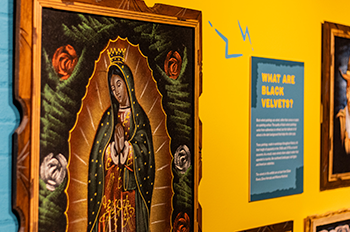
Instead of canvases or paper, black velvets are painted on rich, textured fabric. While the subject of each painting varies, the deep black background is a staple that helps the colors pop. The term “rasquache” refers to the creation of art and beauty from everyday materials.
“The importance of black velvet must be understood as an instinct: the right to appreciate beauty in all its forms,” said Elena Herrada, guest curator. “Love of velvet is a class statement. We grew up with velvets in our homes.”
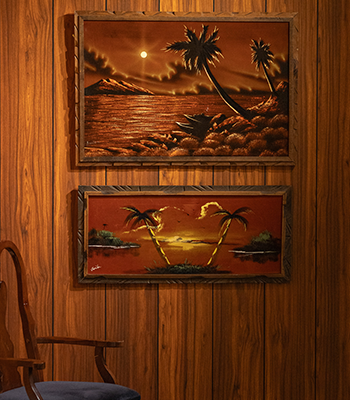
The pieces, many made in workshops throughout Mexico and the Southwest U.S., became popular among tourists in the 1960s and '70s. As a result, many of them reflect subject matter that appealed to tourists, such as bull fights, American celebrities and Southwest landscapes. Other popular subject matter includes animals and religious figures.
While most of the paintings were created in Mexico or the Southwest, a section of the exhibit features Michigan artists who have been inspired by the guest curators’ collections.
On the back wall of the exhibit, a staged black velvet workshop demonstrates the artistic process. To create a black velvet, an artist stretches velvet over a wooden frame, then applies one color at a time.
“We're very pleased that the Michigan History Museum is exhibiting the black velvet collection,” said Diana Rivera, guest curator. “Despite their profound influence on Michigan’s social, economic and cultural development, Latino communities have been underrepresented in state and national cultural institutions for generations.”
|
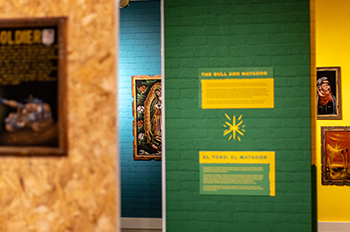
With guidance from the guest curators, the MHC exhibits team designed and fabricated the exhibit. After a brief introduction, including a velvet wall visitors can touch, the exhibit flows through different sections of paintings.
“This exhibit includes a lot of unique design and fabrication,” said Reese. “This is the first time the museum has provided bilingual labels for all content. Each label is written in both English and Spanish. For any unframed velvets, our carpenters crafted frames that match the look of traditional black velvet frames.”
The design team pulled inspiration from Mexican American culture and the paintings themselves for color and font choices.
“The museum’s 2026 yearlong sharing of the velvets addresses the historical gaps in our Chicanx and Latinx representation in a significant State of Michigan institution while demonstrating their commitment to equity, educational inclusion and cultural stewardship," said Rivera.
|
Note to editors
Interview opportunity: Exhibit guest curators Elena Herrada, Minerva Martinez and Diana Rivera are available for interviews. Contact Jillian Reese, Michigan History Museum curator of exhibits, at 517-335-2588, to schedule.
Photos: Accompanying photos are available below for download. Caption information follows.
-
New exhibit now open: The Michigan History Museum's new exhibit explores black velvet paintings and their connection to Latino history. The museum's exhibits team created and designed the exhibit with help from three guest curators, who loaned paintings from their personal collections.
-
Doing more with less: Black velvets are created on rich, textured fabric. The term “rasquache” refers to the creation of art and beauty from everyday materials.
-
Popular tourist souvenir: Black velvet paintings became popular tourist souvenirs. The paintings often reflected subject matter popular with tourists, such as Southwest U.S. landscapes and American celebrities.
-
Taking inspiration from art: The Michigan History Museum exhibits team took inspiration from the black velvet paintings to create the exhibit. The team looked closely at Mexican American culture to pick out fonts and colors.
|