The Digital Services Act: A Mechanism of Mass Censorship
by Drieu Godefridi • January 9, 2026 at 5:00 am
According to critics, this framework [the European Union's Digital Services Act (DSA)] effectively forces American platforms to act as "speech police" on behalf of the EU, under the constant threat of severe sanctions. In doing so, the DSA produces extraterritorial effects that extend well beyond Europe. This point is crucial: any American user of X, for instance, can be sanctioned by X for expressing opinions on the platform. In practice, the DSA is thus applied to all Americans. This requirement constitutes a clear instance of the normative imperialism that has characterized the EU for the past 20 years.
The only conceivable technical alternative would be the creation of separate platforms — an X-USA and an X-EU — which would amount to a denial of the very idea of a global network and of the internet itself.
The US House Judiciary Committee has denounced this system as one of "organized censorship," in which the EU effectively "arms" NGOs to compel American technology companies to remove content that is lawful in the United States but deemed "problematic" in Europe.
Fines could reach up to 6% of a company's global turnover, amounting to potentially billions of euros for firms such as Meta or Google. In cases of non-cooperation, platforms even face the possibility of a temporary ban within the EU.
This environment of stringent enforcement strongly encourages platforms to over-moderate content in order to minimize regulatory risk, leading to the removal of content that is perfectly legal. We are speaking here of approximately eight million posts deleted per month in the European Union, not including complete bans, such as those imposed on Russian media outlets.
Illegal content is treated as the top priority. Defined by the EU and national legislation, it includes hate speech (such as incitement to violence based on race or religion), terrorist content, child sexual exploitation material, counterfeit goods, and dangerous products.... Yet the central problem remains: "hate" itself is never defined in law.
It must be stressed that disinformation itself is not illegal. The DSA therefore mandates the active censorship of content that is lawful -- but merely displeasing to the European Princes and their legions of censors.
American freedom of speech cannot survive a "Big Brother" DSA.
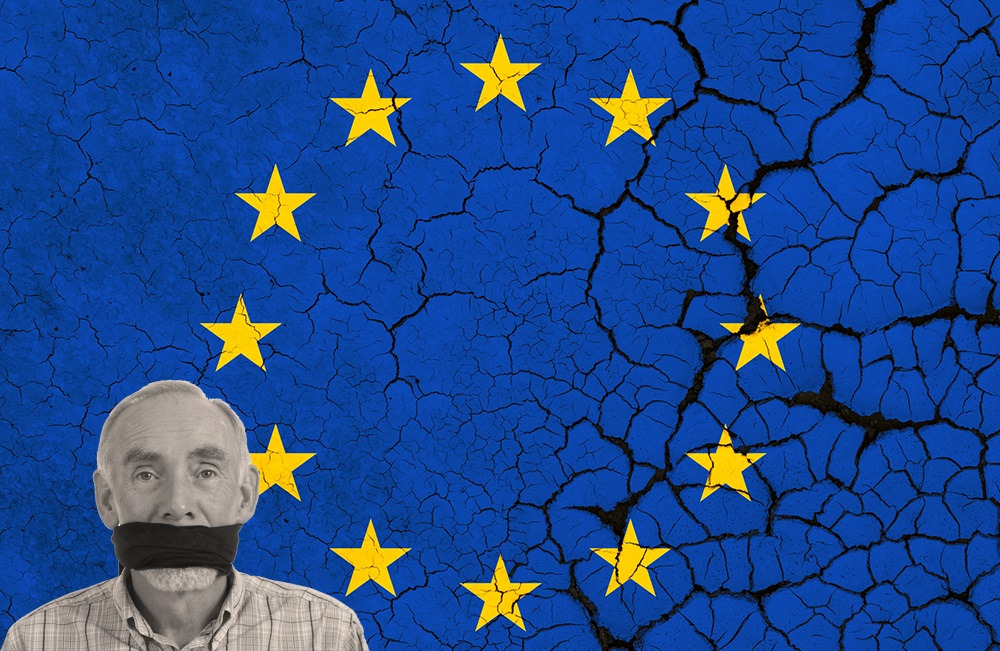
The Digital Services Act (DSA), adopted by the European Union in 2022 and fully applicable since February 2024 to "very large online platforms" (VLOPs) such as X, Facebook, TikTok, and Google, is not officially presented as an instrument of "organized censorship." Formally, it is purported to be a regulatory framework intended to govern digital services in order to protect users from illegal content, systemic risks, and opaque platform practices.
However, a growing number of critics — particularly in the United States, including Elon Musk and several Republican members of Congress — describe the DSA as a mechanism of mass censorship. In their view, it imposes heavy bureaucratic oversight on freedom of expression and enables selective repression of dissenting opinions.