
John,
Most of us have received at least a few scam texts in our life. But these fraudulent messages are no longer a rare event. They've become a persistent, everyday intrusion.
The rapid rise of AI technology isn't only making scam texts more common. AI is also making scams more deceptive. In 2024, 247,000 people reported falling victim to scam texts and losing $470 million.1
Let's take a look at some of the ways in which AI is making text scams more difficult to spot:

"Hey, are you okay?"
"Are you free now?"
Perhaps you've received a text that appears to be sent to the wrong number. The text is usually framed as a question designed to rope you into conversation.
Often, these messages are from scammers hoping to get people to respond. And with the development of AI, bots can generate more of these messages. In fact, some bots can send thousands of these messages at a time.2
If you get a friendly message from an unknown number, It's best to not respond. If it really is someone who has the wrong number, they will figure it out. Don't take the risk and fall into a scam.
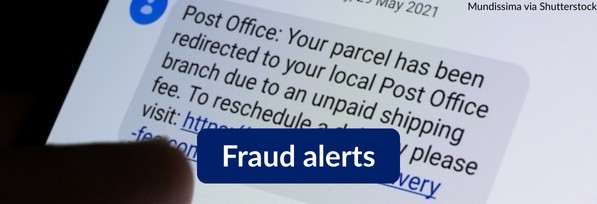
Fraud alerts are another effective scam. Sometimes fraud alerts appear as a text saying "your password has changed," or "your account has been charged."
These messages suggest that you owe money or that your information is at risk -- and people respond to fear. To make matters worse, AI is able to send these messages out in bulk, putting more people at risk of scams.3
If you receive a fraud alert notification, check your accounts and reach out to organizations directly. Do not click on links sent by numbers you don't know or make payments requested unexpectedly by text.

In "pig-butchering" scams, scammers create fake identities and play the long game to convince people to send them money.
Often, people or bots will reach out to people and form relationships with them, eventually asking victims to invest money. And because of AI, bots can easily scour the internet for personal data to form relationships with people and make their scamming significantly more effective.4
It's good practice to be extremely cautious when forming relationships with people over text. You should talk to a trusted relative or friend if someone you've never met in person wants you to send money or invest in some "fantastic opportunity."
AI is making scam texts more common and more effective. But here at U.S. PIRG we're working to make sure you have the tools to protect yourself, and that companies are doing as much as they can to keep consumers safe.
Thank you,
Faye Park
President
P.S. We're urging the Federal Communications Commission to hold phone carriers who aren't combatting spoofed robocalls accountable. You can be a part of that work by donating today.
1. Jacob Mela, "The top 5 text scams: Are you getting any of these?," PIRG, September 17, 2025.
2. Jacob Mela, "The top 5 text scams: Are you getting any of these?," PIRG, September 17, 2025.
3. Jacob Mela, "The top 5 text scams: Are you getting any of these?," PIRG, September 17, 2025.
4. Jacob Mela, "A dark side of AI: Text and phone scams are getting worse," PIRG, November 14, 2025.
Your donation will power our dedicated staff of organizers, policy experts and attorneys who drive all of our campaigns in the public interest, from banning toxic pesticides and moving us beyond plastic, to saving our antibiotics and being your consumer watchdog, to protecting our environment and our democracy. None of our work would be possible without the support of people just like you.
Join us on Facebook | Follow us on Twitter
U.S. PIRG, Main Office: 1543 Wazee St., Suite 460, Denver, CO 80202, (303) 801-0582
Federal Advocacy Office: 600 Pennsylvania Ave. SE, 4th Fl., Washington, DC 20003, (202) 546-9707
Member Questions or Requests: 1-800-838-6554.

If you want us to stop sending you email then follow this link -- unsubscribe.