|
|
January 2025
We publish our Constellations newsletter to share ways that Assistive Technology can be life-changing for people with disabilities and raise awareness of the services offered through the STAR Program and our partners.
|
|
In this Issue
Photo by Tom Fisk of aurora over Reads Landing, MN
Welcome to our first issue of 2026! We're excited to kick off the year by exploring accessibility at all levels, including:
- The Department of Justice issuance of Title II Web and Mobile Application Accessibility Rule to ensure accessibility for people that sets technical requirements for entities to follow to make sure that their websites and mobile apps are accessible to people with disabilities,
- The Association of Assistive Technology Act Programs (ATAP) a non-profit that supports Assistive Technology Act Programs in 56 states and territories including the STAR Program, in strengthening access to assistive technology and advance shared priorities,
- A unique STAR Program partnership that spans two states, making it easier for Minnesotans who live near the North Dakota border to access accessible technology, and
- Expanded community engagement by the Advisory Council, an accessible deer hunt for people with disabilities to safely enjoy an outdoor experience in a welcoming environment, an Alternative Communication (AAC) device that was a “total game changer for a student,” and a device that enables a person to “read what everyone else is hearing.”
Finally, be sure to check to the STAR Highlights/What’s New section for upcoming events and webinars. Also, refer to Helpful Links for resources about assistive technology.
We hope you enjoy this issue of Constellations and be sure to subscribe for next time!
Amy Perron, Program Director
|
|
|
Do you like the Constellations Newsletter? Don’t miss an issue!
|
|
|
Assistive technology (AT) is something that can help you do things that might otherwise be difficult or impossible to do on your own. It is an item or device that can help you speak, walk, talk, remember, see, hear, learn and more.
Take a look at the video on channel.
|
|
Did you know? There is no cost to borrow equipment from the STAR Program or our partners! You can schedule a time to pick up the equipment or we can ship the device at no cost to the borrower. The borrower is responsible for returning the item back to the program they borrowed it from at the end of the six-week period by scheduling an appointment to return the device or by paying to ship the equipment back to the program. |
|
Complying with the Americans with Disabilities Act
State and local governments (or “entities”) offer many services on their websites and mobile applications (or “apps”). But these services are not always accessible to people with disabilities. A new rule seeks to address that.
In April of 2024, the Department of Justice published the Title II Web and Mobile Application Accessibility Rule that sets technical requirements for entities to follow to make sure that their websites and mobile apps are accessible to people with disabilities. Minnesota state and local governments are working on compliance to the Rule.
We talked recently with Jay Wyant, Chief Information Accessibility Officer for the State of Minnesota. Wyant provided insight into what the rule is designed to accomplish. Wyant explained, “Historically before 2000, Title II, which is the section of the ADA for states and local governments, only referenced the aspects like the building, a ramp into the building, or the ability for people in wheelchairs to be able to enter a room, and the obligation of local government to provide access to government services, which were primarily physical at the time. Then after the digital world became more prevalent, the Department of Justice expanded their interpretation of Title II and Title III (for e-commerce) to include the digital space. The 2024 rule puts specific, measurable criteria into the ADA. This rule uses the criteria to make sure web application websites, mobile application and digital documents are accessible, too. The scope of the work covers digital content that faces the public.
The deadline for compliance for all state and local governments serving populations of 50,000 or more is April 24, 2026, and is April 26, 2027, for those entities serving populations up to 49,999 people is April 26, 2027.
Overall, entities aim to prioritize what must be done for compliance. This may involve outreach to the residents of an entity asking constituents to help prioritize the work. Also, residents are welcome to contact the entity with problems they are having with digital content so they can be addressed for compliance to the rule.
For more information about the Rule, the Fact Sheet is the best resource. The full rule can be found on the federal ADA website.
|
Working for you Nationally: The Association of Assistive Technology Programs
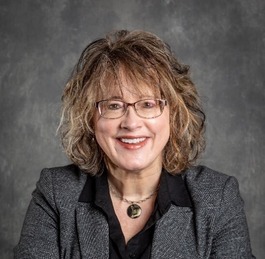
Jeannie Krull serves as the Executive Director of the Association of Assistive Technology Act Programs (ATAP), a national nonprofit comprised of 56 state and territory Assistive Technology Act (AT Act) programs. These programs are organized as follows: 21 within state governments, 21 in universities, and 14 as nonprofits. Minnesota STAR is a member of ATAP, working alongside AT Act programs nationwide to strengthen access to assistive technology and advance shared priorities.
Before ATAP’s formation, there were plans to sunset the AT Act programs, because as Krull explains, “No one was fighting for us at the federal level.” In response, ATAP was established in 1997 by several state directors, aiming to secure and increase funding for assistive technology (AT) programs. The sunset clause was ultimately removed in 2004, ensuring program continuity. Krull notes, “We’ve been fortunate with relatively steady increases in funding.” Reauthorizing the AT Act in 2022 required 18 years of effort, and another reauthorization is needed in 2027.
ATAP also provides technical assistance and training for its members, holding the Technical and Training Assistance Center grant since 2016. According to Krull, the organization envisions “an inclusive world with easy access to AT, where AT is universal and everyone is supported to thrive in an ever-evolving environment.” ATAP’s five-year strategic plan centers on expanding the capacity of AT programs and driving innovation for positive change.
In addition to supporting program growth, ATAP prioritizes raising awareness of assistive technology (AT). Krull emphasizes, “We also want to lead the way in AT awareness, so people know about it before they need it. We're always advancing advocacy and influencing policy to support the work of our members.” While funding has increased, it often does not keep pace with the cost of living, motivating ATAP to help states leverage additional dollars and build capacity through partnerships.
The impact of the work of the AT Act Programs is significant. With a $31 million federal investment, 487,000 people were served in 2024 and over $91 million in savings and benefits was generated. Leveraging $49.4 million from other sources, the AT Act Programs achieved a return on investment (ROI) of 196%: $2.97 saved for every dollar spent. Krull remarked, “Few programs can claim that ROI, which is another reason for continuing investment in the AT Act Programs.”
For the last couple of years, the focus was on education partnerships. ATAP’s current emphasis is on forging partnerships with AT Act Programs and aging entities within their states such as Area agencies on Aging, Senior Centers, and State Units on Aging. The goal is to enable people to age in place and thrive, not just survive. AT can support basic needs, such as safety in the bathroom, and help individuals with daily tasks like internet access and content consumption, including those who are visually impaired. In assisted living, AT, such as a personal listening device, can facilitate social engagement, such as participating in conversations at meals. Krull shares, “That’s where just basic technology is life changing.”
Increasing AT awareness is a growing priority. Krull believes, “Every person on the planet is going to need to know about AT because they're either going to need it for themselves or know someone who needs it.” Building early awareness is essential, as it can have a profound impact when the need arises.
ATAP maintains advocacy and technical assistance websites for all states and holds an annual conference for its programs. The community is small and closely connected, fostering collaboration and knowledge-sharing. Regular gatherings allow members to share best practices and inspire innovation. New directors receive mentorship and training, benefiting from the collective experience of former AT Act program directors who now support the technical assistance and training program.
National outreach includes partnerships with organizations like US Aging and the Department of Education, allowing information and resources to filter down to the state and territory levels. A major goal in ATAP’s strategic plan is to establish a national fund for individuals unable to access devices through conventional means such as Medicaid, Vocational Rehabilitation, or schools. This fund would provide devices, support home modifications, and further increase awareness about the benefits of AT.
The field of accessibility and AT has advanced rapidly. Whereas AT was once limited, many modern devices, like cellphones, now include built-in accessibility features. “Business is booming!” Krull notes. However, the abundance of options can be overwhelming for those seeking support. ATAP emphasizes the importance of meeting people where they are and educating them about the possibilities, striving to guide and empower individuals through every stage of their journey.
For more information on ATAP, visit: ataporg.org and at3center.net.
|
|
|
|
Check out our online lending library at MN AT4ALL where you can see many of the devices hosted by STAR and our partners. You can check out a loan online and a staff member will reach out regarding next steps.
For more information, contact STAR. We look forward to hearing from you!
|
|
Our Partners Help Broaden Our Reach State-wide
The federal 21st Century Assistive Technology Act, requires programs like STAR to provide the following services: assistive technology demonstrations, loans, and reutilization services. In order to support the entire state with a small team, STAR has broadened their ability to meet people where they are, closer to their communities where possible.
|
|
North Dakota Assistive: “The Stuff that Matters”
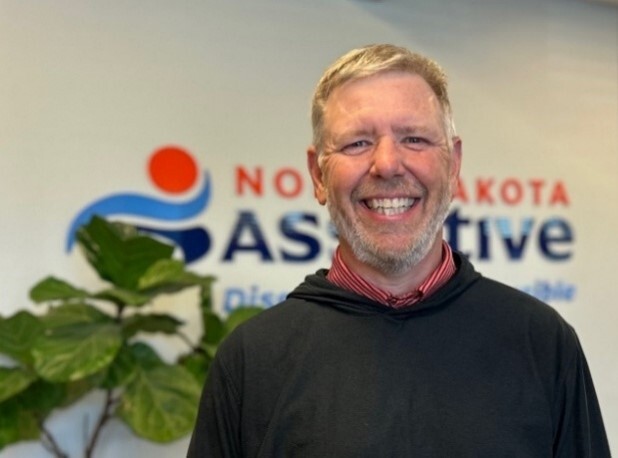
Mike Chaussee, Executive Director
North Dakota Assistive
With its convenient location, Minnesotans with disabilities who live near the North Dakota border can access North Dakota Assistive for AT needs. It is the only STAR Program Partner that is in another state with locations in Fargo and Bismarck. The STAR Program worked with North Dakota Assistive to add the organization as a STAR Program Partner in 2005.
The non-profit strives to bring assistive technology (AT) devices and services into the lives of North Dakotans and Minnesotans with disabilities. Their goal is to help bridge the gap between ability and disability using AT.
Mike Chaussee, the executive director of North Dakota Assistive, talked with us recently about the organization.
North Dakota Assistive is the designated administrator of the Assistive Technology (AT) Act for their state. Mike explained, “Most AT Act organizations in the United States are either part of state government or part of a university. We were established as a non-profit, and our status allows us to take on other contracts to fund our work, including working with Minnesota. It’s a good fit for both organizations.”
North Dakota Assistive costs are paid by Minnesota when devices are loaned out to Minnesotans. The compensation is used to purchase more AT for North Dakotans and Minnesotans alike.
North Dakota Assistive recently added more occupational therapists as well as a speech language pathologist to their staff, which enables them to address more needs.
North Dakota Assistive devices and tools are listed on the ND AT4ALL library website. “Minnesotans can borrow anything a North Dakotan would, “said Chaussee, adding, “Our vision is to put AT in reach of every North Dakotan and Minnesotan. We want people to know that they have a choice in how they move forward. AT can help.”
Mike shared, “It can be challenging to raise awareness that this service is available, but we take advantage of ways that keep us more top-of-mind with professionals that rely on us, and we make it a priority to gain a person’s trust. Key to our success are our programs: if we can open a person’s eyes to the possibilities and provide the right solution the first time they work with us, we build a relationship that leads to people to adopt more AT.
”Our staff cares deeply about those who come to us, and it shows in how we collaborate to find solutions together. We serve people with whatever they need in the moment. They find in us someone they know who cares about them.”
Mike reflected, “In our culture, we will invest anything and everything to save lives. We will save your life and get you on your journey, but then what? Our answer is that AT helps people live their lives better. With AT, we have so many options – it can help a person read or fall asleep without fear that they won’t hear their alarm. What’s most important is AT can allow people to have their lives back.”
Mike shared several successes:
A student with cerebral palsy used the grant and loan system to purchase a robotic walker. Mike said, “Last summer, he passed one million steps and participated in school activities– something that would not have been possible without AT.”
“About half of the time, a person leaves with something else that what they came in to see,” Mike shared. An older couple was looking for assistance to address the husband’s vision issues. However, the staff observed the couple had significant hearing challenges during their appointment and suggested hearing devices to try. They were so grateful for how their communication improved, changing their lives for the better.
Sometimes, the solution involves a less “technical” tool. An older man browsed the lending library for nearly 45 minutes. He stopped when he saw a deck of large print playing cards. “I want those,” he said. He could no longer see playing cards well enough to play card games and became isolated, avoiding the community room in his assistive living center. The cards were the perfect simple solution and now he was able to play cards with others again. Mike said, “His life was better because of a deck of cards. That is the stuff that matters – you can see the impact!”
To learn more, refer to their website: North Dakota Assistive
|
|
STAR Partners are listed on our Device Loan page. Individuals can search for a device by product type and location by accessing the MN AT4ALL online lending library. If there are questions, we encourage people to check with STAR first. |
|
|
Note: The Minnesota STAR Program is federally funded by the Department of Health and Human Services, Administration for Community Living in accordance with This law requires that the STAR Program have an Advisory Council. The purpose of the Minnesota Technology Advisory Council is to provide consumer-responsive, consumer-driven advice to STAR.
Getting to know the Advisory Council Chair Aaron Arvig
Aaron Arvig, Chair of the Minnesota Assistive Technology Advisory Council for STAR, Program Digital Accessibility Coordinator for MnDOT
Aaron Arvig recently became the Chair of the Advisory Council. He has been a public member of the Council since 2022. Arvig has worked for the state of Minnesota since 2014, beginning in the Department of Human Services. Aaron’s position is unique in that most state employees on the Council are representing their department, while he falls in the “member at large” category. At present, Aaron is the Digital Accessibility Coordinator for MnDOT.
His interest in AT began with his very first role with the state. Arvig shared, “I really noticed that accessibility, specifically digital accessibility, was quite siloed. Some people were including accessibility in their work, some not. So, I learned as much as I could about accessibility because it was part of my job. This connected me with some awesome people at DHS, who suggested that I get involved with the Advisory Council and learn about their work.”
The leadership development program with Minnesota Management and Budget (MMB) also suggested that Aaron apply for the Council in 2021. Aaron said, “They knew my interest was digital accessibility.”
The Council provides a forum for hearing real-life, real-world examples of the challenges people have. Regarding the Council, Aaron said, “I feel we have very smart, educated people who provide the energy we need to keep going to keep making Minnesota a better place for AT. Often, a person may be dealing with something that we've dealt with or have yet to deal with. I really appreciate being able to observe the different situations that are going on and how they might correlate to my own role.”
Regarding the STAR Program overall, he said, “The STAR Program team does so much with minimal budget and staff. A few weeks ago, our MnDOT team toured STAR and looked at all the devices in the lending library. We were impressed with the range of AT. It's not just a refreshable Braille display or a cane. There are AT tools for infants to seniors, from feeding devices to technology.”
Aaron is focused on getting visibility out to everyone and ensuring more Minnesotans of all ages and abilities have access to AT and to the support they need to live and work more independently. And with his unique perspective on social services, he believes there also is a great opportunity to increase awareness to state services employees and their families about where to go for help with AT. Aaron noted, “Like many state services employees, I knew very little about the STAR Program until joining the Council. We can change that.”
Aaron looks forward to more networking as Council Chair. He credits former Chair Dave Andrews as a role model, saying, “He's an amazing advocate for accessibility and AT.” He added, “No one is going to fill the shoes of Dave, but he's taught me a lot over these past few years. And you know, even if I can fill only 1/4 of his shoes, I'm going to try.”
|
|
 |
|
Note to readers: in each issue, we feature a device from our lending library or a useful AT app we have found. There are many devices that can be demonstrated or trialed through our loan program at no charge to you. Check out our inventory of devices at the MN AT4ALL website. We also feature promising apps that help improve the lives of people with disabilities. |
Caption Companion™ Universal Captioning Device
Read what everyone else is hearing!
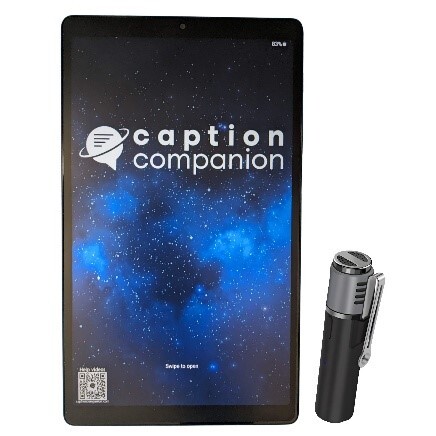
It isn’t always possible to schedule an ASL interpreter, especially for last-minute meetings or everyday activities. The Caption Companion™ Universal Captioning Device offers a simple way to access real-time captions when you need them.
Caption Companion listens to spoken words and turns them into text without using the internet. Because it works completely offline, conversations are not sent to the cloud or stored online. This helps protect privacy and reduces the risk of sharing sensitive or personal information—making it a good option for healthcare visits, school meetings, work conversations, and other situations where confidentiality matters.
The device uses a Bluetooth SmartMic for clear captions and works well in classrooms, meetings, and live events. It’s easy to use—just tap to start. No accounts, subscriptions, or ongoing fees are required. Caption Companion also supports unlimited captioning in multiple languages.
Caption Companion™ is available to borrow from the MN AT4ALL lending library. More information is available on the Caption Companion website.
You can find more information in the STAR Program lending library and on the Caption Companion webpage.
|
|
|
A First for SWCIL: An Accessible Deer Hunt
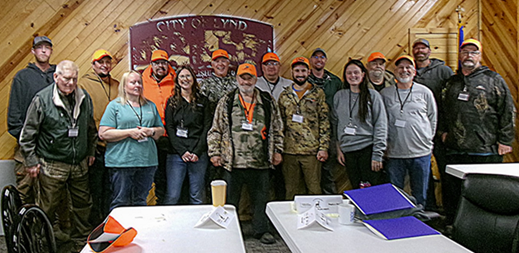
Accessible deer hunt participants and SWCIL staff
“I’ve been waiting for something like this my entire life.”
A participant shared this sentiment at the first ever accessible deer hunt that the Southwestern Center of Independent Living (SWCIL) hosted at Camden State Park. The hunt provided a meaningful opportunity for individuals with disabilities to participate fully in a deer hunt.
Melissa Doherty, Executive Director of SWCIL, spoke with us about how the event became a reality. Melissa explained, “We have a large hunting community here but not many options for accessible hunting. I had long been interested in doing our own accessible hunts locally, especially after hearing from other Minnesota Centers for Independent Living (CILs) about their hunts.” Two CILs have held accessible hunts annually for more than a decade: Options Center in East Grand Forks, ND and Access North in Hibbing. These events provide a meaningful opportunity for individuals with disabilities to participate fully in a deer hunt.
Melissa said, “I didn’t feel comfortable doing an event like this without an experienced hunter serving as coordinator, so I asked a new staff member (and avid hunter) if he could join another CIL on their hunt. He participated in 2024, which gave us an inside look at what was possible and became our coordinator.” For their first planned hunt, SWCIL decided to offer the experience to adults with disabilities. A number of CILs also helped SWCIL in the planning.
An important step was to communicate the plan to others and secure funding. Melissa shared, “We were able to partially fund this through grants. The community also pitched in. Many businesses donated food for meals and funding for supplies. They helped us with outreach, too.” The DNR from Camden State Park supported the hunt, and Action Track employees from the local manufacturer of track chairs offered to answer phones and provide other support during the event.
Melissa said, “Individuals listed any personal barriers they had to hunting on their application. Participants selected were then paired with a mentor/hunter, who focused on overcoming those barriers.” Participants were also required to have Firearm Safety certification, appropriate clothing, a hunting license, firearm and ammunition.
Mentors provided individualized pre-hunt support and accompanied their person on the hunt. Melissa shared, “We didn’t have a base of volunteers at first and found mentors largely by word-of-mouth. Our employees checked with friends or family that hunted, and we put a note in the local newspaper. People just came out of the woodwork, and we filled each mentor spot with experienced hunters and lined up others who offered to assist with harvesting if needed. One volunteer mentor even took their hunter to a shooting range prior to the hunt as they had never fired a firearm before.”
SWCIL provided chairs, heaters, shooting tripods, and pop-up ground hunting blinds. All meals and snacks were provided at no cost, thanks to generous community support and sponsor donations.
The hunt removed common barriers, providing adaptive support, accessible facilities, and one-on-one mentorship. Although several deer were seen and no deer were harvested, the person who took the only shot was a hunter without any hunting experience.
The result? Melissa said, “Our goal was to provide an opportunity to grow a community among hunters. I brought people in and out of the park to their hunting blinds and observed the camaraderie that had formed. That was exactly what we wanted.”
Looking forward, SWCIL hopes to offer another event next year. The future looks promising!
|
|
“A Total Game Changer for Me and My Student”
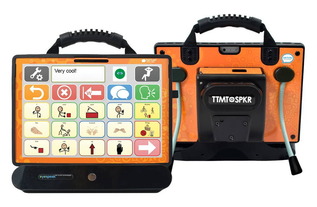
A Speech-Language Pathologist who recently borrowed an Augmentative Alternative Communication (AAC) device through STAR reached out to share her experience with the Zuvo 12. The Zuvo 12 is an AAC speech device that can be used with eye-gaze, allowing someone to communicate by looking at items on the screen instead of touching them. Eye-gaze is often a great option for people who have strong understanding and ideas to share, but limited use of their hands or body—offering a direct, independent way to communicate.
She wrote, “Having that device was a total game changer for both me and my student. I had been unsure about trying an eye-gaze device with him because he has poor head control, and I didn’t want to put his family through the hoops of requesting a trial if it wasn’t going to be a good fit.
“The AT Specialist at STAR made the loan process so easy and quick. As soon as my student figured out how to use the device, he started requesting and talking about so many things. It was incredibly cool to see—and hear—him communicate dynamically for the first time. Once I saw that success, I started the process with his family to pursue a trial device from a company.
“Because it was the end of the school year, it meant everything for my student to be able to use the device over the summer. I don’t typically work in the summer, but I subbed for three days in his summer school class, and he was so happy to be using it to talk. Because he had practiced over the summer, he was ready to use the trial device right away when it arrived in September.
“This loan was huge for my student. Without it, he wouldn’t have had access over the summer and would have had to wait until September. It was also valuable for me professionally—since I hadn’t worked with eye-gaze technology in years, this gave me a chance to see what new options are available, and that will help me make stronger recommendations for other students.
“I was honestly just so pleased with how easy everything was. The AT Specialist made it simple for me and for my student’s family. It saved at least three hoops, and a lot of time compared to going through a company trial first. I will absolutely keep using—and referring others to—the STAR program. I’m so excited to know this resource is available for anyone with disabilities, and it genuinely makes me proud to live in a state that has a program like this.”
|
|
|
There are several events and learning opportunities that may be of interest about assistive technology. More information about upcoming events is available from the links. All events are in Central Time unless otherwise indicated. If you want to hear more about future events, subscribe to our Upcoming Events list!
|
|
|
January 29 – 31
Orlando, Florida
|
|
Conference: ATIA Conference is where to learn about the latest trends in AT. The STAR Program will also be attending the national event.
See the website for information or to register for this annual conference.
|
|
|
March 9 – 13
Anaheim Marriott
Anaheim, California
|
|
41st CSUN Assistive Technology Conference The CSUN Assistive Technology Conference (ATC) fosters a welcoming, diverse, and inclusive environment where global voices and perspectives are celebrated. As accessibility advances worldwide through evolving legislation and practices, the conference remains a vital space for international leaders to exchange ideas, share innovations, and explore how these developments shape inclusive societies.
The digital accessibility team at MnDOT is planning to attend and present at the conference.
Registration link: 41st CSUN Assistive Technology Conference
Contact information:
Email: [email protected]
Phone: 818-677-2578
|
|
|
March 11 – 13
Minneapolis Convention Center
1301 2nd Avenue South, Minneapolis, MN 55403
|
The MSSA’s annual conference is for professionals from various sectors within health and human services, bringing together supervisors and direct staff who play pivotal roles in referrals and decision-making.
|
|
|
National AT Awareness Day - ATAP
This day commemorates the importance and vital role AT plays in the lives of people with disabilities and older adults. It reinforces the necessary support and funding the federal government provides to ensure people receive the assistive technology necessary to engage in education, employment, and community living. Assistive technology allows individuals with disabilities and older adults to be included in their communities and in inclusive classrooms and workplaces and these devices are necessities, not luxury items.
|
|
|
Ongoing
Metropolitan Center for Independent Living
530 Robert Street North
St Paul, MN 55101
or online
|
|
The Metropolitan Center for Independent Living offers free classes for people with disabilities to enhance independent living skills. These are free to the public and offered on an ongoing basis, and registration for our winter classes is now live.
Descriptions for some of our classes can be found on the MCIL website. People can attend in person at MCIL or virtually. To register, please fill out our online registration form, email [email protected], or call 651-646-8342.
|
|
We have many device and educational videos. STAR posts videos often, so consider subscribing to our channel! Here are also two playlists on the channel:
|
|
|
|
|