|
Weekly Update
A newsletter from The Hechinger Report |
|
|
Sponsored by: |
 |
|
|
|
 |
|
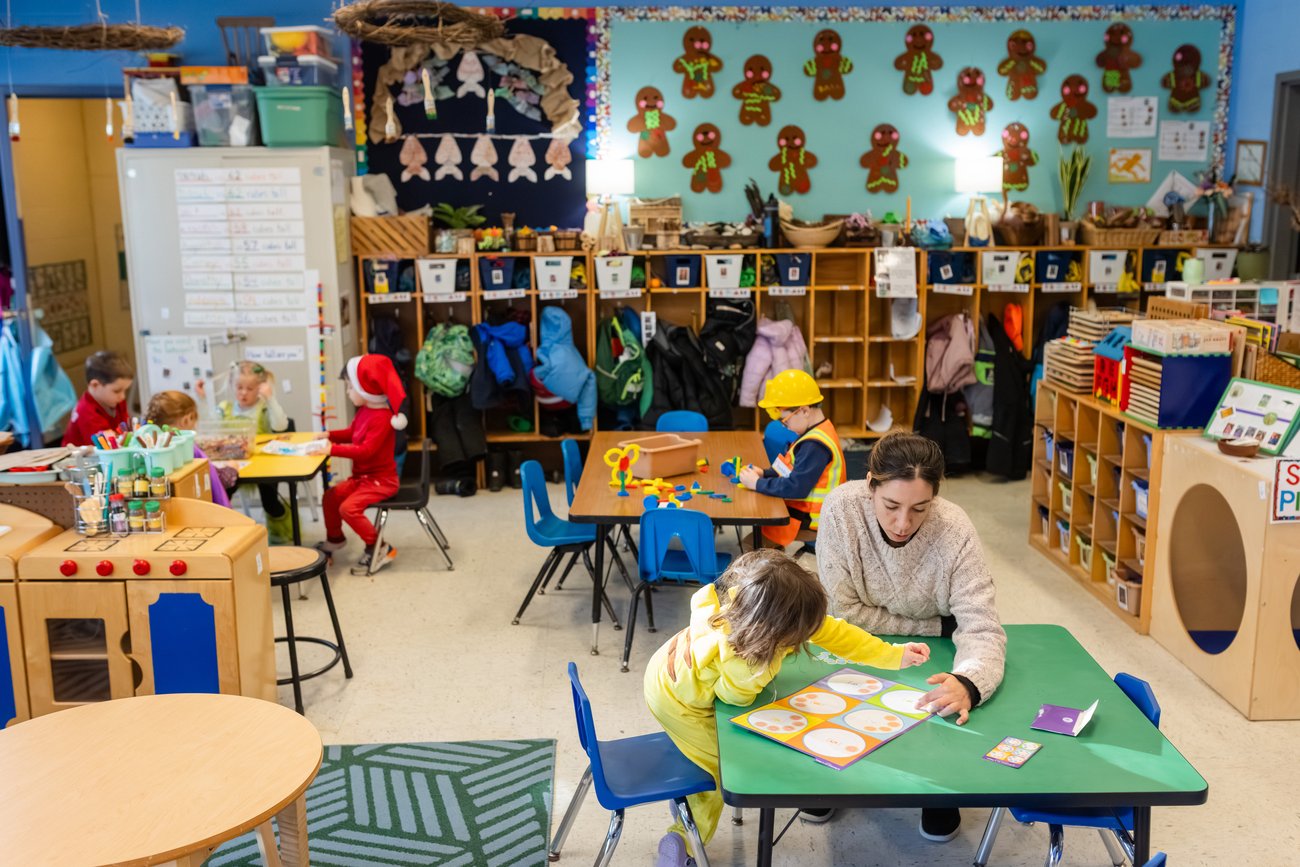
Students and teachers play in the preschool classroom at Peacham Elementary School on Thursday, Dec. 18, 2025 in Peacham, Vt. Credit: Oliver Parini for The Hechinger Report
|
|
|
|
Schools are closing across rural America. Here’s how a battle over small districts is playing out in Vermont |
|
Early on a chilly fall morning in this small Vermont town, Principal Lydia Cochrane watched a gaggle of kids chase one another and a soccer ball around their school recess yard. Between drop-off and first bell, they were free, loud and constantly moving.
With only about 60 students in prekindergarten through sixth grade, Peacham Elementary is the sort of school where all the kids know one another and locals regularly respond to calls for supplies and volunteers for field trips and other school activities. Cochrane gestured at the freshly raked wood chips around the swings and climbing structures, one of many tasks Peacham families completed at a recent community workday.
“With a small school, the families know how crucial it is to support it and ensure it succeeds, and so they show up for it,” said Cochrane.
Peacham is also a type of school that’s disappearing nationwide, as education systems grapple with plunging enrollments and rising costs. Amid declining birth rates and growing competition from private-school voucher programs, the number of students in U.S. public schools dropped about 2.5 percent between 2019 and 2023, according to the most recent federal data. Fewer students leads to higher per-pupil spending, because district staffing and other expenses largely remain in place despite enrollment drops, and states are increasingly trying to escape the education budget crunch via school consolidation: In the past three years alone, at least 10 states have considered measures to mandate or incentivize district mergers.
These pressures are especially keen in rural areas where the smallest schools predominate and play an outsized role in community life. Vermont, the nation’s most rural state, has lost about 20 percent of its K-12 public school student population in the past two decades.
|
| Read the story |
|
|
|
|
This week's newsletter is sponsored by: |
|
|
Bring innovative ideas and new strategies back to your community. SXSW EDU 2026 is where you can connect with education professionals for four days of groundbreaking sessions, global networking, and unparalleled inspiration.
Learn more about what to expect in Austin, Texas, March 9-12 and register today. |
|
|
|
|
How a legal group’s anti-LGBTQ policies took root in school districts across a state
|
|
|
|
The West Shore school board policy committee meeting came to a halt almost as soon as it began. As a board member started going over the agenda on July 17, local parent Danielle Gross rose to object to a last-minute addition she said hadn’t been on the district’s website the day before.
By posting notice of the proposal so close to the meeting, charged Gross, who is also a partner at a communications and advocacy firm that works on state education policy, the board had violated Pennsylvania’s open meetings law, failing to provide the public at least 24 hours’ notice about a topic “this board knows is of great concern for many community members interested in the rights of our LGBTQ students.”
The committee chair, relentlessly banging her gavel, adjourned the meeting to a nonpublic “executive session.” When the committee reconvened, the policy was not mentioned again until the meeting’s end, when a lone public commenter, Heather Keller, invoked “Hamlet” to warn that something was rotten in the Harrisburg suburbs.
The proposed policy, which would bar trans students from using bathrooms and locker rooms aligned with their gender identity, was a nearly verbatim copy of one crafted by a group called the Independence Law Center — a Harrisburg-based Christian right legal advocacy group whose model policies have led to costly lawsuits in districts around the state.
“Being concerned about that, I remembered that we don’t partner with the Independence Law Center,” Keller said. “We haven’t hired them as consultants. And they’re not our district solicitor.” |
| Read the story |
|
|
|
|
|
Teachers who use math vocabulary help students do better in math
|
|
|
|
Using words like ‘factors,’ ‘denominators’ and ‘multiples’ may be part of a constellation of good math teaching practices. |
|
|
|
|
|
|
|
|
|
|
|
|
Copyright © 2025 The Hechinger Report, All rights reserved. |
|
|
|
|