By the end of December 2023, the number of people in US prisons had risen for the second year in a row, though it remains below historic highs. The most recent federal data shows where prisoners are held, how that’s changed over time, and which states rely most on local jails or private prisons. |
|
- About 1.25 million people were in US prisons at the end of 2023. That included both state and federal jurisdictions — and was up 2% from 2022. Prisoners sentenced to a year or more made up 96.5% of this group.
- Federal and state-run facilities housed 87.7% of prisoners. The remainder were held in private facilities (which the federal system relied more on) or local jails (which state systems relied more on). However, as of 2022, all federal prisoners in private custody were in halfway houses and home confinement, not what is traditionally thought of as a “prison.” The Federal Bureau of Prisons stopped contracting private secure facilities in November 2022.
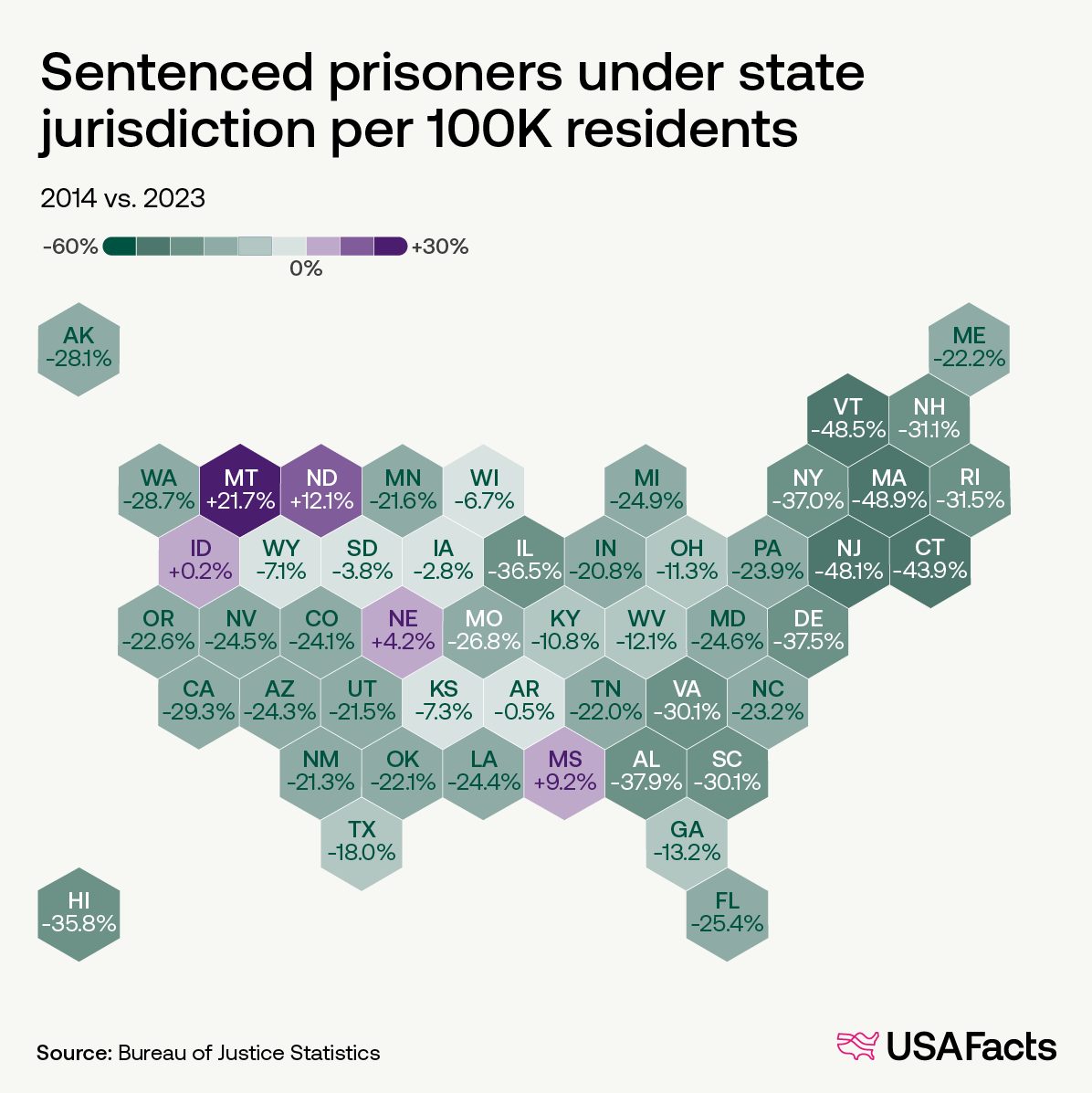
- State incarceration rates fell in 45 states and rose in five from 2014 to 2023. The rate decreased the most in Massachusetts, down 48.9% from 188 prisoners per 100,000 people to 96. Montana had the biggest increase, up 21.7% from 360 per 100,000 to 438.
|
|
- Louisiana held over half its prisoners in local jails, while Montana held nearly half in private prisons — the highest shares reported nationwide. Of all prisoners in the US, 5.2% are housed in local jails, and 7.1% in private prisons.
|
|
Who’s in preschool, and where? |
|
Preschool might not always come with report cards, but the enrollment numbers are in: in 2023, nearly half of all three- and four-year-olds were enrolled in preschool, up from a slump during the pandemic. We dug into the data to learn more about who’s enrolled and where they’re learning.
- In 2023, around 28.6% of enrolled children were in public preschool programs, while 20.3% were enrolled privately.
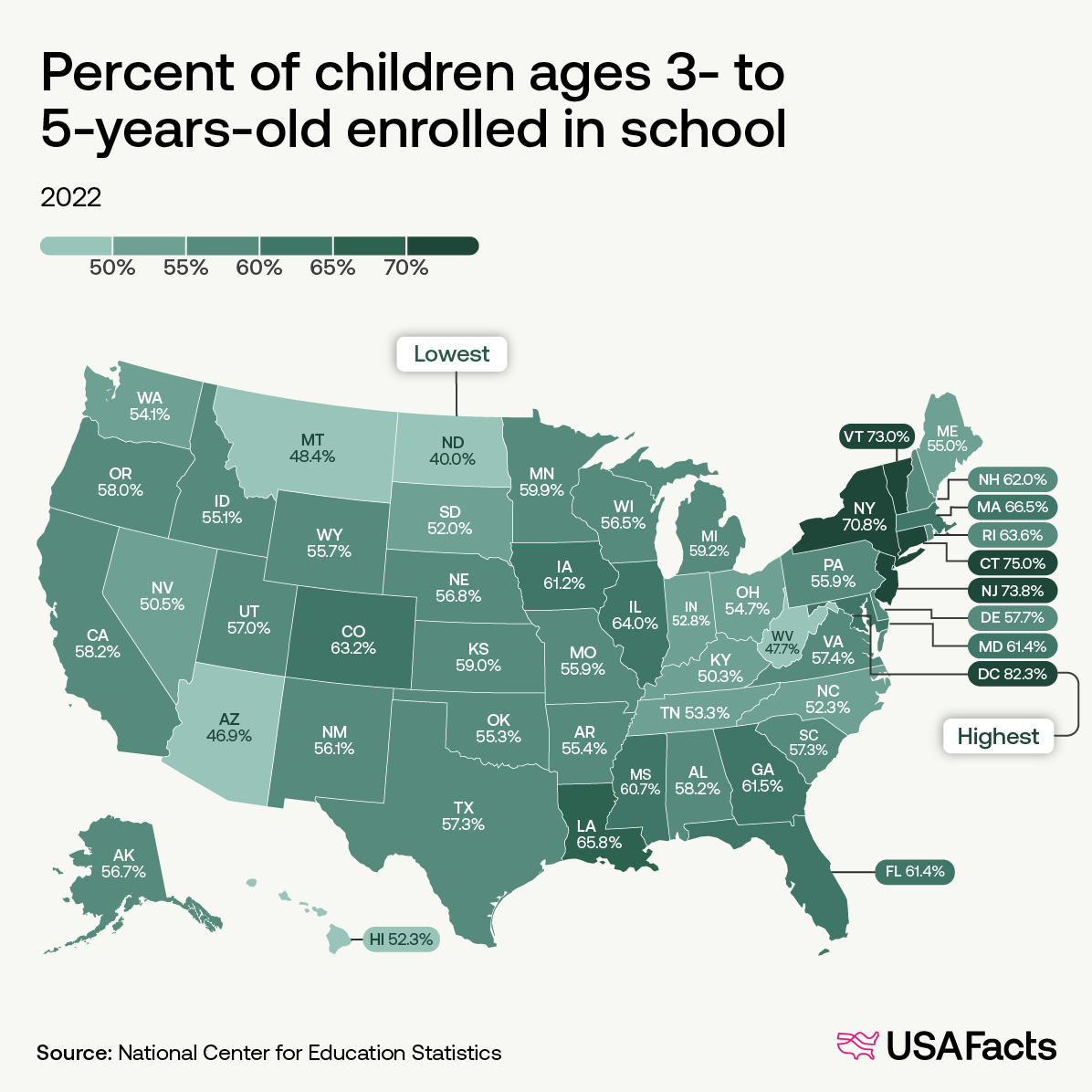
- The highest preschool enrollment rates were in the Northeast: Connecticut (75.0%), New Jersey (73.8%), Vermont (73.0%), New York (70.8%), and Massachusetts (66.5%).
- In comparison, North Dakota, Arizona, West Virginia, and Montana all had preschool enrollment rates below 50%.
|
|
- Enrollment fell during the COVID-19 pandemic, dropping from 49.2% in 2019 to 40.2% in 2021. By 2023, the rate was close to its pre-pandemic peak.
- In two-parent families, preschool attendance among three- and four-year-olds was highest when both parents were employed (57.1%), lower when only one parent worked (44.5%), and lowest when neither parent was employed (40.2%)
|
|
Think you know the data? Take our poll! |
|
| Which led to more fatalities in the US in 2023? | | Read next week's newsletter for the answer. | | | | | | | | |
|
Last Saturday, US forces struck targets in Venezuela, captured Venezuelan President Nicolás Maduro and his wife, and transported them to the United States. For context behind the Venezuela–US relationship, we have facts on foreign aid the US provides Venezuela. Enhanced premium tax subsidies for Affordable Care Act (ACA) healthcare plans expired on December 31. See how many people are on ACA plans.
The next USAFacts weekly quiz is ready for you data diehards. |
|
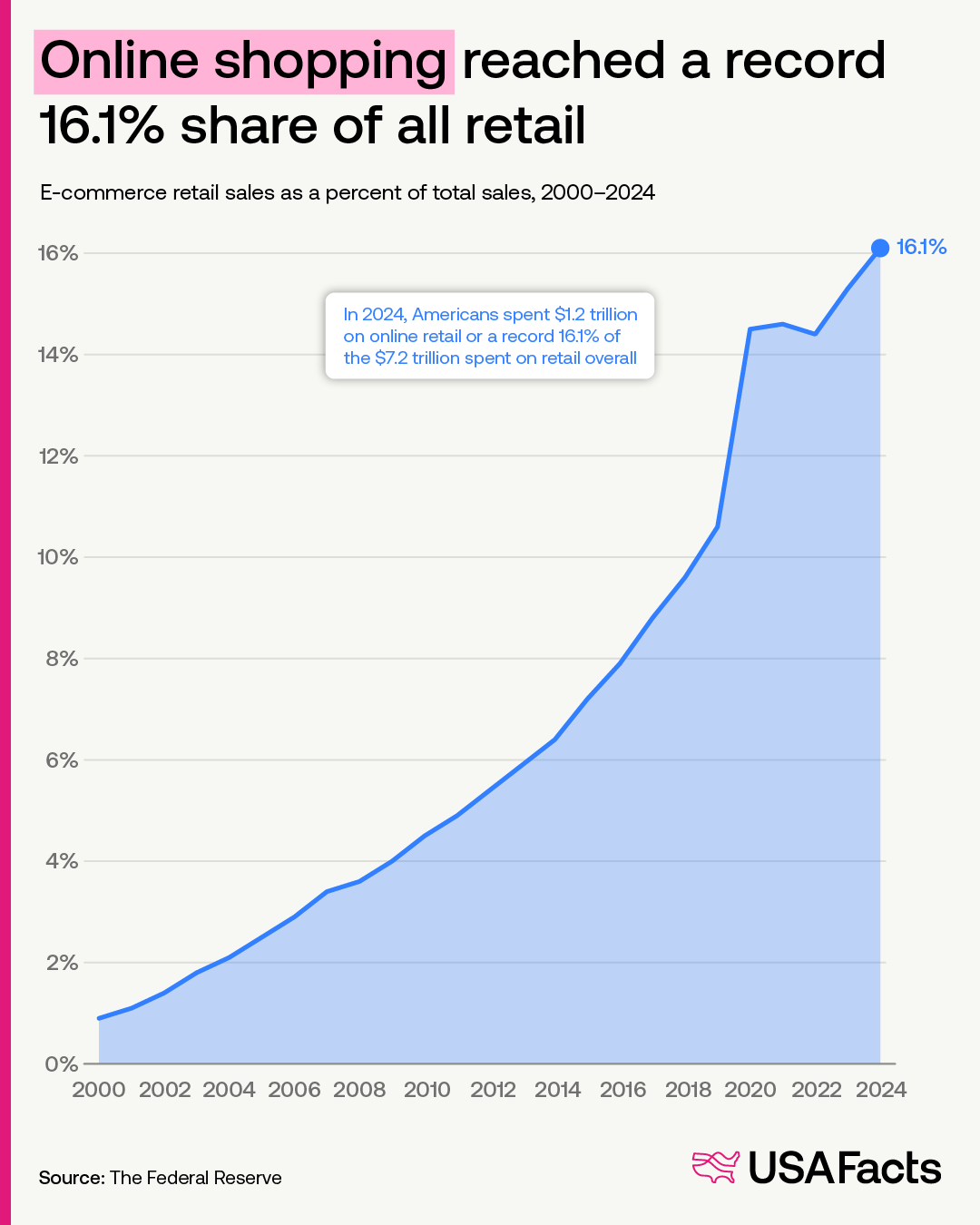
In 2024, Americans spent $1.2 trillion on online retail — a record 16.1% of retail overall. Overall, the retail industry produced $7.4 trillion in sales in 2024. Online shopping and other non-store retail comprised $1.5 trillion (or 20% of that total).
|
|
|
|
|