
Jan. 5, 2026
Permission to republish original opeds and cartoons granted.
U.S. Captures Nicolas Maduro, But It’s Not Yet A War—That’s Up To New Venezuelan President Delcy Rodríguez
|

|
|
On Jan. 3, President Trump ordered U.S. armed forces and the Justice Department to capture narco-terrorist Venezuelan President Nicolas Maduro and his wife for trafficking drugs into the U.S. including cocaine and other deadly poisons, killing thousands of American citizens, and now both face prosecution in the Southern District of New York. So far, no written notification has been sent by the President to Congress about the operation, as called for in Section 4 of the War Powers Resolution “in any case in which United States Armed Forces are introduced… into hostilities or into situations where imminent involvement in hostilities is clearly indicated by the circumstances… into the territory, airspace or waters of a foreign nation…” Was it an act of war? The administration says it was a law enforcement operation. Maybe it was both. The President did send War Powers Resolution notifications in 2025 for U.S. military strikes in Iran to destroy her nuclear facilities in June, for attacking narco-terrorist boats in the Caribbean Sea beginning in September and for strikes in Yemen in March. Trump also used such notifications following military strikes abroad five times in his first administration. Similarly, in 1989 when George H.W. Bush used U.S. armed forces to capture then Panama dictator Manuel Noriega, he issued the Section 4 notification to Congress. In this case, however, it’s not a war, the President says — at least, not yet. Or if there was a war, maybe it’s already over. If so, perhaps it should be called the Three-Hour War. Whether or not there really is a war, though, might actually be up to the new President of Venezuela, Delcy Rodríguez. She has called the capture of Maduro “aggression” but does she want to chance a wider war?
|
President Trump Gaining Into 2026 As Democrats Still Ahead In Congressional Ballot By Modest Margin
|
|
|
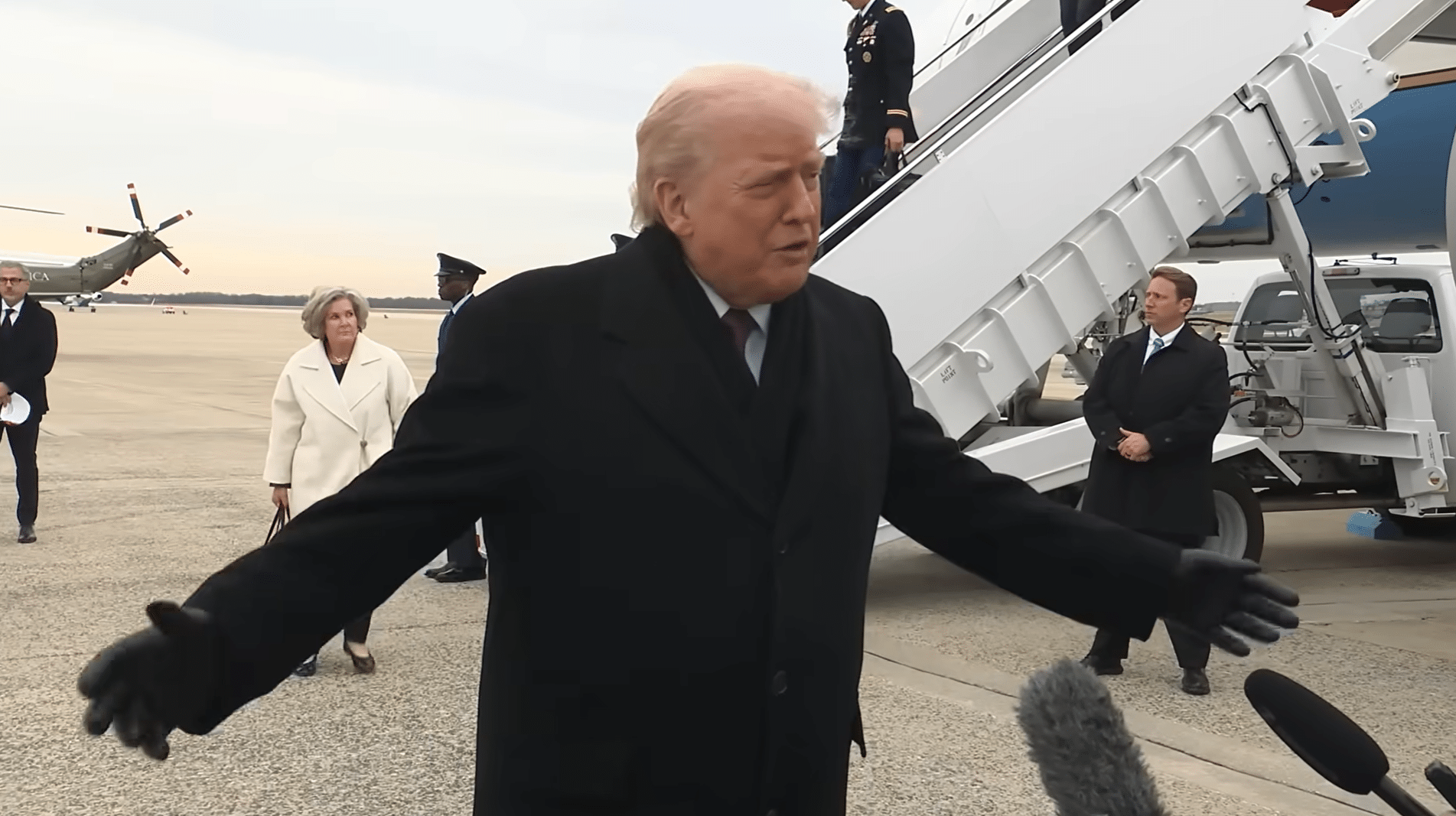
While President Trump’s approval rating remains underwater due largely to negative sentiment about the speed of the economic recovery, there are signs the president’s approval could bounce back, and one new poll shows his approval rating moving into the positive. Democrats are beginning the year with a 3.9 percentage point lead in the generic congressional ballot, but that lead is smaller than it was at the beginning of the last two midterm cycles in 2022 and 2018. First, a new Trafalgar poll of 1,098 likely voters released Dec. 27 shows President Trump’s net approval rating sitting at 5.6 percentage points, with 50.2 approving while 44.6 disapprove. The survey is an outlier, with the latest Real Clear Polling average placing Trump’s net approval rating at -9.9 percentage points, but the president’s approval rating is moving upward. On Nov. 21, just two weeks after the GOP lost both the Virginia and New Jersey Governor races, President Trump’s approval rating was -13.1 percentage points. With his current net approval rating hovering around -9.9 percentage points, he has improved just over three percentage points since late November. Democrats hold a 3.9 percentage-point lead in the latest generic congressional ballot data from Real Clear Polling, with 46 percent of voters planning to support a Democrat for Congress in the midterm cycle while 42.1 percent plan to support a Republican. This lead has widened slightly since November but remains modest compared to early spring polls from the previous two midterm cycles.
|
Netflix-Warner Brothers Discovery Merger Will Benefit Consumers And Put America First
|

|
|
Americans for Limited Government Executive Director Robert Romano: “The proposed merger of Netflix and Warner Brothers Discovery will help American consumers save money on their ever expanding monthly streaming budgets and make Warner's library of titles more widely available than ever before. It will also keep the Warner and Discovery studios owned independently of Disney, Paramount and Universal, ensuring all four remain competitive, dramatically reducing anti-trust concerns and protecting Warner and Discovery workers who still work at the studios. Similarly, the marketplace for streaming options will remain competitive as Netflix competes with Amazon, Disney, Paramount, Apple and so forth. Finally, and most importantly, the deal puts America first by keeping iconic and historic American cinema — spanning generations of beloved films and franchises — under American ownership.”
|
U.S. Captures Nicolas Maduro, But It’s Not Yet A War—That’s Up To New Venezuelan President Delcy Rodríguez
By Robert Romano
“We are at war against drug trafficking organizations and not at war against Venezuela.”
That was Secretary of State Marco Rubio on NBC’s Meet the Press on Jan. 4 conveying President Donald Trump’s policy, that, as of now, there is no state of war that exists between the U.S. and Venezuela.
On Jan. 3, President Trump ordered U.S. armed forces and the Justice Department to capture narco-terrorist Venezuelan President Nicolas Maduro and his wife for trafficking drugs into the U.S. including cocaine and other deadly poisons, killing thousands of American citizens, and now both face prosecution in the Southern District of New York.
So far, no written notification has been sent by the President to Congress about the operation, as called for in Section 4 of the War Powers Resolution “in any case in which United States Armed Forces are introduced… into hostilities or into situations where imminent involvement in hostilities is clearly indicated by the circumstances… into the territory, airspace or waters of a foreign nation…”
Was it an act of war? The administration says it was a law enforcement operation. Maybe it was both.
The President did send War Powers Resolution notifications in 2025 for U.S. military strikes in Iran to destroy her nuclear facilities in June, for attacking narco-terrorist boats in the Caribbean Sea beginning in September and for strikes in Yemen in March. Trump also used such notifications following military strikes abroad five times in his first administration.
Similarly, in 1989 when George H.W. Bush used U.S. armed forces to capture then Panama dictator Manuel Noriega, he issued the Section 4 notification to Congress.
In this case, however, it’s not a war, the President says — at least, not yet. Or if there was a war, maybe it’s already over. If so, perhaps it should be called the Three-Hour War.
Whether or not there really is a war, though, might actually be up to the new President of Venezuela, Delcy Rodríguez. She has called the capture of Maduro “aggression” but does she want to chance a wider war?
There of course is another way — President Trump’s way, who doesn’t want a war.
Instead, Venezuela can be rebuilt and free elections can once again be held, but the drug trade is over. And that’s okay because the oil trade is back on. I bet they make more money that way, anyway, since selling oil and gasoline is actually legal in the U.S., whereas drug trafficking gets you a one-way ticket to jail.
In any event, Trump is telling Venezuela it must change. No more dead Americans. And no need for armed hostilities.
That’s the apparent deal President Trump is attempting to reach with President Rodriguez.
In so doing, Trump is dusting off the Monroe Doctrine, first articulated by President James Monroe in 1823 to discourage European influence in the Americas, blocking any further colonization of North and South America.
Then, Monroe told Congress in his State of the Union Address: “We… declare that we should consider any attempt on their part to extend their system to any portion of this hemisphere as dangerous to our peace and safety. With the existing colonies or dependencies of any European power we have not interfered and shall not interfere. But with the Governments who have declared their independence and maintained it… we could not view any interposition… by any European powers in any other light than as a manifestation of any unfriendly disposition toward the United States.”
This was later expanded by President Theodore Roosevelt in 1904, the so-called Corollary to the Monroe Doctrine, to include the possibility of the use of military force by the U.S. to protect the Americas, telling Congress: “[I]n the Western Hemisphere the adherence of the United States to the Monroe Doctrine may force the United States, however, reluctantly, in flagrant cases of such wrongdoing or impotence, to the exercise of an international police power… We would interfere with them only as a last resort and then only if it became evident that their inability or unwillingness to do justice at home and abroad had violated the rights of the United States or had invited foreign aggression to the detriment of the entire body of American nations.” Roosevelt immediately made good on the threat by intervening in the Dominican Republic in 1905, as he had already in Panama in 1903 by establishing a protectorate there, or predating Roosevelt’s tenure, the protectorate over Cuba starting in 1898.
Later, U.S. actions to avert the Cuban Missile Crisis in 1962 as the Soviet Union put nuclear missiles there or in Nicaragua in 1981 and Grenada in 1983 were other assertions of the Monroe Doctrine and against greater powers who challenged U.S. superiority in the Americas.
Venezuela was said to be a nexus of Chinese and Russian influence in the Western Hemisphere, and Trump said no more.
Maduro was offered a well-provided-for exile in Turkey but he said no. That was prior to his own notification that his rule was over delivered by the U.S. armed forces responsible for his capture. Maduro tried it his way, and it didn’t really work out.
As we are fond of saying in the U.S.: No one is above the law. If terrorists and drug traffickers are subject to being captured or killed, then so are drug kingpins, even if they’re presidents.
Now, there may yet be a War Powers Resolution letter sent to Congress under Section 4 subject to Venezuela, but the new president of Venezuela never gets to read it because Rodriguez’ only notification came from a cruise missile. Who knows?
It’s all up in the air. Just the way President Trump likes it. Rodriguez might be better off taking the deal. Better to not find out.
Robert Romano is the Executive Director of Americans for Limited Government Foundation.
To view online: https://dailytorch.com/2026/01/u-s-captures-nicolas-maduro-but-its-not-yet-a-war-thats-up-to-new-venezuelan-president-delcy-rodriguez/
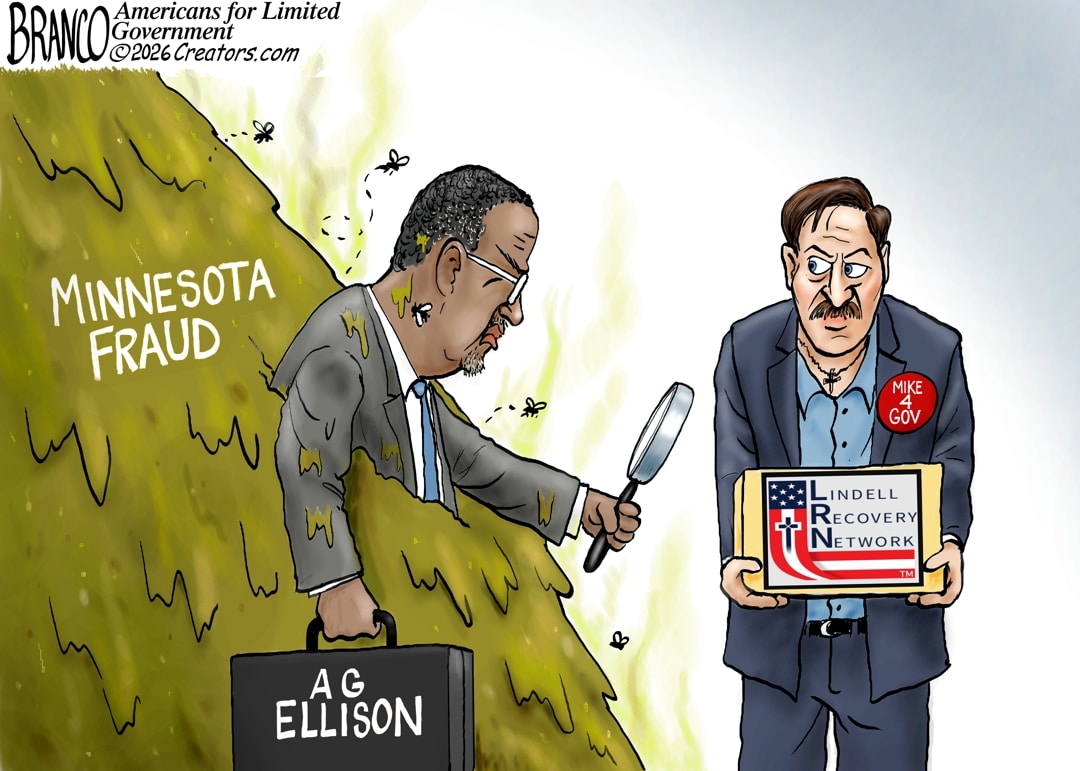
Cartoon: On The Case
By A.F. Branco
Click here for a higher level resolution version.
To view online: https://dailytorch.com/2026/01/cartoon-on-the-case/
President Trump Gaining Into 2026 As Democrats Still Ahead In Congressional Ballot By Modest Margin
By Manzanita Miller
While President Trump’s approval rating remains underwater due largely to negative sentiment about the speed of the economic recovery, there are signs the president’s approval could bounce back, and one new poll shows his approval rating moving into the positive. Democrats are beginning the year with a 3.9 percentage point lead in the generic congressional ballot, but that lead is smaller than it was at the beginning of the last two midterm cycles in 2022 and 2018.
First, a new Trafalgar poll of 1,098 likely voters released Dec. 27 shows President Trump’s net approval rating sitting at 5.6 percentage points, with 50.2 approving while 44.6 disapprove. The survey is an outlier, with the latest Real Clear Polling average placing Trump’s net approval rating at -9.9 percentage points, but the president’s approval rating is moving upward.
On Nov. 21, just two weeks after the GOP lost both the Virginia and New Jersey Governor races, President Trump’s approval rating was -13.1 percentage points. With his current net approval rating hovering around -9.9 percentage points, he has improved just over three percentage points since late November.
Polling from The Economist/YouGov from Dec. 26-29 shows that President Trump’s approval rating has risen modestly since Nov. 21-24 among moderates, women, and voters earning less than $50K annually.
President Trump has gained four points with moderates since Nov. 24, going from 27 percent approval to 31 percent. He has also gained four points with women, going from 31 percent approval to 35 percent. President Trump also gained four points with voters earning less than $50K, going from 34 percent approval to 38 percent, according to the survey. This indicates a modest turnaround among working-class voters and swing voters that could pose a challenge to Democrats.
Democrats hold a 3.9 percentage-point lead in the latest generic congressional ballot data from Real Clear Polling, with 46 percent of voters planning to support a Democrat for Congress in the midterm cycle while 42.1 percent plan to support a Republican. This lead has widened slightly since November but remains modest compared to early spring polls from the previous two midterm cycles.
In the first three months of 2018, Democrats were ahead in generic congressional ballot by an average of six percentage points, with one McClatchy/Marist poll showing Democrats ahead by nine points. Looking at the first few months of 2022, Democrats where ahead by 6.7 percentage points.
Democrats have incrementally gained in the generic congressional ballot since mid-2025, with data from July 10 showing Democrats ahead by only 2.4 percentage points. That said, Democrats have yet to eke out a strong lead that indicates a repeat of the 2018 midterm cycle — yet.
Despite negative perceptions of the cost of living presenting a serious challenge for Republicans in the midterm cycle, Democrats are at peak unfavourability. The latest YouGov tracker finds Democrats underwater by a historic 30.1 percentage points, with 64 percent of Americans disapproving of the party, while 33.9 approve. Among swing voters, those numbers are even worse. Democrats’ favorable rating among independents is underwater by a startling 47 percentage points, with 71 percent of independents disapproving of Democrats while 24 percent approve.
While the Democrat Party tends to rely heavily on the female vote, women could pose a challenge in 2026. The Democratic Party’s approval rating is underwater by close to 20 percentage points with women, 57 percent to 29 percent. This is the highest the party’s disapproval rating has climbed among female voters since YouGov started tracking the data in 2017. In January of 2018 for example, Democrats were underwater with women by five points. In January of 2022, Democrats were underwater with women by four points. In April of last year, Democrats were underwater by ten points with women, but that number has climbed to 18 points.
Republicans are on defense as the party in power in the White House and Congress, and negative economic perceptions are driving President Trump’s lagging approval ratings and Democrats’ lead in the generic congressional ballot. That said, the Democratic Party’s approval rating is at a record low, and swing voters — including women and independents — are particularly critical of Democrats heading into the midterm cycle.
Manzanita Miller is the senior political analyst at Americans for Limited Government Foundation.
To view online: https://dailytorch.com/2026/01/president-trump-gaining-into-2026-as-democrats-still-ahead-in-congressional-ballot-by-modest-margin/

Netflix-Warner Brothers Discovery Merger Will Benefit Consumers And Put America First
Jan. 5, 2026, Fairfax, Va.--Americans for Limited Government Executive Director Robert Romano today issued the following statement urging approval of the Netflix-Warner Brothers Discovery merger by the Justice Department and Federal Trade Commission:
“The proposed merger of Netflix and Warner Brothers Discovery will help American consumers save money on their ever expanding monthly streaming budgets and make Warner's library of titles more widely available than ever before. It will also keep the Warner and Discovery studios owned independently of Disney, Paramount and Universal, ensuring all four remain competitive, dramatically reducing anti-trust concerns and protecting Warner and Discovery workers who still work at the studios. Similarly, the marketplace for streaming options will remain competitive as Netflix competes with Amazon, Disney, Paramount, Apple and so forth. Finally, and most importantly, the deal puts America first by keeping iconic and historic American cinema — spanning generations of beloved films and franchises — under American ownership.”
To view online: https://getliberty.org/2026/01/netflix-warner-brothers-discovery-merger-will-benefit-consumers-and-put-america-first/