|
January, 2026
 |
|
2026 MECA conference & trade show Jan. 27-29 |
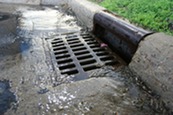
If you want to learn how to better control erosion and improve compliance with your Municipal Separate Storm Sewer System (MS4) permit, you'll want to attend the 2026 Minnesota Erosion Control Association (MECA) Conference & Trade Show, Jan. 27-29, 2026, in Mankato, Minnesota.
MPCA and city staff will be presenting a MS4 Permit Update, Audit-Proof Program and New MS4 Resources Pre-Conference Workshop on Jan. 27. Conference sessions (Jan. 28-29) will cover a wide range of stormwater and erosion topics.
For more information, CLICK HERE. Please register by Friday, Jan. 9, 2026.
|
 |
|
Winter Salt Week 2026 |
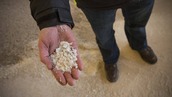
The MPCA is joining partners across the country to spotlight the growing challenge of excess deicing salt use that is washing into our lakes, streams, wetlands and groundwater with Winter Salt Week 2026 on January 26-30. The week is dedicated to helping communities understand the impacts of salt pollution and explore practical steps we can all take to protect freshwater.
Throughout the week, leading experts in environmental science, public works, engineering, and policy will share insights on smarter winter maintenance, community action, and innovative solutions already taking root. Local organizations are also hosting events around the state.
Join us daily at 12:30 CT for a series of free, live YouTube events. Register for notifications and links to the livestreams.
MPCA is also hosting an online Smart Salting for Community Leaders workshop in collaboration with Winter Salt Week on January 28 from 10:00am-12:00pm. The workshop is intended for city administrators, elected officials, homeowner or lake association board members, or any community decision makers and leaders.
Together, we can keep winter roads, parking lots & sidewalks safe and our waters healthy!
Terminating Your Construction Stormwater (CSW) Permit |
|
 |
As we head into winter and will begin spring in several months, one of the more popular topics for construction stormwater is submitting a Notice of Termination (NOT), which closes out your NPDES/SDS Construction Stormwater General Permit coverage.
Per permit requirements, you must terminate your permit within 30 days of meeting all requirements for termination. Unfortunately, it’s common that permits stay opened for years. Terminating your permit in a timely manner helps ensure you are no longer responsible for permit requirements and the MPCA can keep track of active permits more accurately.
There are several conditions you need to meet before terminating your permit. Some of the more common permit items related to termination include establishing uniform perennial vegetation (often grass), removing temporary synthetic BMPs, and submitting photos of site conditions.
To learn more about terminating your CSW Permit, you should reference sections 4 and 13 of the CSW General Permit, which list the conditions for closing out your permit. Additionally, you can visit the MPCA’s CSW website to find helpful links and guidance documents for how to take NOT photos and how to submit the NOT through e-services.

We use salt to manage snow and ice in Minnesota. Unfortunately, salt also creates a problem for freshwater fish and other aquatic life when it runs off into our lakes and streams. It can impact drinking water sources when infiltrating into our aquifers. To keep our waters healthy and high quality, salt users need to limit usage while still keeping sidewalks, streets, and parking lots safe.
While the 2025-2030 Industrial Stormwater General Permit is not yet available to be applied for, it is important for permit holders to be aware of the new permit's salt management requirements. Permittees can get a head start on compliance with the new permit by ensuring implementation of these new requirements listed below.
- Salt piles must be covered or within a storm-resistant shelter.
- Implement practices to reduce exposure when adding to or taking from salt piles such as frequent sweeping, stormwater diversion, or other salt containment practices.
- Create plans in the Stormwater Pollution Prevention Plan (SWPPP) detailing how facility employees and contractors will minimize runoff contamination from salt usage.
- Ensure salt storage areas are identified on facility SWPPP maps.
- Train employees to use salt only in necessary areas and amounts.
You can send questions about these new requirements to the Industrial Stormwater Program’s email at, [email protected].
We encourage businesses to learn more about salt’s impacts to the environment and how to effectively manage salt usage by participating in the MPCA’s Smart Salting Program. To learn more, please visit the Smart Salting webpage at https://www.pca.state.mn.us/business-with-us/smart-salting-training. The training provided will help winter maintenance managers learn best management practices, how to calculate application rates, and how to use weather condition information more effectively.
|
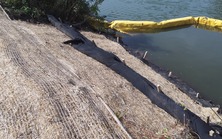
The Construction Stormwater (CSW) Permit requires that contractors install sediment control best management practices (BMPs) to minimize sediment leaving a construction site. Contractors must establish sediment control BMPs on all downgradient perimeters before any land disturbing activities begin.
The CSW permit also requires sediment control BMPs on any downgradient areas of the site that drain to a surface water, including curb and gutter systems. BMPs must be repaired, replaced, and supplemented throughout the life of the project when needed, and contractors must not remove them until permanent cover has been established on a site.
Permanent cover does not include temporary BMPs such as wood fiber blanket, mulch, and rolled erosion control products. Permanent cover does include gravel, concrete, perennial plants like grass, or other landscaped material that will permanently prevent soil erosion. Contractors must establish a uniform perennial vegetative cover (i.e. evenly distributed, without large bare areas) with a density of 70 percent in order to meet the requirement for “permanent cover”. Sediment control BMPs may be removed only once all upgradient areas have established permanent cover.
Visit the Minnesota Stormwater Manual for more information on BMPs.
|
 |
|
Host or attend a Smart Salting training this season!
|
MPCA Smart Salting Certification trainings explain how salt works, effects on the environment, and how to keep surfaces safe while saving money and minimizing salt use. Select a certification training for the work you do or try a refresher if you are already certified.
The MS4 General Permit includes a training requirement for winter maintenance staff or contractors to help reduce chloride and Smart Salting trainings meet those requirements. Find details about the New Rural Roads certification training or the topic-specific 3-hour refreshers on the MPCA Smart Salting Certification training page.
Hands-on winter maintenance staff should attend either the Roads, Rural Roads or the Parking lots & Sidewalks training.
Roads Certification – 5 year individual certification
- None scheduled, contact MPCA to host a public or private training!
Rural Roads Certification NEW – 5 year individual certification
- Thursday, January 22 (North Branch) Register
Parking Lots & Sidewalks Certification – 5 year individual certification
Property managers, environmental professionals, business owners, MS4 permit staff should attend:
Property Management Certification – 3 year individual certification
Email the MPCA’s Chloride reduction program at [email protected] with questions or to host a training.
TMDLs and MS4 audits
Total Maximum Daily Loads (TMDLs) are part of routine MS4 audits. For reference, MPCA inspectors review permit items 22.3-22.7 in addition to Minimum Control Measures (MCMs) 1-6.
Total Maximum Daily Load (TMDL) Wasteload Allocations (WLAs) approved by the U.S. Environmental Protection Agency (EPA) prior to the November 16, 2020 issuance date of the MS4 (Municipal Separate Storm Sewer System) General Permit (permit) must be addressed by permittees in their Stormwater Pollution Prevention Program (SWPPP).
TMDLs are a tool that we use to restore impaired waters by reducing pollutants of concern in stormwater runoff to Minnesota’s lakes, rivers, streams and wetlands. The MS4 permit requires municipalities to each do their part to restore impaired waters. Most regulated municipalities have a TMDL for bacteria (Escherichia coli or fecal coliform). Some municipalities have a TMDL for chloride (salt), temperature, nitrate, phosphorus, or suspended solids.
How to know if your municipality has a TMDL Waste Load Allocation (WLA)
MPCA created the 2020 Municipal stormwater permit TMDL WLAs list which is a spreadsheet that contains WLA information for all TMDLs approved prior to the effective date of the General Permit. Each line on the spreadsheet represents a different WLA. This spreadsheet also has a tab which lists the TMDL project webpage for each WLA. The information found on the TMDL project webpages and linked reports can provide helpful information to MS4s. Use the filter in Column A to select your municipality and see the list of applicable WLAs.
To see all WLAs, including those that have been approved after November 2020, please check out this report: Workbook: Municipal Stormwater Total Maximum Daily Load Allocations
The tableau report gives you a preview of WLAs that you will be responsible for under the next MS4 general permit.
Questions about TMDLs or WLAs?
Contact Anna Bosch, MPCA Environmental Specialist, 218-316-3929, [email protected]
|
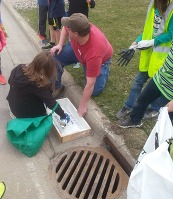
If you partner with another organization to accomplish a part of your Municipal Separate Storm Sewer System (MS4) Permit, you need to document that partnership.
Be sure to document which permit item you are accomplishing and with whom you are partnering.
You are required to have a copy of the permit items and maintain copies of any required permit documentation you are partnering on. The MPCA highly recommends the partnership has a written agreement.
Demonstrating a partnership can include a written agreement between the parties, written letter from a partner’s legal services, or other documentation describing how the permit requirements are being implemented or enforced by the partner. For regulatory mechanisms, you must also maintain a copy of the regulatory mechanism, such as the ordinance or policy language.
Remember, you are ultimately responsible to be in compliance with your MS4 permit. If you partner with another MS4 and the other MS4 has noncompliant items, you are ultimately responsible and in noncompliance.
Questions about partnerships and the MS4 permit , reach out to your MPCA MS4 staff contact.
|
|