Secured $3.2M to Assist in Rebuilding After September 2024 Storm
The Federal Highway Administration (FHWA) announced a $3,200,000 grant to assist in the rebuilding areas of North Carolina's Seventh Congressional District impacted by Potential Tropical Cyclone Eight (PTC-8) on September 16, 2024. The historic storm dropped more than 18 inches of rain in less than a day, causing significant flooding that undermined roads and caused washouts, pipe blowouts, and other storm-related damage to the State's Federal Highway System.
The storm caused significant damage to infrastructure across the district, and this grant is essential to helping our communities recover and rebuild. I’m grateful to U.S. Department of Transportation Secretary Sean Duffy and the Federal Highway Administration for prioritizing the needs of Southeastern North Carolina.
Lumbee Tribe of North Carolina Receives Full Federal Recognition
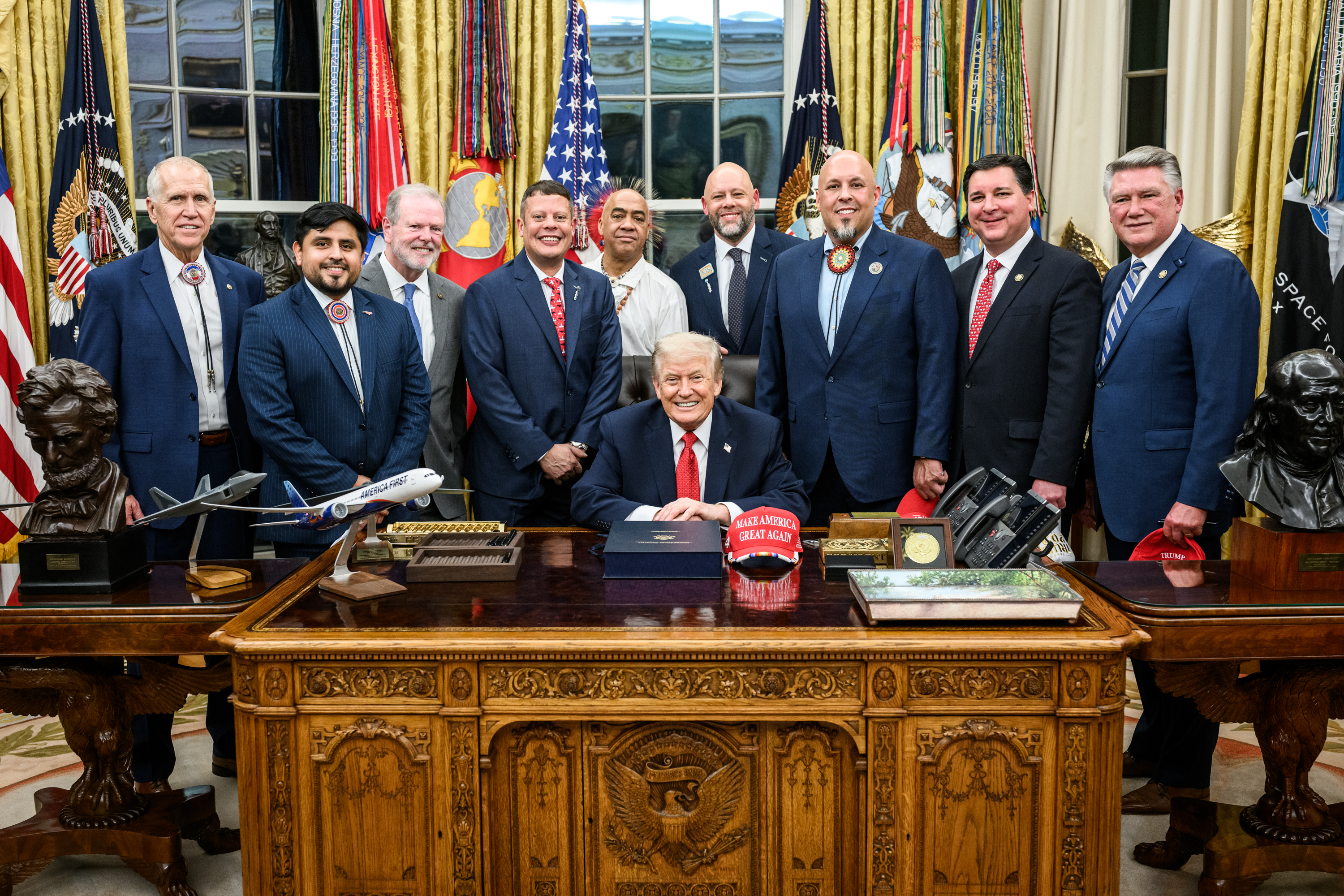
After years of determination and support, the Lumbee Tribe of North Carolina has finally received full federal recognition. Congress passed the Fiscal Year 2026 National Defense Authorization Act, which included the Lumbee Fairness Act, granting the Lumbee Tribe full federal recognition. With President Donald J. Trump’s signature, this long-overdue achievement is now law, ending generations of denied recognition.
This amazing achievement would not have been possible without Lumbee Tribal Chairman John Lowery’s leadership and the hard work of generations of Lumbee. Their voice has been heard, and their perseverance and faith in God has brought us to this historic moment.
I also want to commend and thank our current Senators Thom Tillis and Ted Budd as well as former Senators Elizabeth Dole and Richard Burr. Each of them have been staunch supporters of this effort, and Senator Tillis’ efforts have been nothing short of stellar. A number of my House colleagues in the NC Delegation have been strong advocates as well, including Mark Harris who now represents most of Robeson County.
This victory, decades in the making, is a moment of celebration for a community that has never wavered in its resolve. I am proud to stand with the Lumbee Tribe and with all who worked tirelessly to make this a reality.
Improving Safety on U.S. Transit Systems
In September, as Chairman of the Highways and Transit Subcommittee, I led a bipartisan roundtable discussion with transit officials, law enforcement officials and stakeholders to discuss the need to identify actionable solutions to improve safety on publicly funded transportation systems to help restore the public’s trust in transit.
I also participated in a House Judiciary Committee field hearing in Charlotte, North Carolina. The hearing evaluated the rise in violent crime in American cities, the radical, pro-criminal policies instituted in liberal cities across the country in 2020, and the failure of judges to keep violent criminals off the streets.
The deadly stabbing of Iryna Zarutska on Charlotte’s light rail is a stark reminder safety must be at the center of our national transit conversation. While law enforcement and the justice system have their obligations to keep the public safe and ensure justice prevails, Congress has an obligation to address any shortcomings in federal statute that could improve deterrence and prevention to enhance public safety.
This transit safety roundtable was an essential and initial step in ensuring every rider can feel safe when they step onto public transit. By bringing together transit leaders and law enforcement, we are focused on real, actionable solutions to protect riders, strengthen community confidence, and uphold the fundamental promise of safe, accessible public transportation systems for all Americans.
You can listen to my House Judiciary Committee field hearing remarks here.
Introduced Bipartisan Healthy Drinking Water Affordability Act
I introduced the bipartisan Healthy Drinking Water Affordability Act, also known as the Healthy H2O Act, with Congresswoman Chellie Pingree (D-ME-01). This legislation would provide grants for water testing and treatment technology directly to individuals and nonprofits in rural communities. Systems that improve water quality — whether installed at the faucet or within a building — can provide immediate and ongoing protections from known and emerging water contaminants, per- and polyfluoroalkyl substances (PFAS), lead, and nitrates.
The Healthy H2O Act would help rural residents in the Cape Fear Valley gain access to safe, clean drinking water free from harmful contaminants. As city and county water systems continue upgrading to address these pollutants, this legislation would help ensure rural communities aren’t left behind by supporting testing and the installation of effective filtration systems to remove ‘forever chemicals.'
Bolstering Disaster Preparedness and Recovery
Every year, North Carolinians must prepare for severe weather events. To make the hardening of all homes more affordable in preparing for natural disasters, I introduced the Disaster Assistance Fairness Act, a bi-partisan bill, to provide cooperative residential communities with the same assistance after disasters as others.
Hurricane seasons remind us that natural disasters do not discriminate among neighborhoods, location, or housing arrangements. No matter your living situation, every individual deserves the same access and support during recovery from natural disasters. Unfortunately, under FEMA’s current eligibility rules, individuals and families that have co-ops and homeowner associations do not have access to FEMA’s Individual Assistance program to cover the damage of common-area elements, increasing their share of the costs to repair and/or rebuild. The Disaster Assistance Fairness Act allows communities that have HOAs to receive the same assistance as everyone else.