|
 |
The Year of the Great Unplugging
Intercollegiate Review | Conservatism's sharpest voices, curated weekly. ISI's weekly newsletter brings you the best in serious conservative thought.
|

| |||||||||||||||


AI and the Value of Work
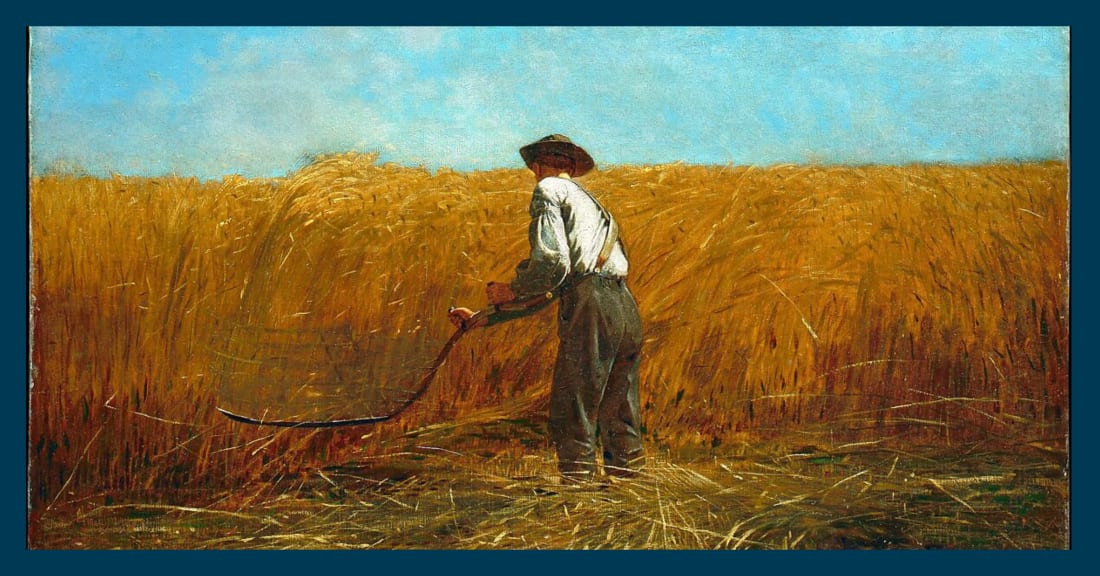 |
Over the last several years, AI tools have been rapidly incorporated into many aspects of work and daily life. Commercials promote the latest AI assistants, professionals across all industries struggle to integrate chatbots into their fields, and thousands of Americans worry their jobs might be at risk.
In an essay for First Things, Ricky McRoskey considers the hidden costs of outsourcing our work to AI. Drawing on Pope John Paul II’s encyclical Laborem Exercens, McRoskey identifies two ends of human work: the objective and the subjective. The objective end concerns the tangible result of work—the finished product offered for the benefit of society. The subjective end, however, concerns the effect that work has on the worker himself, such as a deepening of experience or the acquisition of knowledge.
McRoskey argues that AI tools have been promoted largely because of their objective results. However, far less attention has been paid to how AI undermines the subjective ends of work. While it may make our work more efficient, AI undermines our critical thinking skills and weakens our ability to live and work independently of the machine.
McRoskey concludes his essay with a series of helpful questions to ask when deciding whether to use an AI tool for a given task. Read more here.
|
The Great Unplugging of 2025
 |
As we turn the page on 2025, it’s worth reflecting on the ways the world has changed. Although technology, especially in the realm of AI, is advancing, many people around the world are pulling back from the digital universe. For them, the past year marked a deliberate unplugging from the machine and a return to reality.
In his column for UnHerd, Ryan Zickgraf reflects on what he calls “the year of the Great Unplugging.” He suggests that President Trump’s reelection and alliance with Big Tech oligarchs such as Elon Musk jolted mainstream liberals into realizing that technology was outside their control. As a result, even mainstream media outlets have begun questioning the tech maximalism that defined the 21st century. At the same time, Gen Z has testified loudly to the damaging effects of an online childhood, and millennial parents are responding by reinstalling landlines and rejecting smartphones.
Zickgraf warns, however, that the tech industry is fighting back. As social media devolves into a wasteland filled with automated interactions, platforms are rushing to integrate gambling into the digital experience, encouraging users to bet on sports, current events, and celebrity gossip. Yet even these desperate efforts, he suggests, will fail to reach those who have intentionally turned off their screens.
Read the rest of Zickgraf’s reflection on the Great Unplugging of 2025 here.
Compendium
Every article we feature here is available to read for free. Articles from paywalled publications are available through gift links.
Valerie Stivers on the turn toward Catholicism among artists in UnHerd.
Audrey Pollnow on the legalization of physician-assisted suicide in New York in First Things.
Edward Welsch on the recent Minnesota fraud and the need for remigration in Chronicles Magazine.
Leah Libresco Sargeant on hospitals behaving badly under new laws in The New Atlantis.
Myron Magnet on the possibility of restoring American exceptionalism in The New Criterion.
Brian Allen on the biggest art discoveries of 2025 in National Review.
 |
Upcoming ISI Events
If you enjoy what you’re reading here, we invite you to engage with ISI at one of our upcoming in-person events.
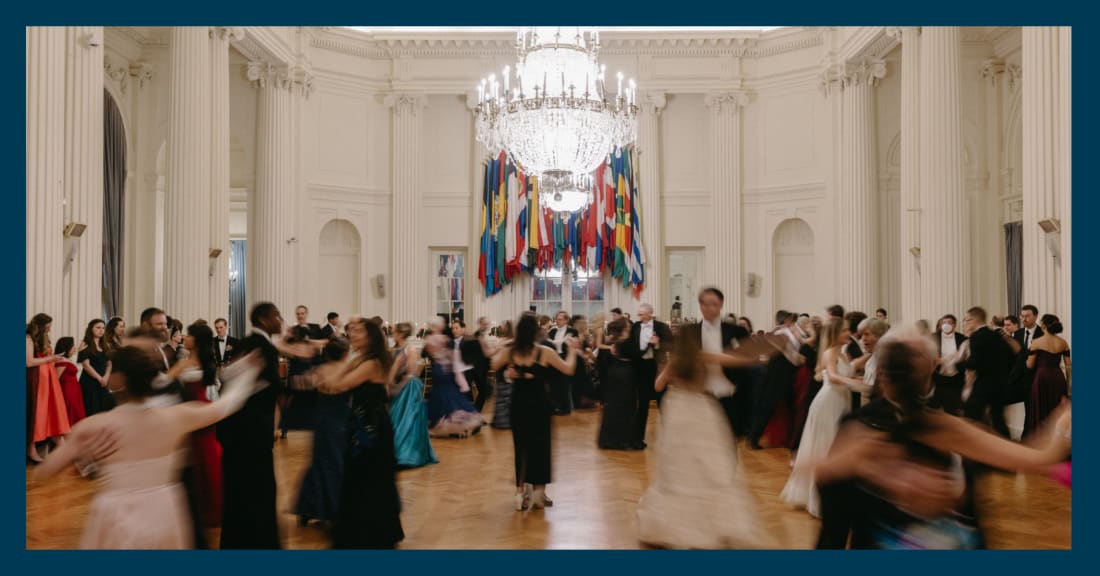
43rd Annual Evening of Viennese Waltzing | February 7 | Washington, DC
Join the Intercollegiate Studies Institute on Saturday, February 7, at The Organization of American States for the 43rd Annual Evening of Viennese Waltzing! This annual event brings together over 200 couples for a luxurious recreation of the sumptuous balls of turn-of-the-century Vienna.America 500 Gala for Western Civilization | April 30 | Washington, DC
The America 500 Gala for Western Civilization is the flagship event of ISI’s America 500 Campaign that celebrates America’s 250th anniversary. Join us at the Andrew W. Mellon Auditorium on Thursday, April 30, 2026, for an elegant evening with inspiring speakers.Conservative Book of the Year Award Ceremony and Luncheon | May 1 | Washington, DC
ISI’s annual Conservative Book of the Year Award Ceremony honors a distinguished nonfiction work that has contributed to the advancement of conservative thought. Join us on May 1 for a luncheon buffet, award ceremony, and panel discussion in Washington, DC.
Visit our events page on our website to see all upcoming events.
Thanks for reading Intercollegiate Studies Institute! Subscribe for free to receive new posts.

This week, from ISI’s Digital Media:

As America celebrates its 250th anniversary this year, the latest episode of Modern Age with Dan McCarthy revisits the Declaration of Independence and its enduring claim that “all men are created equal.” Dan explores why the Founders grounded equality in a Creator rather than in birth, society, or the state. That theological foundation, he argues, shapes a very different understanding of liberty, property, justice, and political authority than today’s secular rights language.
Subscribe to Modern Age with Dan McCarthy here.
Humanism on the Big Screen
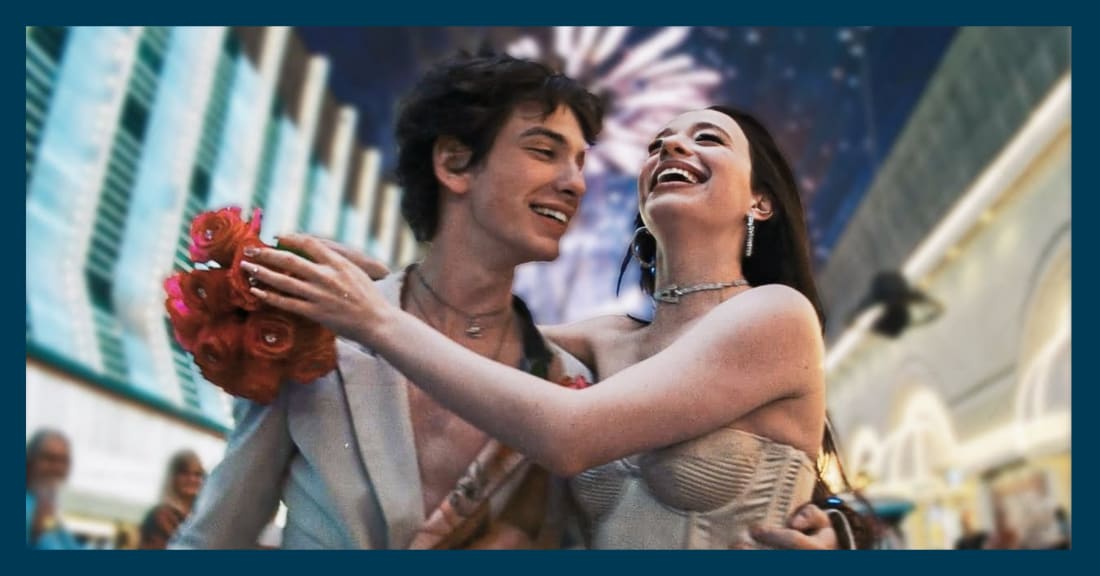 |
These days, the movies that receive the most attention tend to boast big budgets and spectacular effects. However, the films that stay with us the longest are often those that capture the human experience in a unique and touching way. Movies such as It’s a Wonderful Life are watched year after year because they remind us what it means to be human.
In this week’s Modern Age article, Noah Millman reviews three films from 2024—Hard Truths by Mike Leigh, Nickel Boys by RaMell Ross, and Anora by Sean Baker—that he says “impressed [him] with the sincerity of their humanist commitments.” While Hard Truths’ protagonist is distinctly unlikable, Leigh’s portrayal ultimately reminds audiences of their shared humanity. Nickel Boys experiments boldly with point of view and, in Millman’s opinion, with mixed results; however, he still finds that it “achieves moments of striking beauty and emotion” that set it apart from much of today’s cinema. Anora was the most commercially successful of the three, and Baker’s experimentation with genre conventions and his commitment to emotional realism make its protagonist touchingly memorable.
Despite their differing strengths and weaknesses, Millman concludes that all three films reflect what he sees as filmmaking at its best: the medium’s ability to reveal what we might otherwise overlook and to expand our understanding of humanity by immersing ourselves in the experiences of others.
Read the rest of Millman’s review here at the Modern Age website.
Modern Age is ISI’s flagship publication. Visit modernagejournal.com and subscribe to receive a free daily newsletter.
“More than machinery we need humanity.
More than cleverness we need kindness and gentleness.”
–Charlie Chaplin, The Great Dictator
Celebrate America’s semiquincentennial with ISI and help shape the next 250 years of our country. Your support of the America 500 Education Fund will help ISI reach, teach, and launch the next generation of conservative leaders. Visit isi.org/america500 to learn more.
| ||||||||||

