What Is In This Newsletter?


  • 47's Success is Engineered Inequality: The K Curve
  • Our Biggest Project Yet!
  • Update on Congressional District 4 Race
LinkedIn Share This Email

I have recently been introduced to the so-called “K curve,” and it is not very curvy at all. It is especially brutal for those of us living in rural Washington.


A K curve describes a sharp split in outcomes within a population. It is effectively the opposite of a bell curve. A bell curve represents what we consider normal distribution, where most people cluster somewhere in the middle. The K curve is the opposite of normal. It represents engineered inequality, and it should come as no surprise that this outcome is being driven by the far right.


A clear example of the K curve can be found in the recent announcement that America is “great again,” boasting 4.3 percent GDP growth. No one disputes that 4.3 percent growth is strong. But with even a modest amount of scrutiny, the good news quickly sours.


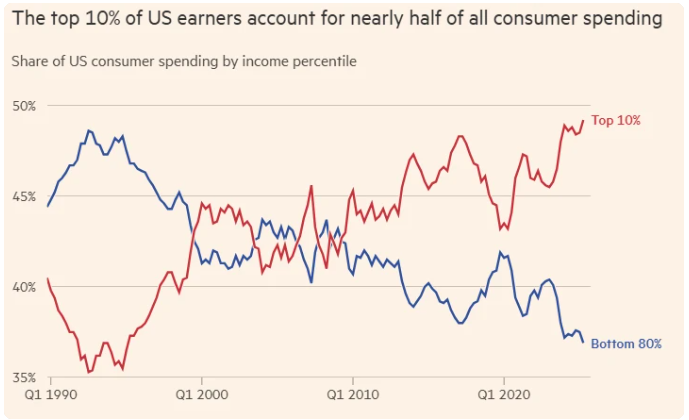
Two things stand out immediately. First, the GDP bump appears to be driven largely by optimism following 47’s reversal of his logic defying tariff crusade. Markets seem to be reacting to the hope that he may have briefly come to his senses. Second, and far more troubling, is that nearly all of that growth flowed to the wealthiest third of households. The middle class gained little to nothing, and the lowest income households are stagnant or sliding backward.

Trading View reporting Moody's analytics December 24, 2025


Not since Reaganomics has there been such a sustained and deliberate assault on the middle and working class in this country. None of us needed an economist to explain this. In fact, as soon as I typed the words “economic policies,” I had to stop and laugh because the idea that this chaos qualifies as policy is absurd. But here we are.


As people who believe in long term economic health, we should be striving for a bell curve, or better yet, one that skews upward for the lower and middle classes. History is clear. Investing in working people pays dividends across society. Concentrating wealth in the hands of a few inevitably ends in instability, unrest, and eventually revolt.


The reality is that roughly two thirds of Americans are worse off today despite glowing GDP headlines. Wages are stagnant. Unemployment is rising. And rural Washington is getting hit hardest.

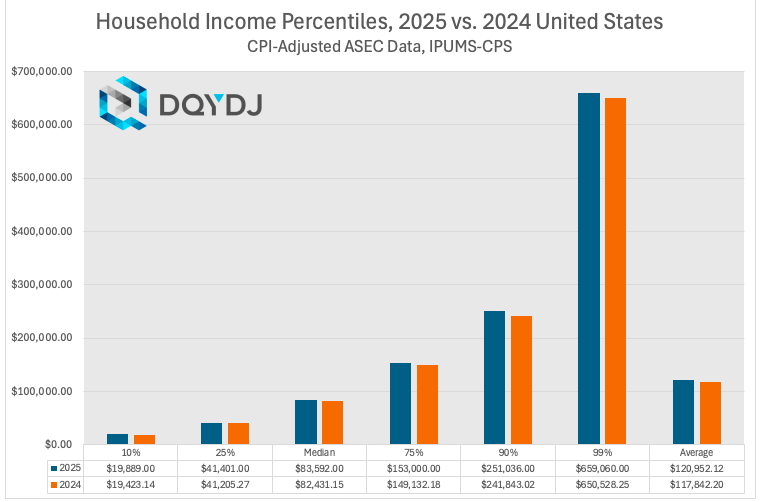
DQDYJ reporting median and average household incomes by percentile


Looking specifically at Congressional District 4, which includes Okanogan, Douglas, Grant, Yakima, Benton, Klickitat, and parts of Adams and Franklin counties, the numbers tell a grim story. Despite Washington being one of the wealthiest states in the country, and despite CD4 containing pockets of wealth like the Methow Valley and the Tri Cities anchored by Hanford, the median household income in the district is about $75,000 a year. That is nearly $25,000 below the statewide median and roughly $8,000 below the national median. If we look at averages, the household income in Congressional District 4 is almost $50,000 less than the state and national average.


By every meaningful measure, this district sits on the lower end of the economic scale. We are feeling the full force of 47’s economic chaos, and the K curve makes that painfully clear.


The pain is real. How do we translate lived economic reality into votes?


Our most significant project yet!


Rural Americans United believes that all politics is local, and we are committed to informing, persuading, and activating rural voices to participate fully in the democratic process. Through progressive, rural focused outreach, we have blanketed Washington with radio ads, funded the Granny Caravan, supported grassroots organizations, delivered a newsletter centered on rural issues, and engaged first time voters through direct mail. We are just getting started. 


In 2026, we will launch our most ambitious effort yet, organizing listening sessions with local grassroots partners, translating those voices into compelling messaging, and deploying thirty strategically placed billboards across Central and Southwest Washington to reach youth, Latino communities, families, and seniors who are too often ignored. At a time when local media is shrinking and misinformation is everywhere, trusted, visible, community rooted communication matters more than ever. 


To make this work possible, we must raise $89,000 now. If you already support Rural Americans United, thank you, and we ask you to consider doing more. If you are able to make a leadership investment of $5,000 or more, please reach out so we can ensure the best possible tax advantage for your support.


Congressional District 4 Race Update


For a brief moment, it looked like Democrats might finally have a shot at flipping Washington’s 4th Congressional District after Do Nothing Dan slithered into retirement. He will not be missed. After a decade in office, his only real assignment should have been passing a Farm Bill, and he could not even manage that. Ten years of stagnation is his legacy.


So things should be better, right? Not even close.


The Republican field is already shaping up to be a mess. Jerrod Sessler, the perennial MAGA conspiracy candidate, is back. Despite endorsements from 47 and praise from the Washington State MAGA apparatus, he has been unable to raise meaningful money and continues to prop up his campaign with personal loans. That tells you everything you need to know.


Then there is Yakima County Commissioner Amanda McKinney, the latest addition to the MAGA cesspool. She has positioned herself as a Trump loyalist, backed by the Kirks, yes those Kirks. Rumor has it she already has $1.8 million pledged. That kind of money does not come from grassroots donors, which means independent expenditure groups are already circling CD4.


On the Democratic side, the situation is not encouraging. The only declared Democrat, John Duresky, made serious missteps early and his campaign has yet to find its footing. If he cannot correct course quickly, we are headed for another cycle where Democrats fail to clear the starting line.


There are two potential candidates who could dramatically alter the race. Republican State Senator Matt Boehnke of the Tri Cities is widely seen as competent, well liked, and pragmatic. He also has the single most important asset in this district: name recognition in the Tri Cities. You cannot win CD4 without winning the Tri Cities. That said, the gravitational pull of MAGA money and pressure has corrupted better people than him.


The other possibility is Nick Bumpous, president of Local 598 Plumbers and Steamfitters. If he runs, likely as a Democrat or Independent, he would immediately command labor support and Tri Cities recognition. At this moment, he would be the strongest Democratic contender.


And yet, here is the hard truth. None of these candidates are truly positioned to represent Congressional District 4. Sessler is unserious. McKinney appears intent on turning the district into a MAGA enforcement zone while suppressing economic growth. Boehnke and Bumpous have spent their entire careers focused on the Tri Cities and Hanford cleanup funding, important issues, but far from the whole district.

CD4 is bigger, poorer, and more complex than any one ideology, party, or personality. Voters here deserve representation that understands agriculture, labor, healthcare access, housing affordability, and the daily economic pressure facing rural families.


What we are being offered instead is loyalty to a person, a party, or ideology. That is not representation. And unless something changes, CD4 will once again be left behind.

Facebook  Instagram  Email