In 2025, USAFacts readers sought clarity on the data behind some of the nation's most debated topics—from crime trends and immigration patterns to political divides and how the federal government collects its revenue. As conversations intensified, readers turned to nonpartisan facts to cut through the noise. Here are the 10 most-read articles from USAFacts this year: |
|
10. How many voters have a party affiliation?
Americans remained interested in the number of voters with a declared political affiliation long after the presidential election. As of August 2025, 45% of all registered voters had declared a party affiliation — 37.4 million registered as Republicans and 44.1 million as Democrats. Fun fact: this was also the #10 article of last year. 9. How many people work for the federal government?
As of August 2025, the federal government employed just under 3 million people. It was the 14th largest workforce across all industries nationwide and represented less than 2% of all employee jobs. 8. What can the data tell us about unauthorized immigration? |
|
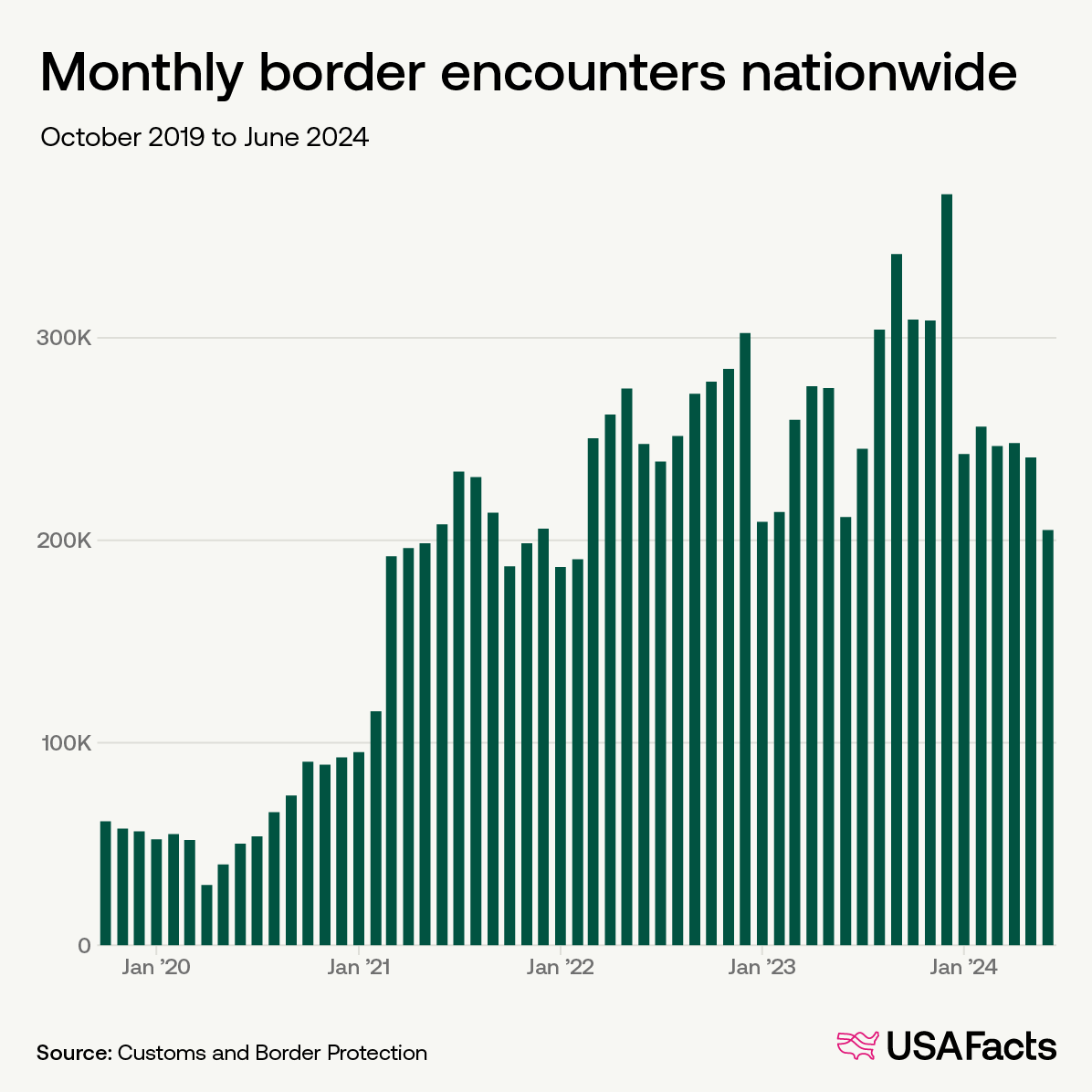
Americans were interested in this data all year. Between October 2019 and June 2024, US Customs and Border Protection (CBP) recorded just under 11 million border encounters nationwide. These numbers include multiple crossings by some individuals. Monthly border encounters hit a high of over 370,000 in December 2023 (that’s about 12,000 daily, or more than eight per minute). 7. Which states rely the most on federal aid?
In fiscal year 2021, federal grants comprised roughly 20% of states’ total revenues. This paid for services including healthcare, education, social programs, infrastructure projects, and public safety.
Montana had the largest share of federal funds in its budget: 31.8%. Vermont relied the least on federal money; it was 12.8% of its budget in 2021. Meanwhile, California received the most federal aid in absolute terms, it ranked as the second-least dependent state.
6. How red or blue is your state?
After the 2024 elections, readers sought information on state political profiles. During the 10 presidential elections since 1988, 41 states supported candidates from the same party at least eight times. Twenty states and Washington, DC, voted for the same party’s candidates in all 10 elections.
5. Which countries own the most US debt?
|
|
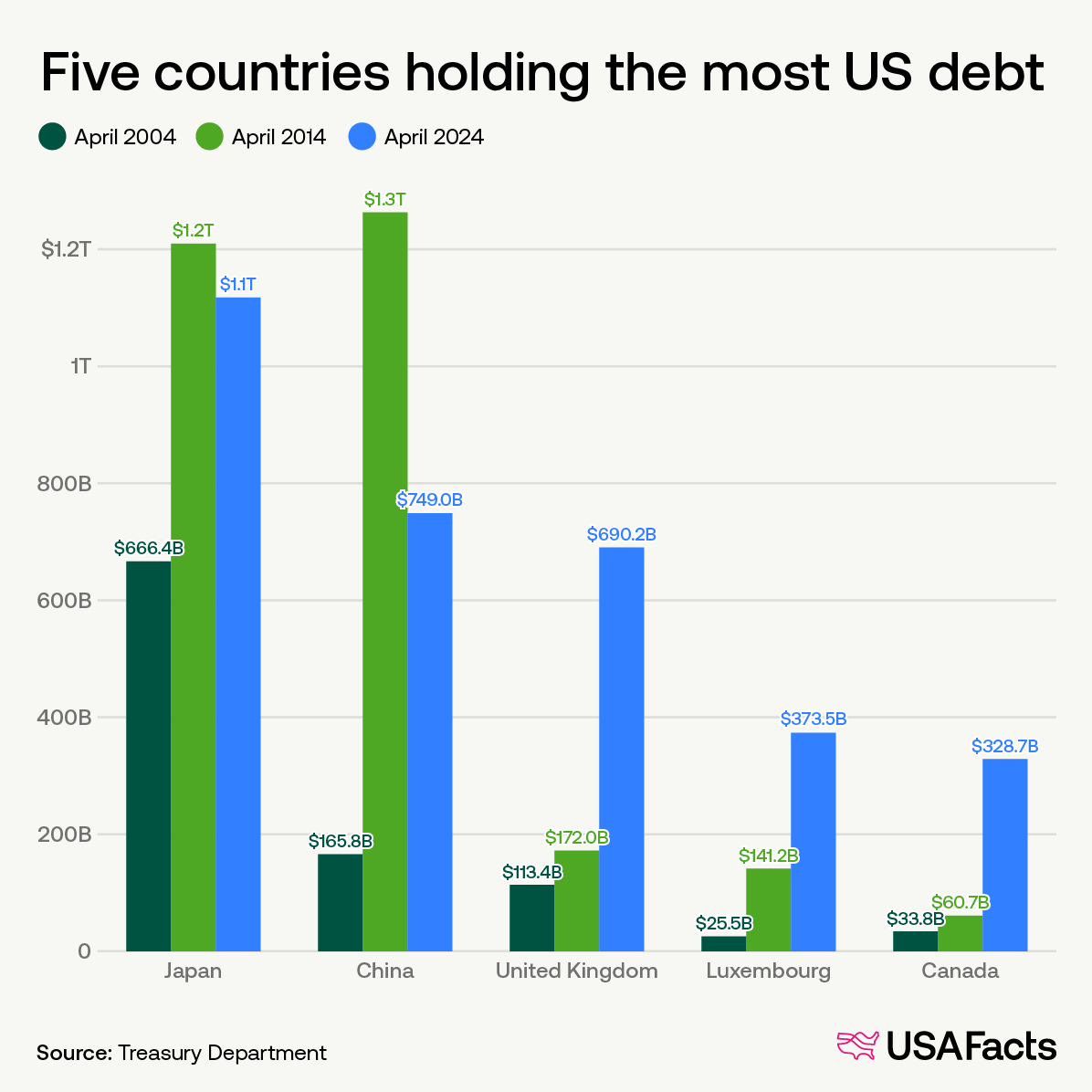
As of April 2024, foreign countries owned approximately 7.9 trillion in Treasury securities — that’s 22.9% of total US debt. The five countries owning the most US debt were Japan ($1.1 trillion), China ($749.0 billion), the United Kingdom ($690.2 billion), Luxembourg ($373.5 billion), and Canada ($328.7 billion). 4. Which states have the highest murder rates?
In 2023, Mississippi, Louisiana, and Alabama had the highest population-adjusted homicide rates. In contrast, New Hampshire, Utah, and Rhode Island had the lowest rates. Mississippi’s homicide rate was more than 10 times New Hampshire’s.
3. Which states contribute the most and least to federal revenue?
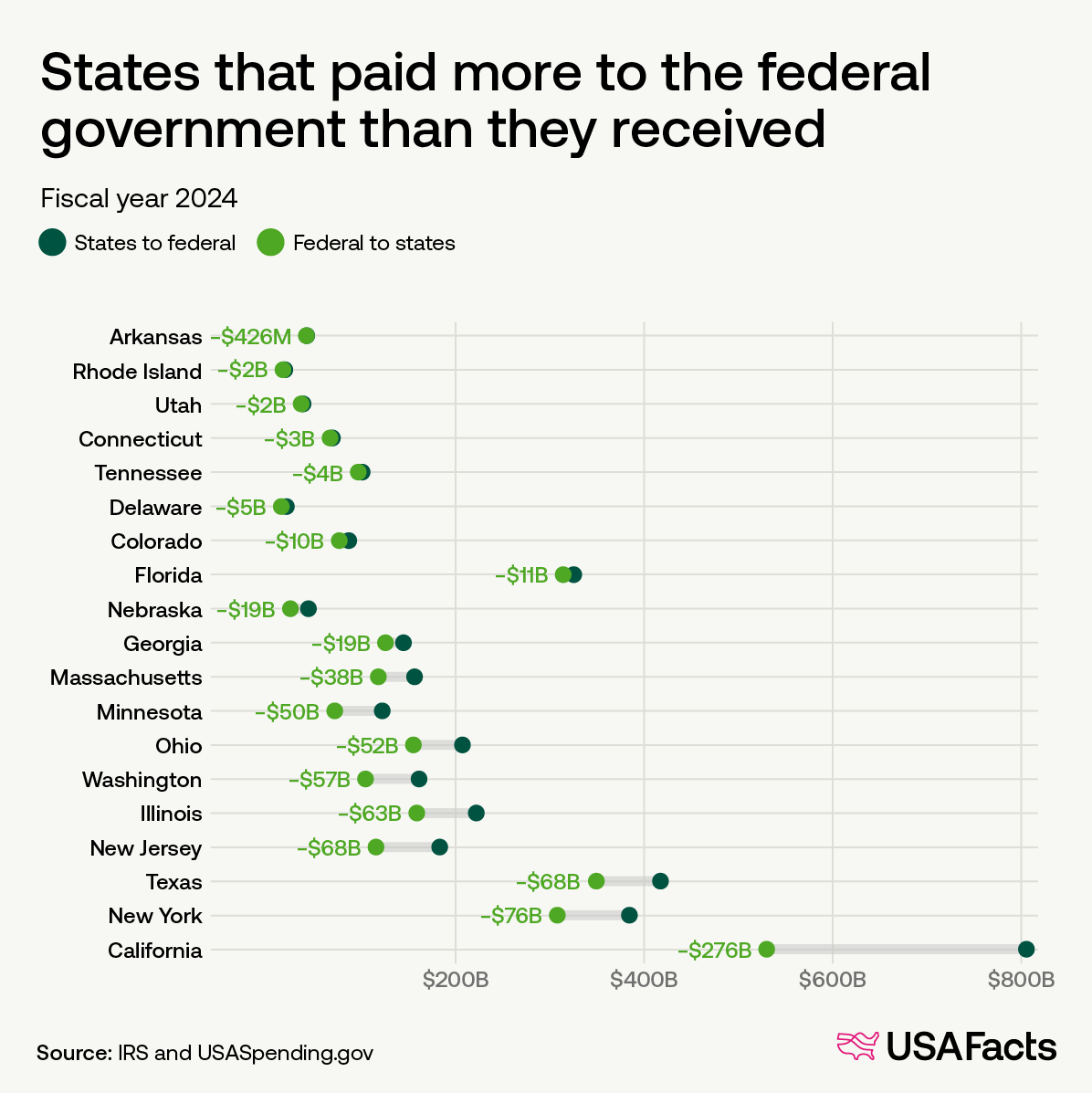
Nineteen states sent more money to the federal government than they received in fiscal year 2024. |
|
Californians paid about $275.6 billion more to the federal government than they received, while Virginians received about $89.0 billion more than they paid.
In FY 2024, 38% of federal revenue came from the nation’s four most populous states. Meanwhile, some less-populated states generated more than their populations would suggest. Massachusetts sent $21,933 per person to the federal government, Nebraska contributed $21,922, and Minnesota sent $21,106.
2. Everything you need to know about a government shutdown
The recent US government shutdown began on October 1 and ended on November 12. It lasted 43 days, making it the longest in US history. Americans sought to understand why shutdowns happen and how they trigger furloughs, reduced services, closed parks and museums, and more. 1. Which cities have the highest murder rates? |
|
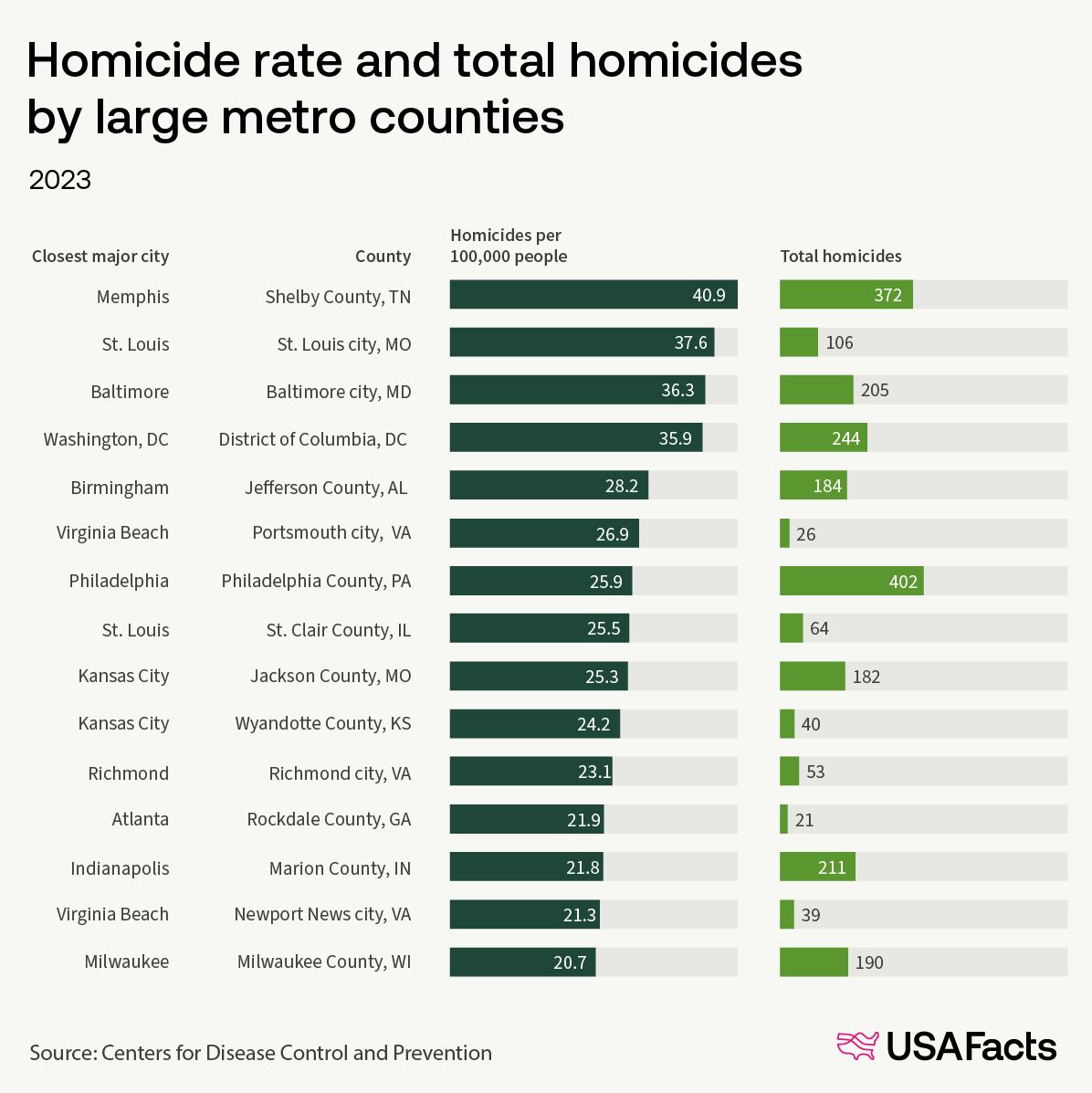
There were 22,830 homicides in the US in 2023 — an average of about 6.8 deaths per 100,000 people. The national homicide rate has been above 6.0 since 2020. The home counties of New Orleans; Memphis, Tennessee; St. Louis; Baltimore; and Washington, DC, had 2023’s highest homicide rates. The lowest rates in large urban areas were in the home counties of San Jose, Anaheim, and San Diego, California; Plano, Texas; and the borough of Queens in New York.
Thanks for being part of this fact-filled journey. We’ll be back next Monday with more data.
|
|
|
|
|