How Swinomish youth sparked a clean energy movement
The Swinomish Indian Tribal Community, located on Swinomish Channel along the Puget Sound in Skagit County, is guided by a longstanding ethic of environmental stewardship, salmon health, and responsibility to future generations. For the Tribe, protecting the salmon is inseparable from caring for the land and waters that sustain them, an obligation rooted in culture, diet and identity. This worldview shapes every decision: take only what you need, and consider the next generation who will inherit what you leave behind.
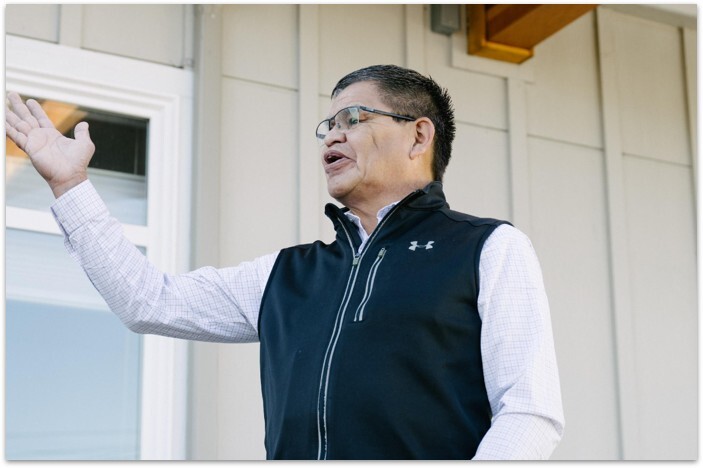
Swinomish Tribal Chairman Steve Edwards. Photo courtesy of the Swinomish Indian Tribal Community.
That mindset also sparked the Tribe’s clean energy transformation. It began with a simple question from Swinomish youth: “Why don’t we have solar?”
Tribal elders and leaders listened, and that moment began a series of projects that are reshaping energy systems, lowering bills, improving resilience, and laying the groundwork for future careers in clean energy.
From vision to action: A plan moves forward
Like many communities, Swinomish had a written clean energy plan but lacked the funding to bring it to life. The youth’s insistence and their desire to help their community become more self-reliant re-energized the conversation. Tribal leadership committed to moving forward in a way that aligned with long-held cultural values: strengthening the community, protecting natural resources, and creating opportunities for tribal members.
Through a partnership with the Washington State Department of Commerce, the Tribe was able to take major steps toward those goals. To date, Commerce has invested $6,450,939 across seven clean energy projects in the Swinomish Indian Tribal Community, including five funded through the Climate Commitment Act.
Together, these projects are helping to power homes, strengthen essential services, and build a more resilient energy future for generations to come.
Project spotlight: Apartments and cottages solar and microgrid
The first Commerce-supported project to move forward was the Apartments and Cottages Solar and Battery Backup Microgrids, a transformative investment of $1,753,156 in affordable Tribal housing.
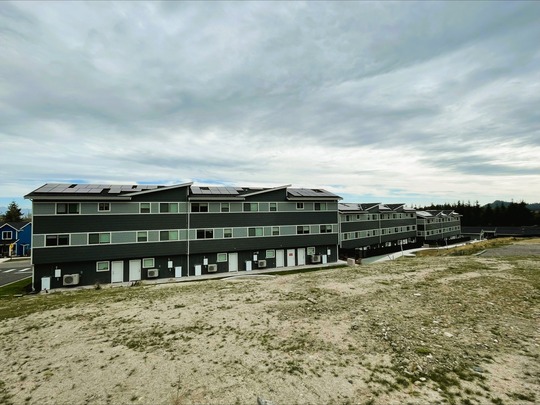
Swinomish Indian Tribal Community tribal-owned apartments equipped with solar, battery storage and heat pumps.
This project equips a new development of three townhouses and six cottages with a single-node solar and storage microgrid. The system provides:
- Significant utility savings for 33 households
- Backup power during outages, which are common in the area
- Increased energy independence for tribal residents
- An expanded tribal renewable energy portfolio
For many families, the impact is dramatic. Some have seen their monthly energy bills drop from roughly $160 to as low as $10, which directly supports household stability and economic security.
Project spotlight: Youth Center resiliency hub microgrid
Soon after the tribe’s first successful microgrid collaboration with Commerce launched, a flagship project emerged: the solar-plus-storage system for the Swinomish Youth Center Resiliency Hub.
The Youth Center is a critical facility for the community. It houses a large commercial kitchen and cafeteria, a gymnasium used for community gatherings and emergency support, and the Tribe’s youth center and playground.
During emergencies or disasters, the Youth Center becomes the primary community and resource hub, which means it can provide reliable services and support during emergencies. The solar-plus-battery system ensures it can continue providing essential services, even when the power goes out. The project will:
- Improve emergency preparedness
- Reduce generator run time
- Lower energy costs by generating solar power and reducing peak electricity use
- Provide reliable, on-site renewable power
A partnership with the local fire district further strengthens emergency planning and response, ensuring the facility can support the wider community during outages or natural disasters.
Why energy storage matters
Energy storage is a cornerstone of the Tribe’s clean energy approach. Paired with solar, battery systems can:
- Increase reliability
- Balance the variability of renewable generation
- Reduce grid stress
- Enable higher renewable penetration
- Ensure clean energy is available when it’s needed most
Storage also generates economic value by minimizing demand charges, reducing curtailment, and improving system flexibility. For a community that experiences frequent outages and places a high value on self-reliance, it’s a powerful tool for cultural, economic and energy resilience.
Creating jobs and building a future
One of the Tribe’s core goals is to turn these projects into long-term employment pathways for Tribal members. The community is developing workforce programs to allow young people to build careers in solar installation, energy storage, and system maintenance, transforming a youth-led question into lasting economic opportunity.
And perhaps most importantly, the youth who first asked, “Why don’t we have solar?” have now seen their voices shape real change. They learned that their ideas matter and their generation will play a central role in shaping Swinomish’s clean energy future.
Looking ahead
The partnership between the Swinomish Indian Tribal Community and the Department of Commerce demonstrates what’s possible when culture, community leadership, and clean energy investments align.
For the Swinomish people, this work is more than infrastructure. It’s an extension of their responsibility to protect the land, salmon, and community for those who will follow.
|