Palestinian Authority 'Help' Is a Trap for Washington: Trump Has the Opportunity to Break a Cycle of Defeat
by Pierre Rehov • December 28, 2025 at 5:00 am
The Palestinian Authority is not a neutral Muslim-majority entity seeking peace. Its doctrine has, for decades, blended conventional diplomacy with asymmetric warfare — using terrorism as an instrument of policy. In the last decade, this double game has not disappeared. It has merely learned to speak the language of Western guilt. Countries in the West have actually rewarded its terrorism, both by continuing lavishly to fund it and by climbing over one another to recognize a fictitious, nonexistent "Palestinian State."
Palestinians in Gaza might be tired of Hamas, but that does not mean they are ready to live peacefully side-by-side with Israel.
Just imagine the Palestinian Authority inside Gaza's reconstruction ecosystem, with access to donor funds, humanitarian logistics, and institutional channels. Reconstruction money is not neutral. It creates influence, dependency, and leverage. The Palestinian Authority understands this better than anyone.
The Palestinian Authority does not recognize Israel and most likely has no intention whatsoever of dismantling Hamas. For the Palestinian Authority, "reconstruction" offers laundering its legitimacy, access to institutions, long-term influence, and the chance, once President Donald Trump leaves office, of being deliciously positioned to do anything it likes.
For Israel, this scenario is existentially dangerous. Israel would be expected to tolerate a hostile foreign security architecture on its southern border while remaining ultimately responsible for the consequences of its failure. Any future escalation — rocket fire, tunnel reconstruction, arms smuggling — would place Israel in an impossible position: to act militarily and be accused of attacking "the forces for peace " or refrain and absorb the threat. Either choice is unacceptable.
For Washington, the trap is more subtle but equally severe. Once the United States endorses a framework, it becomes politically and financially invested in its survival. Billions of dollars in aid, contracts, and diplomatic capital follow. At that point, acknowledging failure becomes almost impossible. The priority shifts from solving the problem to preserving the framework — even as security deteriorates.
A post-war Gaza that is not fully demilitarized -- and remains that way -- will not stay quiet. Hostility will mutate.... Reconstruction will become camouflage. And the international presence meant to stabilize the situation will end up institutionalizing the very forces it was supposed to eliminate.
That is why this "Palestinian Authority solution" is a terrible idea for Israel — and a strategic trap for Washington: It offers the appearance of control while in fact hollowing out any real security.
Trump's instinct to reject endless wars and failed orthodoxies is sound. Both Gaza and Ukraine are littered with the wreckage of peace processes divorced from security realities, aid policies disconnected from accountability, and diplomatic frameworks that rewarded rejection.
Trump's real challenge is to resist the temptation to confuse participation with solution. The Middle East is full of actors eager to "participate" in Gaza — not to neutralize the threat it presents, but to shape its outcome to their advantage. The Palestinian Authority's interest in Gaza should be understood not as an act of goodwill, but as a bid for expanded power in a conflict that resonates across the Islamic world.
Accepting such a compromised "solution" will create a familiar pattern: the United States funds, legitimizes and protects bad actors, while constraining Israel and empowering hostile intermediaries. When the stabilization force then inevitably collapses, Washington will be told that the failure was due to insufficient patience, insufficient funding, or insufficient engagement — never to the flawed premise itself. Trump has an opportunity to break this cycle.
The opportunity requires drawing a clear red line that reconstruction comes only after demilitarization, not the reverse. Stability is the outcome of security, not a substitute for it. Legitimacy therefore cannot be granted to any actors whose strategic culture depends on permanent confrontation with Israel.
The Middle East does not need another "grand framework" built on diplomatic wishful thinking. It needs fewer illusions, fewer intermediaries, and clearer consequences -- ones that are actually implemented.
If Trump listens to the siren songs that promise order without disarmament, he will inherit the failures of his predecessors. If he refuses — and insists on realities rather than rituals — he may yet reshape the post-war equation.
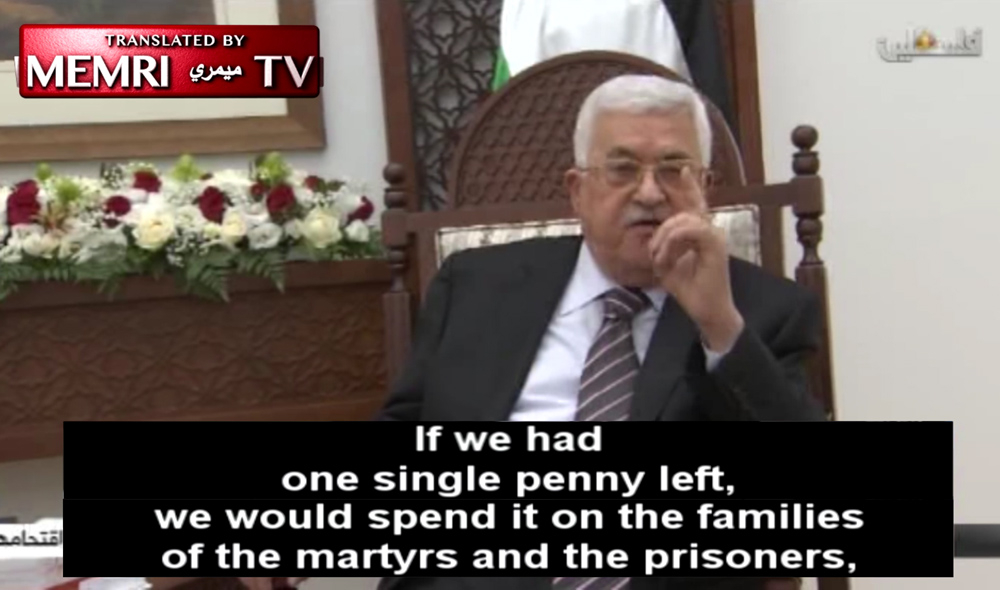
In Washington, there is a recurring temptation: when a crisis becomes exhausting, any actor offering "help" starts to look like a partner. The reconstruction of Gaza has reached that stage. The rubble is real. The humanitarian pressure is real.
The Palestinian Authority is not a neutral Muslim-majority entity seeking peace. Its doctrine has, for decades, blended conventional diplomacy with asymmetric warfare — using terrorism as an instrument of policy. In the last decade, this double game has not disappeared. It has merely learned to speak the language of Western guilt. Countries in the West have actually rewarded its terrorism, both by continuing lavishly to fund it and by climbing over one another to recognize a fictitious, nonexistent "Palestinian State."