|
 |
Epstein University: How Jeffrey Epstein Bought His Way Into Elite Academia
Inside the donor culture that traded access, silence, and credibility for money
|

| |||||||||||||||


 |
 |
By Ellie Leonard, Blue Amp Media Contributing Editor
When I wrote the article “How Jeffrey Epstein Cosplayed His Way Into Harvard” last July, I knew it was unfinished. There were too many stories about chance meetings, unqualified positions in higher academia, and unfathomable leaps in income that, on paper, still don’t make sense.
How does a guy with no college degree get a job teaching math and physics at a K-12 private school that today costs $67,840/year? How does he bounce onto Wall Street and make millions, then end up with an office and a key card at Harvard?
I knew there was more to the story, more money, and certainly more victims, as students recounted seeing Epstein at their parties, the only teacher who ever went.
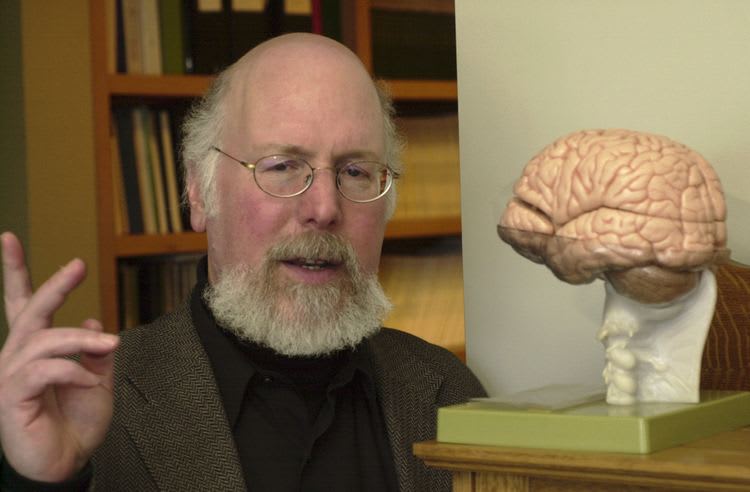 |
Epstein made his way into Harvard’s good graces with a $200,000 donation to the school’s psych department, led by chair Stephen Kosselyn. He’d make another $6.5 million payment to Marvin Nowak, head of the Program for Evolutionary Dynamics, a research program (i.e. not an actual department), in 2003. This led to said key card and “Jeffrey’s Office,” and he was appointed a visiting fellowship two years later.
Upon his arrest in 2006 for sexual trafficking of a minor (which led to his 2008 “sweetheart deal”), Epstein withdrew his application for the 2006-2007 school year. However, he visited Harvard often and kept his social position on campus, including his office, until 2018.
In July, I interviewed a student from the Program for Evolutionary Dynamics, who graduated in 2005. The following quotes are from that interview.
“Nowak is a renowned evolutionary biologist,” the student said, “he was wooed to Harvard from the Institute of Advanced Study at Princeton—he’d been at Oxford before that—with the promise that he’d get to run this Program for Evolutionary Dynamics that was being founded on the basis of an Epstein donation.”
Epstein had planned to give much more.
“Word on the street then was that $30 million was promised. The rest of the money never materialized, which led to some problems down the line, and eventually resulted in the program being shuttered in disgrace.”
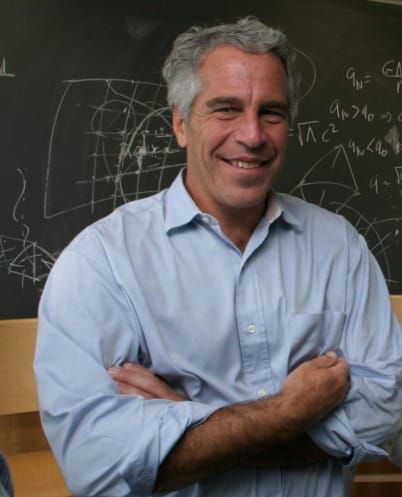
He talks about Epstein’s other-worldly presence, drawing in students, and more often professors, who viewed him as a kind of legend on campus, fawning on him every chance they got, both for his money and sheer proximity.
“Due to Epstein’s largess, the program was housed in a fancy office space on the top of a building in Brattle Square, had lovely views, excellent free coffee, lots of reasons to go there and just hang out. [Epstein] occasionally made ‘state visits,’ as it were, and usually when he came there would be a to-do. Celebrities would gather to greet him. This was very much part and parcel of the culture at Harvard at the time.”
The students surmised that Epstein wouldn’t have received the treatment he got, had it not been for the donations, but noted that Epstein seemed more interested in the science than most donors. The professors felt flattered, he said, as if they, too, held some high-level status when he was around.
 |
 |
When asked why someone without a college degree could receive a fellowship at an Ivy League school, the student downplayed the notion.
“I suppose the context in which these sort of things happen is that there has been, with the years, increasing professionalization - or let’s say ‘corporatization’ seeping deeper into every nook and cranny of the university, with many arrangements that used to be ubiquitous and informal becoming increasingly formalized over the years. So Kosselyn arranged that fellowship.” The student shrugs. “So yeah, it’s nepotism or quid-pro-quo, but those things weren’t considered a big deal because they weren’t.”
I ask him about Harvard’s response to the first scandal in 2006.
“They pretend now that they put their foot down very hard and said, ‘no, no,’ and were, you know, all righteousness and probity. But I think the prevailing attitude was, ‘Yeah, you can’t [receive donations] directly anymore; it would look bad,’ but it was not an excommunication. I would think with a nod and a wink, the professors who’d been the beneficiaries of his largesse in the past, were encouraged, and certainly not discouraged, from maintaining some level of ties with Epstein.”
At some point Harvard began taking indirect payments as a way to distance themselves from Epstein, but maintain funding.
“So Leon Black ended up giving money for the [Program of Evolutionary Dynamics], and when asked, denied that he took the money from Epstein to give.”
 |
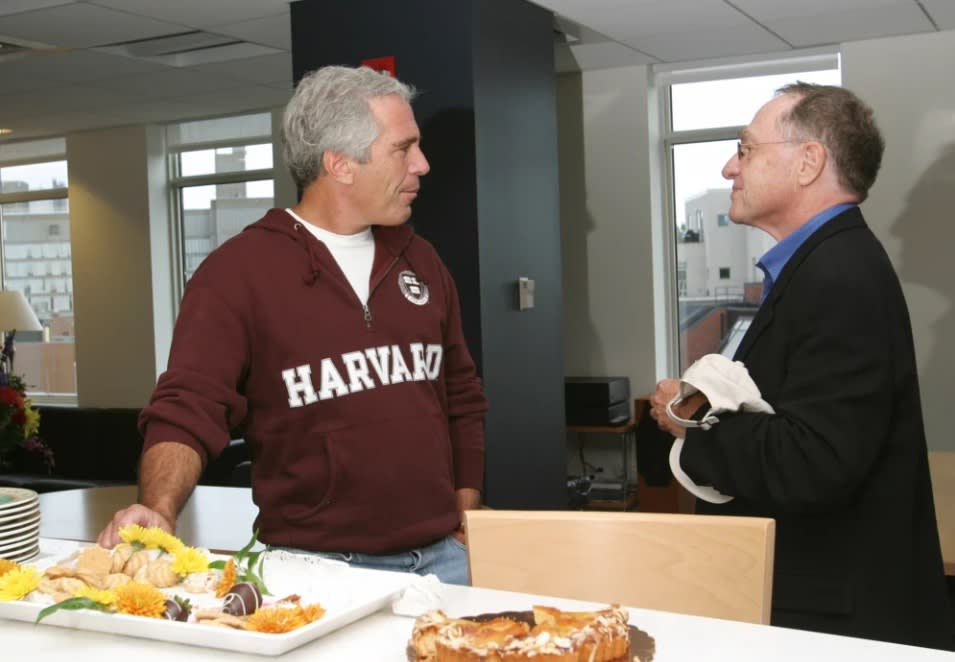
Leon Black, co-founder of the private equity firm Apollo Global Management, would later be flagged by JPMorgan as one of four main actors (also Alan Dershowitz, Glenn Dubin, and Leslie Wexner) participating in nearly 4700 transactions that totaled more than $1 billion. This also included transfers to Russian banks and “sensitivities around his relationships with two U.S. presidents,” Donald Trump and Bill Clinton.
 |
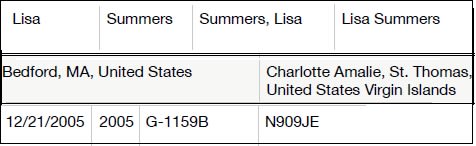
The student says that in 2016 Epstein also made private payments to Elisa New, a professor of poetry at Harvard, who just so happened to be Larry Summers’ girlfriend. And Larry Summers just so happened to be the former President of Harvard. Both New and Summers flew to Epstein’s island, Little Saint James, in 2005.
 |
Ultimately the student stands up for Martin Nowak, the head of his department.
“Harvard ended up making Martin Nowak the scapegoat for all of this, and tried very, very hard to fire him, and ultimately failed to find grounds to fire him, but has continued making his life miserable.”
The student found no fault in Nowak, claiming that he simply was in the wrong place at the wrong time.
“[It’s] a damn shame. He is an excellent scientist and was overall a nice guy.”
The student remembers that Epstein had a reputation among grad students in the Program for Evolutionary Dynamics, and that he was “well-known to have an eye for the ladies.” He says Epstein often brought along a young female companion “probably around my age at the time,” who looked like a model. “And though she was introduced as Epstein’s ‘assistant,’ her role seemed to be entirely decorative.” Epstein didn’t often invite students to his soirees, but he did remember one.
“There was a very up-and-coming female graduate student, also very good-looking, who got an invitation to join some professors who were all being invited to Epstein’s ranch in New Mexico.”
I finished the interview, put away my notes, and honestly didn’t think about the things the student said for many months, hoping I might pull from it at some point if I needed an academic perspective.
Then Virginia Giuffre’s book came out.
“One thing that was happening, and with increasing regularity, was that I was being sexually trafficked by Epstein and Maxwell. The second person I was lent out to was a psychology professor whose research Epstein was helping to fund.” - Virginia Giuffre
Epstein made his way into Harvard’s good graces with a $200,000 donation to the school’s psych department, led by chair Stephen Kosselyn. Virginia Giuffre does not expressly mention Kosselyn’s name, and so he cannot directly be linked to the above statement.
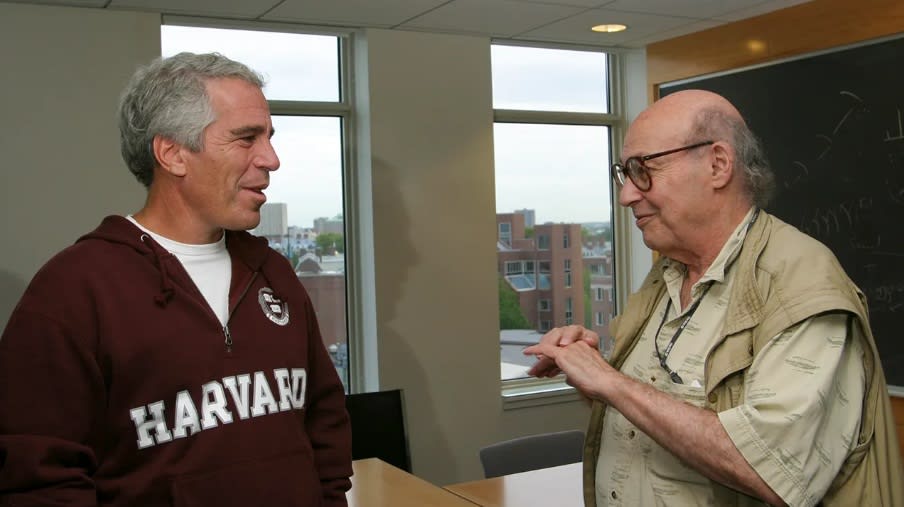 |
She was also trafficked to computer scientist and MIT professor Marvin Minsky, known as the “father of AI.” He was in his 70s at the time; Virginia was 17.
“I will never forget Minsky’s bald head, and the way his face seemed to have shriveled like one of those folk-art dolls whose heads are dried-up apples. Throughout my time having sex with Minsky, I could hear the waves lapping outside the little room. I tried to focus only on that sound.” - Virginia Giuffre
Jeffrey Epstein paid $850,000 to support Minsky’s work at MIT and fund the MIT Media Lab. Only $100,000 came before his 2008 conviction for procuring a minor for prostitution. The other $750,000 came after, continuing until 2017.
The Program for Evolutionary Dynamics announced its closure in 2021, following an investigation into Martin Nowak’s relationship with Jeffrey Epstein after 2008, which included cited policy violations, negligence, and unprofessional conduct. Vicky Ward’s 2003 article “The Talented Mr. Epstein,” gave evidence of his unabashed involvement with the disgraced financier.
“Nowak says that, when he goes to stay with Epstein in the Caribbean, they’ll get up at six and, as the sun rises, have three-hour conversations about theoretical physics. ‘Then he’ll go off and do some work, re-appear, and we’ll talk some more.’” - Vicky Ward, Vanity Fair
At the time Epstein had pledged $25 million to Harvard to create the “Epstein Program for Mathematical Biology and Evolutionary Dynamics.”
In 2011, Nowak would write a book, SuperCooperators, in which he described Little St. James as “a luxury retreat with patina-finished roofs, and a mile-long beach dotted with palm trees.” This was three years after Epstein’s first conviction for sexually abusing a minor.
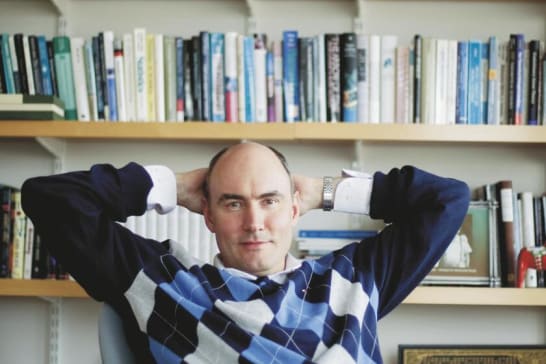 |
Martin Nowak is still working as a professor of mathematics and biology at Harvard University.
Former psychology chair at Harvard, Stephen Kosselyn, is now the President and CEO of Active Learning Sciences, Inc., a AI-based company that creates educational programs.
Marvin Minsky died in 2016, three years before Jeffrey Epstein would be arrested at Teterboro Airport.
 |
You're currently a free subscriber to Blue Amp Media. For the full experience, upgrade your subscription.
| ||||||||||

