
If you are inspired by Jackie’s note below and want to make a difference in the fight to end gun violence, please subscribe to our Substack today.
John,
I was 17 when my class huddled on the floor, the room silent except for our breathing as we watched the small window in the door, unsure if a gun might appear. Hours later, we learned that 17 classmates and teachers had been killed elsewhere on the campus of Marjory Stoneman Douglas High School in Parkland, Florida, on February 14, 2018. Everything about our world changed in that moment, split into the life we had before and the one we were forced to begin after.
The experiences of students at Brown University this past weekend are eerily reminiscent of what my classmates and I went through that day. Students sheltering in place, holding their breath, and hoping the gunman didn’t choose their classroom to enter next.
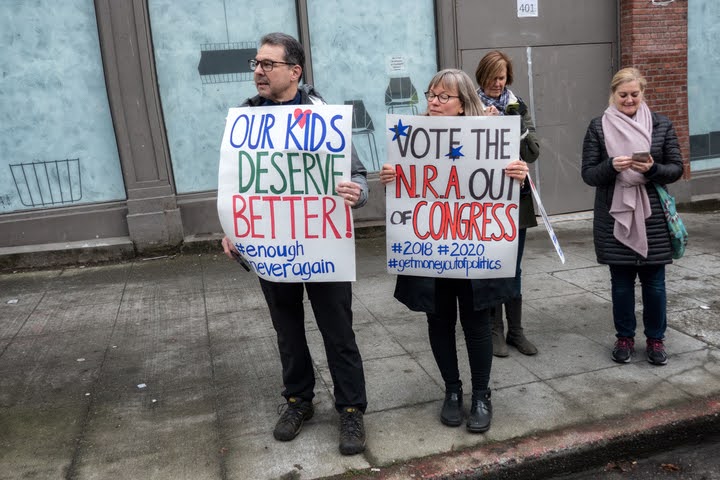
When the world began to move on from what happened at Marjory Stoneman Douglas High School, we refused to follow. My classmates and I helped start March For Our Lives because we could not accept a country willing to look away while children were killed in their classrooms. We did not have a roadmap. We only knew silence was not an option, and, somehow, a group of teenagers pierced the armor of the gun lobby and forced the country to confront a crisis it had long ignored.
Young people went on to win battles no one expected. We helped weaken the NRA’s political dominance. We pushed hundreds of gun safety laws across the finish line in statehouses nationwide. Millions of young people voted in 2018 with ending gun violence as a top priority.
Since then, the crisis has only deepened. Gun violence remains the leading cause of death for young people in America. Twelve young people die from gun violence every single day. Entire communities live in permanent grief. And, now, the federal government is rolling back violence prevention efforts and opening a “gun rights office” inside the Department of Justice.
There is a specific heartbreak in realizing that the world you worked to change continues to fail the generation growing up after you. But we are not hopeless. The same generation that flooded the streets after Parkland is still here. We are older now, more strategic, and far less willing to wait politely for adults to decide whether our lives matter.
March For Our Lives is prepared to meet this moment with a five-year plan that strengthens what has always driven our movement: disrupting complacency, applying pressure, and reshaping a culture that treats gun violence as normal.
1. We will expose the people and institutions enabling gun violence
Gun violence persists because powerful people enable it through political decisions, corporate ties, and industry influence that rarely faces scrutiny.
Over the next five years, we will run targeted national campaigns that reveal who is profiting from this crisis and who is blocking solutions. This year, we launched “Parkland Pam,” a campaign to expose Attorney General Pam Bondi’s record of taking NRA money and rejecting reforms that could have saved lives. That approach to accountability will be expanded nationwide.
2. We will bring youth stories into the places the country cannot ignore
Most Americans know the statistics, but they rarely see the quieter truths behind them: the untouched bedroom, the unopened college acceptance email, the sibling who jumps at sudden sounds. Stories like these show the human toll of this crisis in ways data cannot.
Youth stories will be placed in cultural spaces that shape public attention, including festivals, creator platforms, gaming communities, public art, and unexpected installations. By meeting people where they already gather, these experiences will be harder to dismiss and harder to scroll past.
3. We will turn moments of national attention into real action
Young people often want to help but do not know where to begin. We are creating a clear path forward.
Our digital action hub will offer quick and meaningful ways to engage, from emailing lawmakers to mobilizing for key votes to joining rapid-response protests. It will help young people take action from wherever they are and will grow into a digital community that can move together when it matters most.
4. We will train a new generation of survivor-leaders
Survivors have always given this movement its moral clarity. Their voices shaped the nation after Parkland and continue to carry a power that cannot be replicated.
We are building a national cohort of survivor-leaders who will receive training, support, and real platforms to shape public understanding. Narrative change drives policy change, and survivor-leaders are central to both.
Why this will work
MFOL’s strengths—digital fluency, authenticity, moral authority, and cultural relevance—align with what this moment demands. Young people already influence culture every day, and when that influence is coordinated, it becomes political power.
We are clear-eyed about the forces working against us. The new gun rights office inside the Department of Justice is a huge setback after MFOL’s important work in establishing the former White House Office of Gun Violence Prevention. In Florida, efforts are already underway to roll back the reforms passed after Parkland.
But the gun lobby is miscalculating. It is betting on fatigue. It is forgetting what young people have already accomplished. We pushed dozens of major corporations to cut ties with the gun lobby after Parkland. We helped pass nearly 70 gun safety laws in a single year, including red-flag laws and expanded background checks. These victories happened because young people acted together.
I will never know who my 17 classmates and teachers might have become. I do know that young people have changed this country before, and we can do it again. Over the next five years, we’re building the future we hand to the next generation—one in which safety, not gun industry profits, defines our lives.
If you want to hear more from March For Our Lives, or just stay up to date on the progress of our movement against gun violence prevention, subscribe to our Substack here.
Sincerely,
Jackie Corin
Executive Director
March For Our Lives
