|
FOR IMMEDIATE RELEASE
Dec. 22, 2025
Jeff Johnston, EGLE Public Information Officer, [email protected], 517-231-9304
Michigan State of the Great Lakes Report builds on decades of policy leadership, programs, stewadship
Annual publication delves into major accomplishments and challenges in Michigan waters
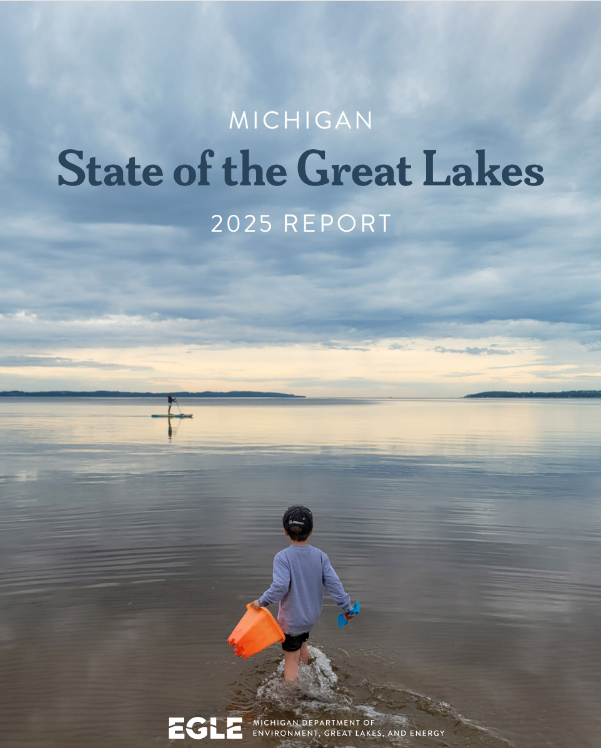
LANSING, Michigan —Today, the Michigan Department of Environment, Great Lakes, and Energy (EGLE) released the 2025 Michigan State of the Great Lakes Report. The annual report explores major accomplishments, issues, initiatives, and challenges related to the health and sustainability of our Great Lakes – the world’s greatest surface freshwater system.
The 2025 report focuses on how individuals, communities, organizations, universities, tribes, and governments unite around the waters, ecology, and economy of Michigan’s Great Lakes.
“Michiganders share a remarkable privilege – and responsibility – to protect and sustain our water resources great and small. Our lakes, rivers, and groundwater drive our economy and shape our way of life,” said EGLE Director Phil Roos. “The 2025 State of the Great Lakes Report underscores the progress we’ve made, the challenges that remain, and the power of collective action. I believe it will inspire continued commitment and innovation.”
By statute, EGLE’s Office of the Great Lakes (OGL) prepares and submits the report each calendar year to the state Legislature on behalf of the Governor. The report is also posted online along with recent years’ editions.
“This year marks the 40th anniversary of the office created in statute by former U.S. Ambassador and Michigan Governor James Blanchard with the recognition that the Great Lakes are central to our way of life, our communities, Michigan’s economy, and our heritage,” said EGLE Great Lakes Senior Advisor and Strategist Emily Finnell, who leads the OGL. “Our work to develop state and regional policies, implement programs, collaborate with partners, and steward our Great Lakes today shapes the health, resilience, and sustainability of these waters for generations to come. This work is our greatest challenge and our greatest opportunity.”
This year’s report highlights activities affecting numerous communities and every Great Lake bordering Michigan. It addresses topics including environmental cleanup, waterfront restoration and revitalization, invasive species, Michigan’s flora and fauna, and growing Michigan’s blue economy. Here’s a cover-to-cover list:
-
Michigan’s OGL and its mission to lead policy development and strategic implementation of programs to protect, restore, and sustain the Great Lakes and grow the next generation of water stewards at home and abroad after 40 years.
-
The former Muskegon Lake Area of Concern and its successful comeback after decades of cleanups and restoration.
-
Detroit’s Ralph C. Wilson, Jr. Centennial Park and the community partnerships behind the newest park on the city’s riverfront.
-
Michigan groundwater management and how new software will improve the process for large-quantity water withdrawal requests.
-
Lake Erie harmful algal blooms and the challenge of reducing agricultural phosphorus runoff in the Western Lake Erie Basin.
-
The Michigan Maritime Strategy and opportunities for collective action, collaboration, and investment in sustainable maritime innovation and environmental stewardship in commercial and recreational marine sectors.
-
Manoomin, or wild rice, and tribal perspectives on honoring and protecting this traditional staple and cultural touchstone.
-
Innovative river plastics cleanup technology and a study exploring it as an option for Michigan’s Grand River.
-
Understanding microplastics and EGLE’s efforts to address the growing environmental and health concerns they pose.
-
The challenges of PFAS, the many ways these “forever chemicals” affect Michiganders and our environment, and the work of EGLE and other agencies to address the problem.
-
Protecting piping plovers in northern Michigan and rebuilding the population of this endangered shorebird.
-
Threats to lake whitefish from invasive mussels undermining this iconic Great Lakes species.
-
Sea lamprey control and the proven need to continue our work to manage this fishery-destroying invader.
-
Dam safety and the risks and costs of neglecting Michigan’s vital infrastructure.
About EGLE’s Office of the Great Lakes
The OGL develops policy and implements strategic programs to protect, restore, and sustain the Great Lakes watershed. The office collaborates with partner organizations to support sustainable water use and development of Great Lakes maritime resources; support vibrant and resilient communities; foster water stewardship; and advance science, research, and policy to solve the next generation of water challenges. Its mission is to ensure a healthy environment, strong water-focused blue economy, and high quality of life for Michiganders.
###
|