
John,
Forty-five million acres of national forest could lose protection across America. That's an area about the size of Washington state that could be carved up by roads, slashed by logging and torn up by mining.1
This plan from Agriculture Secretary Brooke Rollins would tear apart towering forests in 36 states and Puerto Rico -- from the Tongass National Forest in Alaska to the Osceola National Forest in Florida.
Meet a few of the national forests that are at risk:
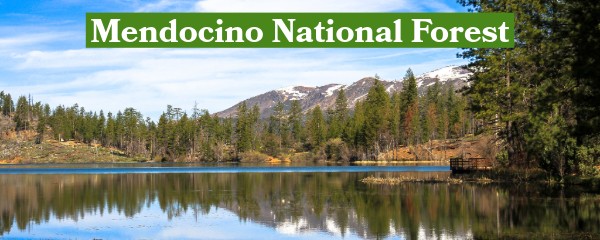
One of California's most tranquil forests, the Mendocino National Forest is the only national forest in the state that doesn't have a single paved road or highway cutting through it.2 Because it's so undeveloped, this forest is an amazing place for stargazing.
A few hours north of San Francisco, this forest starts in the foothills of the Sacramento Valley and rises to the North Coast mountains, encompassing both canyons and snowy peaks.
The last of Napa County's black bear population depends on this forest, including the delicious rainbow trout in its streams.3 By day, you can search for five different species of hummingbirds, and by night, you can listen for the hoots of spotted owls.
Dozens of different tree species fill out the forest, from cypress trees to junipers; from Douglas firs to sugar pines; from California black oaks to longleaf willows. This rugged forest is one of the 20 California forests at risk of being reopened to road-building, logging and mining. Four million acres of national forests in California are on the chopping block.4,5

In rural Missouri, the Mark Twain National Forest is part of the famed Ozarks. The oak, hickory and pine trees here were extensively logged in the early 1900s, leaving much of the region bald and abandoned. But since the wild areas in this forest were protected, it has recovered and the pines, oaks and hickories are standing strong today.6
This forest is a habitat for special wildlife only found in the region, such as the rare little blue heron and the Ozark hellbender. Cave salamanders, southern cave fish and three species of endangered bats live throughout the more than 500 caves in the forest.7,8
The most pristine and scenic spring in Missouri, Greer Spring, feeds into the Eleven Point River, flowing crystal clear through the trees.
Pockets of the Mark Twain National Forest are protected from road construction, logging and mining, but thousands of acres of southern pines and eastern hickories are in danger right now.

Just south of the border with Georgia, Florida's Osceola National Forest is also part swamp -- here you'll find forested trails to a hidden swimming hole with a swinging rope.
The Impassable Bay and Pinhook Swamp are the connective tissue from this forest to the Okefenokee Swamp. It's a natural wildlife corridor that gives panthers and black bears space to roam.9
More than 18,000 acres of the Pinhook Swamp and Impassable Bay are designated roadless areas, meaning they're off-limits to road construction and logging. If Secretary Rollins' plan to rollback roadless protections for our forests moves forward, this critical wildlife corridor could get chopped up and become impassable for animals.
As the cypress swamps give way to the southern pine forest, some very special animals find their perfect homes. The threatened gopher tortoise ambles through the well-spaced longleaf pines in the Osceola National Forest.10
Also dependent on this forest, the endangered red-cockaded woodpecker can only carve its home from mature pine trees at least 80 years old. These birds spend years creating cavities in the still-living pine trunks, hiding away from predators and foraging in the trees. If the older trees in this national forest were cut down, the red-cockaded woodpecker would lose some of its only remaining habitat.11
It took decades to grow the Douglas firs of the Mendocino National Forest and the longleaf pines of the Osceola National Forest. We can't let them be stripped away by the acre, leaving behind bare patches of stumps.
Secretary Rollins' proposal would revoke the Roadless Rule, which prevents road-building, logging and mining across more than 45 million acres of our national forests. We need to keep these forests wild.
This fall, Environment Colorado and our allies delivered more than 600,000 messages from people just like you to the U.S. Forest Service to keep our forests protected. In the year ahead, we'll need to continue speaking up for the trees, and we're glad you're with us.
Thank you,
Ellen Montgomery
P.S. Will you be a guardian for our forests? Donate today to defend the trees.
1. "Secretary Rollins Rescinds Roadless Rule, Eliminating Impediment to Responsible Forest Management," U.S. Department of Agriculture, June 23, 2025.
2. "Epic Adventures," Forest Service, March 31, 2025.
3. "Mendocino National Forest," Visit California, last accessed December 8, 2025.
4. "Animals and Plants," Forest Service, March 18, 2025.
5. Laura Deehan, "California's wild forests may lose Roadless Rule protections," Environment California, September 4, 2025.
6. "Archaeology and Cultural Resources," Forest Service, February 28, 2025.
7. "Threatened, Endangered, and Candidate Species," Forest Service, August 11, 2025.
8. "Geologic Wonders," Forest Service, February 28, 2025.
9. "Discover History," Forest Service, April 9, 2025.
10. "Gopher Tortoise," U.S. Fish & Wildlife Service, last accessed December 8, 2025.
11. "Red-cockaded Woodpecker," U.S. Fish & Wildlife Service, last accessed December 8, 2025.
Your donation will be used to support all of our campaigns to protect the environment, from saving the bees and protecting public lands, to standing up for clean water and fighting climate change. None of our work would be possible without supporters like you. Environment Colorado may transfer up to $50 per dues-paying member per year into the Environment Colorado Small Donor Committee.
Environment Colorado, Inc.
1543 Wazee St., Suite 400, Denver, CO 80202, (303) 573-3871
Member questions or requests call 1-800-401-6511.
Facebook | Twitter

If you want us to stop sending you email then follow this link -- Unsubscribe.