Constitution Weekly-01.jpg

What’s New This Week

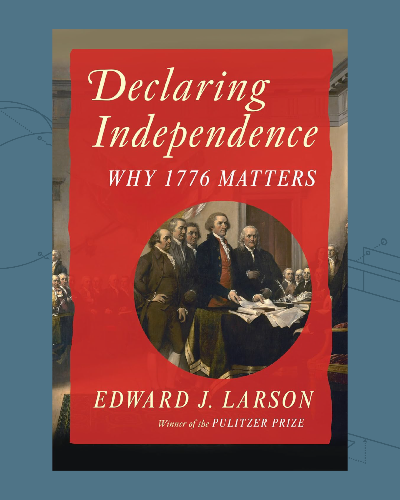
Ed Larson on Declaring Independence: Why 1776 Matters

Run time: 1 hour


Pulitzer Prize-winning historian Edward Larson discusses his newest book, Declaring Independence: Why 1776 Still Matters. This book traces the idea of American independence in one pivotal year—1776—and explores why this year continues to hold significance today. Jeffrey Rosen, president and CEO of the National Constitution Center, moderates. Listen now


We the People is available on Apple Podcasts, Spotify, or wherever you get your podcasts. Learn more

The Latest at Constitution Daily Blog

A look back at the Supreme Court in 2025

by Scott Bomboy | Read time: 5 minutes


“The past year was a significant one for the U.S. Supreme Court, with notable decisions related to the First Amendment, nationwide injunctions, and the 14th Amendment.


The court concluded its October Term 2024 on June 30, 2025 with Goldey v. Fields, a per curiam decision regarding Eighth Amendment protections for inmates making excessive force claims against prison officials. ... ” Read more

December 20, 1803: The Louisiana Purchase is completed

by NCC Staff | Read time: 2 minutes


“Life in the newly formed United States changed forever on December 20, 1803 when the American flag flew over New Orleans, signifying the completion of the Louisiana Purchase and doubling the country’s size. William C.C. Claiborne, governor of the Mississippi Territory, oversaw the transition of power from France for the territory, along with Major General James Wilkinson. ... ” Read more

More From the National Constitution Center

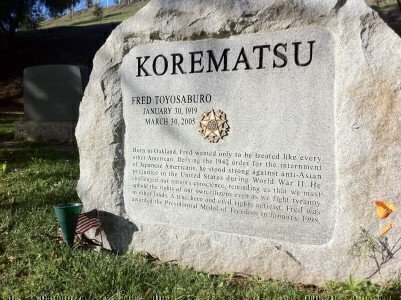
December 18, 1944: The Supreme Court Issues the Korematsu Decision

by NCC Staff | Read time: 4 minutes


“In December 1944, the Supreme Court handed down one of its most controversial decisions, which upheld the constitutionality of internment camps during World War II. Today, the Korematsu v. United States decision has been rebuked but was only finally overturned in 2018


The Court ruled in a 6 to 3 decision that the federal government had the power to arrest and intern Fred Toyosaburo Korematsu under Presidential Executive Order 9066 on February 19, 1942, issued by President Franklin D. Roosevelt. He issued the order after fears generated by the Japanese Pearl Harbor attack made the safety of America’s West Coast a priority. Roosevelt directed the military to isolate any citizen, if needed, from a 60-mile-wide coastal area from Washington state to California and extending inland into southern Arizona. ...” Read more

Constitutional Text of the Week

14th Amendment


All persons born or naturalized in the United States, and subject to the jurisdiction thereof, are citizens of the United States and of the State wherein they reside. No State shall make or enforce any law which shall abridge the privileges or immunities of citizens of the United States; nor shall any State deprive any person of life, liberty, or property, without due process of law; nor deny to any person within its jurisdiction the equal protection of the laws.


Read interpretations in the Interactive Constitution

Support the Center


Your generous support enables the National Constitution Center to thrive as America’s leading platform for nonpartisan constitutional education and civil dialogue.  

Connect With Us

Email      Facebook      X      Instagram      YouTube      Web

Update your email preferences by clicking the Update Profile link below to subscribe to other National Constitution Center newsletters and manage how often you hear from us.