|
 |
This content is available for free to all subscribers. But you really should consider a paid subscription. This unlocks our afternoon e-mails, our Saturday “What is Jon Reading” e-mail, and analysis on breaking news. Normally a subscription is a modest $7 a month or just $70 for the year.
Trump Administration Issues Strong Signal, In Writing, for Offshore Oil Production In Coastal Waters Off Santa Barbara
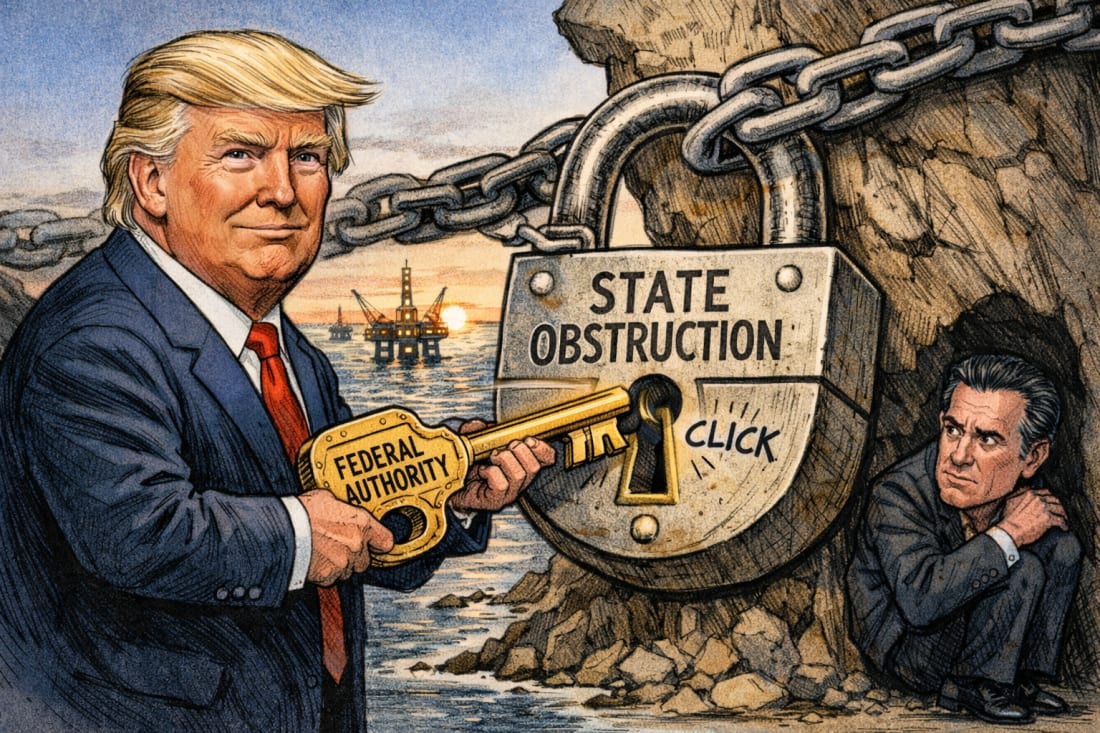
Federal regulators are taking back control of pipeline oversight as Washington pushes to move forward with offshore drilling along the California coast.
|

| |||||||||||||||


 |
To get So, Does It Matter? sent to your inbox, sign up for a free subscription. For full access to all our content, consider upgrading to a premium subscription. Click the button to learn more. Also, check back this afternoon for our weekly Winners & Losers in California Politics column!
🕒 6.5 min read
The Trump Administration Steps In To Get Oil Production Moving
With Californians facing higher fuel prices and limited refinery capacity, the Trump Administration has taken a clear step toward reopening offshore oil production near Santa Barbara. This path has been blocked for years.
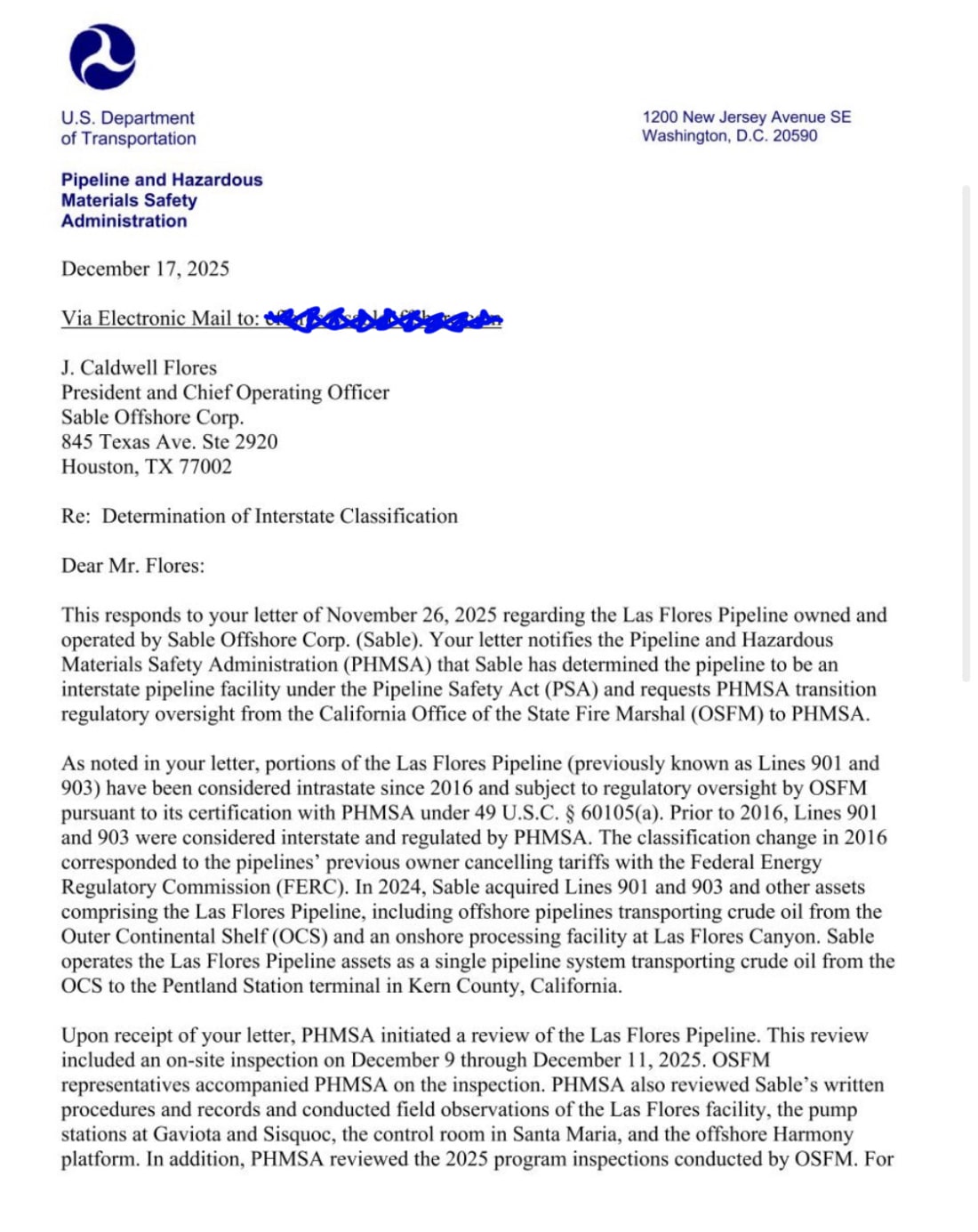
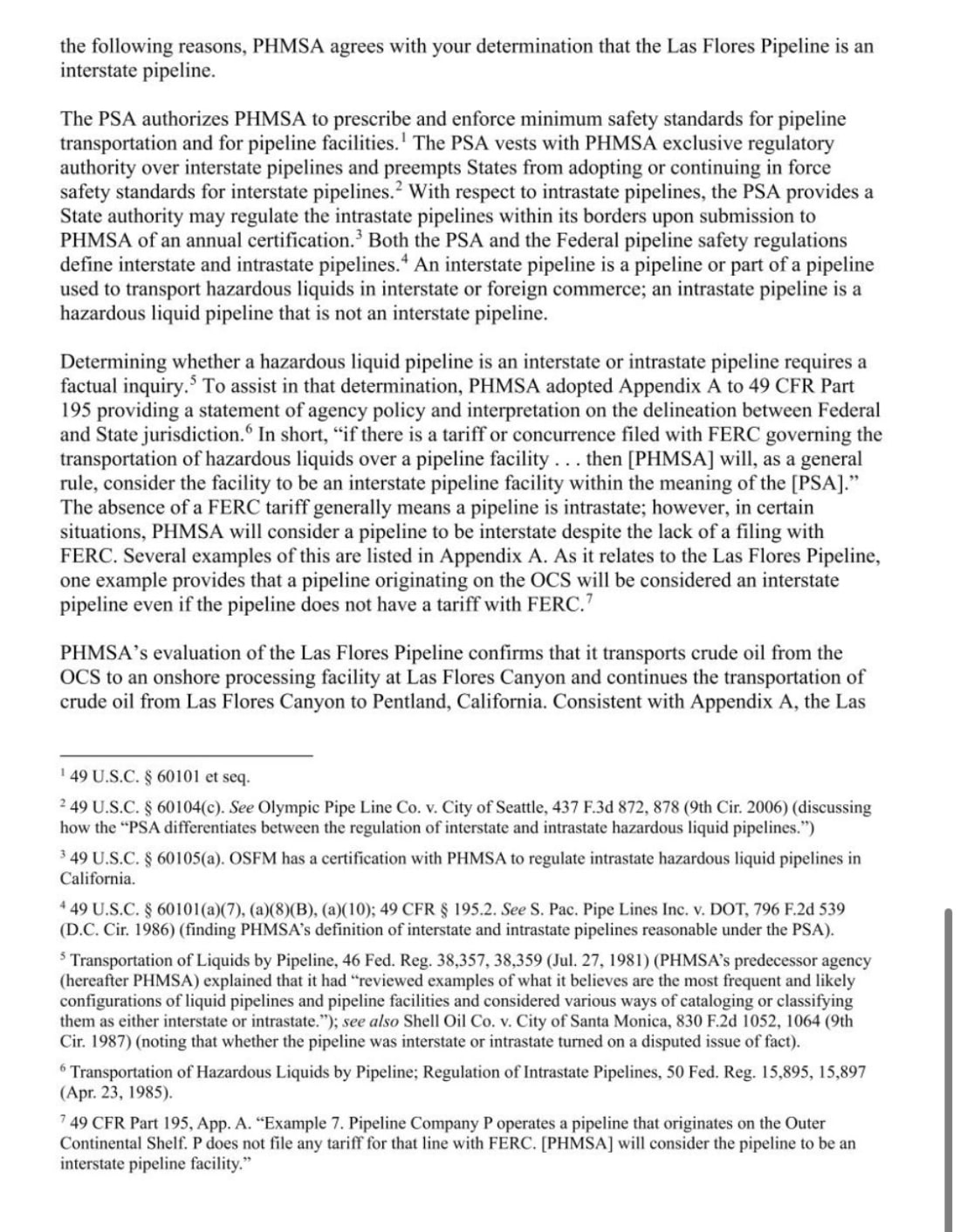
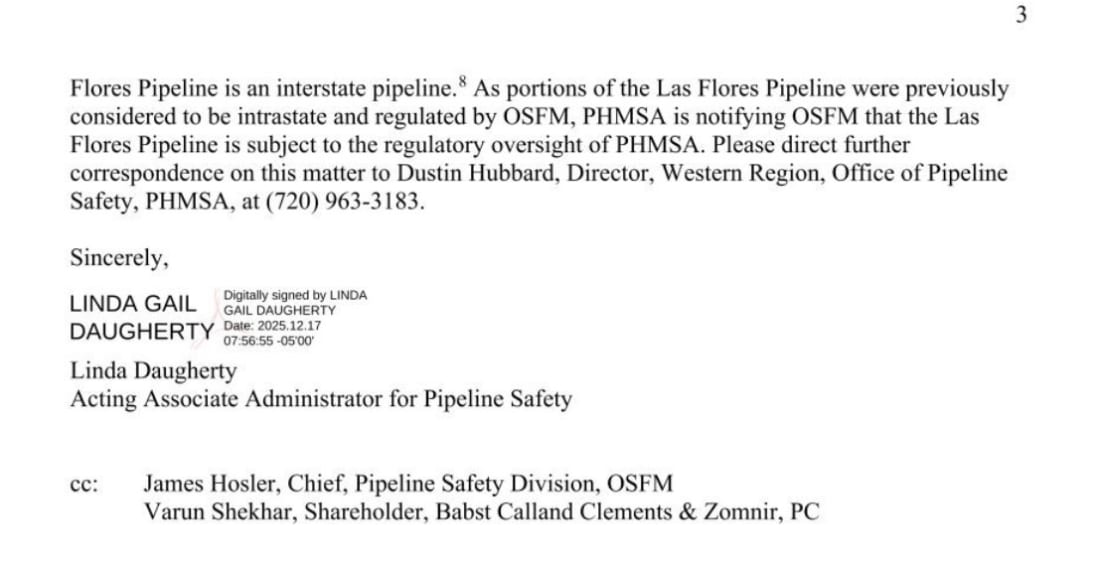
In a letter sent on Wednesday, the U.S. Department of Transportation’s Pipeline and Hazardous Materials Safety Administration (PHMSA) informed Sable Offshore Corporation that its Las Flores Pipeline system qualifies as an interstate pipeline under federal law. That determination places pipeline safety oversight under federal jurisdiction rather than California regulators, a consequential shift after years of delays and regulatory dead ends. The letter, which is embedded in this story, followed on-site federal inspections and a review of operations and records. Here is the letter (warning to lay people - it is a bit wonky)…
 |
 |
 |
Why This Federal Move Matters Right Now
California’s energy situation is getting worse. Two major refineries, Phillips 66 in Los Angeles and Valero in Benicia, are set to close, significantly reducing the state’s refining capacity. A recent University of Southern California study warned that gas prices could exceed $8 per gallon as soon as next year if supplies continue to shrink. As USC professor Michael Mische said, “Supplies will drop. It’s unclear how we’ll compensate for the supply shortfall relative to demand. And prices will go up. That’s simple economics.”
Restarting offshore production through Sable Offshore would bring meaningful new supply into the U.S. energy system, easing pressure not only in Southern California but across Nevada and Arizona, which rely heavily on California refineries for gasoline, diesel, and jet fuel. Congressman Vince Fong has warned that California’s shrinking oil supply carries broader national security consequences. Seen through that lens, Washington’s intervention appears less ideological than inevitable.
California’s Growing Energy Crunch
Even as demand remains high, Governor Gavin Newsom and California regulators continue to resist opening the abundant oil reserves off California's coast. While the state has permitted limited new production in select areas, its overall posture remains hostile to offshore development, particularly projects capable of materially increasing supply.
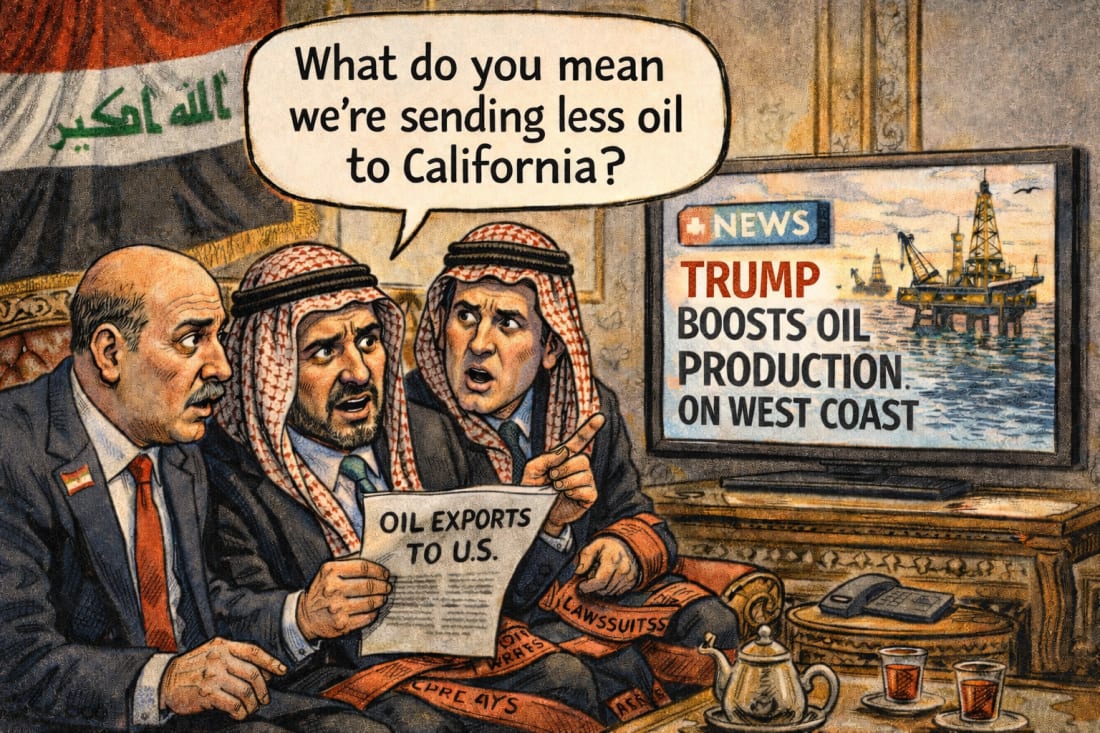
As a result, California relies more on imported oil, often sourced from countries with weaker environmental regulations and higher geopolitical risks. These outcomes come from policies that favor restrictions over reliability. With refineries closing and local production dropping, Californians face higher prices and supply problems, adding to the financial strain on households.
 |
Why Sable Offshore Matters Beyond Santa Barbara
The effects go far beyond Santa Barbara County. California’s refineries are a significant source of fuel for the Southwest, so decisions made here quickly affect other states. When California’s supply drops, nearby states notice right away. If local production is blocked, imports fill the gap, typically at a higher cost and with greater risk.
Federal involvement changes things. Now, the focus is less on whether production should proceed and more on how it can proceed under current laws.
How California Forced the Federal Hand
When California blocked all onshore restart options for Sable Offshore, the company turned to the federal government. The state’s approach was straightforward: deny permits, slow down approvals, and delay the project. Now, that strategy has run up against federal authority.
PHMSA concluded that the Las Flores Pipeline system — which transports crude oil from federal offshore waters through offshore and onshore segments to facilities in Kern County — meets the definition of an interstate pipeline under the federal Pipeline Safety Act. As a result, primary oversight of the pipeline safety now rests with federal regulators rather than the California Office of the State Fire Marshal. For years, pipeline safety rules functioned as a de facto veto. That lever is no longer under Sacramento’s control.
A Backfire Years in the Making
This does not mean offshore production will start right away. There are still federal leasing decisions, environmental reviews, and approvals to go through. However, who controls the process matters. For the first time in years, state agencies are not the only ones setting the timeline.
California officials gave Washington few options. State regulators and environmental groups opposed every restart plan, including those for pipelines, processing facilities, and safety improvements. The legislature added more restrictions, and local prosecutors went further by filing criminal charges against Sable. This led to federal intervention.
So, Does It Matter?
This matters because the United States still imports large amounts of oil from overseas, including from Iraq and other countries in the Middle East and South America, even though domestic resources are available but unused. Choosing to leave oil under coastal waters while depending on foreign supply is a policy decision, not something that has to happen.
It also matters because California is facing an affordability crisis, with energy prices at the heart of the problem. When fuel costs go up, so do transportation, food, and household expenses. Increasing a reliable domestic supply is one of the most direct ways to ease this pressure.
The Trump Administration’s action shows that Washington is no longer willing to let these issues stay unresolved. Federal regulators are exercising their authority where they can, and they have a clear legal basis to do so.
California’s leaders still have a part to play. Governor Newsom, state regulators, and Santa Barbara officials can choose to get involved and help decide how this oil enters the U.S. energy supply. If they do not, Washington’s intentions are clear. President Trump and the federal government are ready to move forward without them and have the legal authority to do so in critical areas.
Now, the choice is simple: get involved and help shape the outcome, or step aside and let others make the decisions.
You’re currently a free subscriber to So, Does It Matter? California Politics! For the full experience, upgrade your subscription. See how much more you get with an inexpensive, paid subscription, but clicking the button below! Support me in providing hard-hitting, clear-eyed analysis of California politics. I am beholding to no one, and sugar-coat nothing!
| ||||||||||

