|
This final newsletter of 2025 highlights the impact that CGS is making with your support, from pushing back against embryo editing startups on KQED Forum to launching our new anti-eugenics network. You’ll also find the insightful commentary and curated news that keeps you up-to-date on fast-moving developments in human biotechnologies.
Your donation to CGS directly supports this newsletter and our fight for a just and inclusive future.
Will you make a gift today and help CGS raise $25,000 by the end of the year?
| | |
| |
Bay Area Startups Want to Make Genetically Engineered Babies. What Could Go Wrong?
KQED Forum | 12.02.2025
When it comes to genetic engineering of children, the biggest risk in terms of inequality isn’t access, says CGS’ Katie Hasson –– it’s the premise –– that “there are people genetically superior to others and that you can achieve that through intervening in the genes… that idea is at the basis of eugenics.”
| | |
| |
Launching the Confronting Eugenics Network
This month, a stellar group of scholar-activists and advocates gathered online for the first meetings of the Confronting Eugenics Network, which forms the core of CGS’ Confronting Eugenics initiative. Several key themes and commitments emerged in the discussion, including the importance of engaging communities impacted by eugenics, using art to bring anti-eugenics discourse to broader publics, and building vibrant positive visions of a just future that supports flourishing for all.
| | |
| |
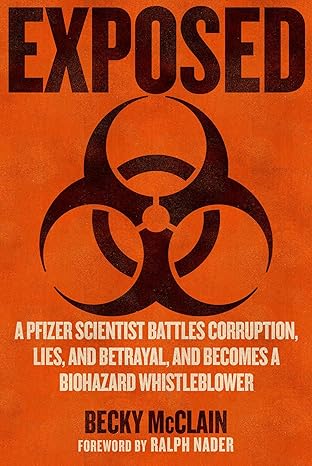
Good Trouble: A Review of Exposed by Becky McClain
Pete Shanks, Biopolitical Times | 12.18.2025
In a new memoir, Becky McClain details her fight to hold Pfizer accountable for their lax biosafety practices, which caused her exposure to a genetically engineered lentivirus and ongoing ill effects. McClain's recounting of Pfizer’s attempts to silence her and quash efforts to improve biosafety highlights the urgent need for policy reform.
| | |
| |
Tech titans lean into gene editing of embryos
The Dip Podcast | 12.02.2025
On the DW News podcast The Dip, CGS Executive Director Katie Hasson explains that one of the risks of allowing heritable genome editing is the “acceptance of the idea that certain children are genetically superior to others, even if it weren’t true. That idea, in and of itself, can be harmful in society, and we’ve seen that in the history of eugenics.”
| | |
HERITABLE GENOME EDITING | GENE THERAPY | EUGENICS
ASSISTED REPRODUCTION | VARIOUS
| | |
Japan eyes ban on gene-edited babies
Japan Times | 12.04.2025
In response to concerns over “designer babies,” a government panel of experts in Japan approved a proposal to submit legislation that would ban the implantation of a genome-edited fertilized human egg.
| | |
In a Honduran city, biotechs create gene therapy cocktails to fight aging
Frankie Fattorini, Pharmaceutical Technology | 12.02.2025
In Honduras, the charter city Próspera advertises lax regulations to attract biotech developers testing experimental treatments that the FDA would probably reject. Two companies have set up shop there, testing gene therapies to combat aging despite many scientists’ skepticism.
| | |
She Was Born Without an Immune System. Gene Therapy Saved Her Life.
Simar Bajaj, The New York Times | 11.27.2025
Experimental gene therapies for children with severe combined immunodeficiency or “bubble boy disease” have successfully restored the immune systems of over 50 children. Further trials are underway to assess the potential of gene therapies for other subtypes of the condition.
| | |
New Gene-Editing Strategy Could Help Development of Treatments for Rare Diseases
Pam Belluck and Carl Zimmer, The New York Times | 11.19.2025
A study tested “disease-agnostic” gene therapy in human cell models for four diseases, including cystic fibrosis and Tay-Sachs. Instead of fixing individual DNA mutations, prime-edited RNA ignores “nonsense mutations” and is able to build the full-length protein.
| | |
UK IVF couples use legal loophole to rank embryos based on potential IQ, height and health
Hannah Devlin, The Guardian | 12.04.2025
Couples undergoing IVF in the UK are exploiting an apparent legal loophole to rank their embryos based on genetic predictions of IQ, height and health. They are sending “raw genetic data” on their embryos to US companies that offer polygenic screening – a controversial technique that UK clinics aren’t allowed to offer.
| | |
Testing Embryos? How Far Should We Go?
Vardit Ravitsky, The Hastings Center | 12.04.2025
In a Hastings Center webinar on embryo testing, panelists discussed risks of embryo selection based on “desirable traits” and other ethical implications for parents, children, clinicians, and society.
| | |
Racism never went away – it simply changed shape
Lars Cornelissen, The Conversation | 11.28.2025
World War II delegitimized eugenics and other overtly racist belief systems in science and politics, but racism continued to thrive in a new form. Cultural racism, including anti-immigrant sentiments and policies, cloaked racism in concerns about national identity.
| | |
They Answered an Ad for Surrogates, and Found Themselves in a Nightmare
Sarah A. Topol, The New York Times Magazine | 12.14.2025
Thai women recruited to be surrogates in Georgia had their passports taken and were stuck in rundown hotels, where they faced abuse and painful, unknown medical procedures. Some of the women escaped and are sharing their experiences, which make it clear how the lack of global regulation of surrogacy agencies and their practices leave surrogates vulnerable to abuse and exploitation.
| |
The Chinese Billionaires Having Dozens of U.S.-Born Babies Via Surrogate
Katherine Long, Ben Foldy, and Lingling Wei, The Wall Street Journal | 12.13.2025
A Wall Street Journal investigation revealed a “thriving mini-industry” within the US surrogacy industry. Agencies cater to elites and billionaires, who will pay millions in surrogacy fees to have large numbers of U.S.-born babies.
| |
A Surrogacy Firm Told Parents-to-Be Their Money Was Safe. Suddenly, It Vanished.
Sarah Kliff, The New York Times | 12.10.2025
The surrogacy agency Surro Connections closed abruptly this month and is facing allegations of financial fraud. Surrogates have been left in the middle of pregnancies, and intended parents who gave the agency tens of thousands to pay surrogates have lost their funds. Limited government oversight of surrogacy agencies makes it difficult for surrogates and intended parents to evaluate agencies and their claims about handling of funds.
| |
Mike Johnson strips military IVF coverage from defense bill – report
Carter Sherman, The Guardian | 12.08.2025
Speaker of the House and anti-abortion Republican Mike Johnson worked behind the scenes to remove a provision that would have provided healthcare coverage for IVF for active-duty members of the military from a defense policy bill since passed by the House.
| |
WA's surrogacy and IVF laws overhauled as legislation passes state parliament
Courtney Withers and Daryna Zadvirna, ABC News | 12.03.2025
Newly passed legislation in Western Australia will allow same-sex couples, single people, transgender and intersex people to access assisted reproductive technology (ART) and surrogacy, almost a decade after reforms were first promised.
| |
Failure to diagnose treatable male infertility leading to unnecessary IVF, experts say
Rachel Hall, The Guardian | 11.30.2025
Although male infertility accounts for 50% of all infertility cases, it is often left untreated in the UK due to a lack of understanding among healthcare providers, few specialists, and limited testing. Without testing and diagnosis, many couples needlessly go through IVF.
| | | | |