
Hi John,
If 2025 proved anything, it’s that people, not politicians, are taking bold climate action. Worldwide, communities stepped up where governments hesitated: blocking pipelines, launching renewable energy solutions, defending land, and demanding fairness.
The same energy defined our work. Have a look at the wins we've achieved together this year below. They show what's possible when ordinary people act with extraordinary courage:
In April, we brought together more than 200 activists from 70+ countries in Brazil for the Renew Our Power Gathering: five days of deep training, strategy, and movement-building that sparked new campaigns and community energy projects worldwide. Participants also delivered a letter to the President of COP30 in Brasília, demanding a just energy transition be placed at the heart of this year’s UN climate talks. Even Brazil’s Environment Minister, Marina Silva, joined our closing, a powerful sign that people are shaping the political climate agenda.
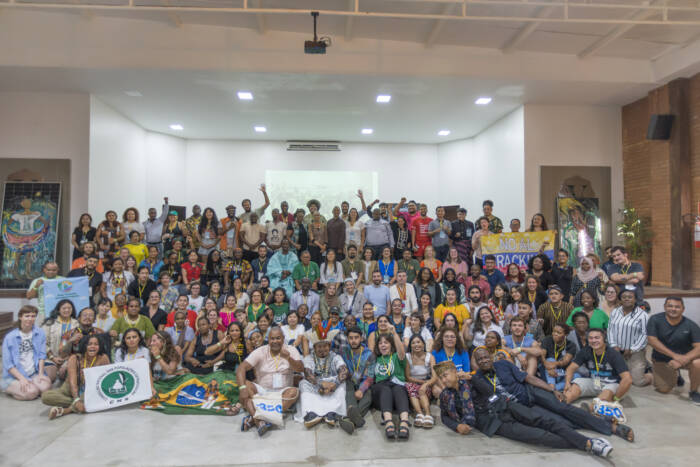
200 climate activists from over 70 countries with Brazilian Environment and Climate Change Minister Marina Silva at the Renew Our Power Gathering in Brazil. Photo: 350.org/Kathleen Lei Limayo
In fact, over the entire year, we trained more than 19,000 people, with many already starting new campaigns, building small renewable energy projects, and organizing in their communities. This growing network of climate leaders is creating the long-term power we need to change our energy systems from the ground up.
Later on, in September, we mobilized over 210,000 people across 600+ actions in 85+ countries. We drew the line against inequality, fossil fuel greed, and climate injustice, creating a red thread of resistance that stretched across continents, borders, and movements. Together, we turned streets, coastlines, and community spaces into powerful sites of art, music, defiance, and care: from Make Billionaires Pay rallies across the U.S., to canoe flotillas in the Amazon and youth marches in Indonesia. We demanded that world leaders make 2025 a turning point for the urgent climate action we need, starting with the UN climate talks, COP30 in Belém, Brazil.
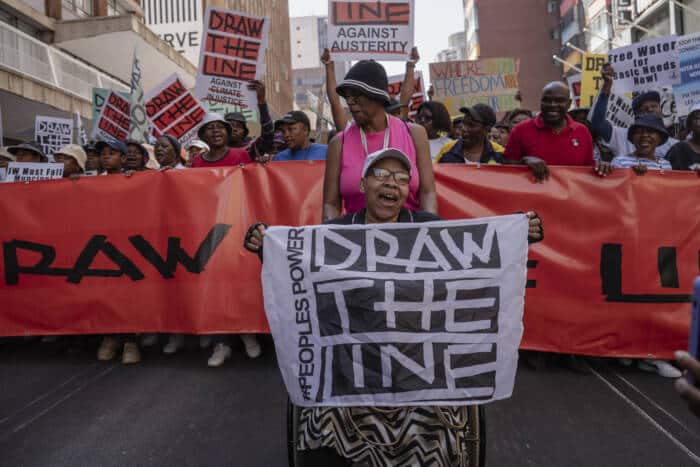
Communities united in Johannesburg, South Africa to Draw The Line against corruption, energy injustice, and corporate capture. Photo: Ihsaan Haffejee
We stood unwavering two months later at COP30 in Belém, helping ensure Indigenous and Traditional Peoples, frontline communities, youth, activists, and everyday people shaped the climate action negotiations. From pushing a first-of-its-kind fossil fuel phase-out roadmap into the heart of the talks (a science-based plan backed by nearly 90 countries) to banner drops, actions, and rituals inside the Blue Zone, we left no stone unturned in calling out the leaders on their lack of ambition, finance, and justice.
Outside the halls too, we ramped up the pressure by way of the 70,000-strong People’s March, supporting Indigenous partners, joining boat parades and demanding universal clean energy. Even as security tightened at the talks, we defended the right to peaceful protest, a commitment we’ll carry into COP31 in Türkiye next year where protecting civic space will be essential to ensuring communities, not corporations, shape the transition ahead.
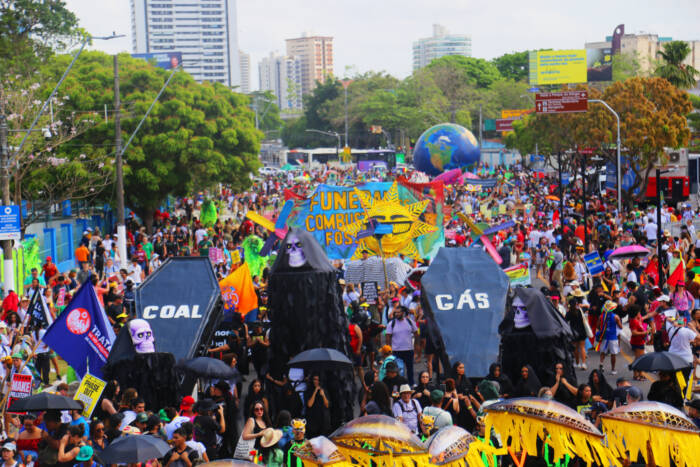
People’s March for Climate Justice in Belém, Brazil with a funeral for fossil fuels. Photo: Artyc Studio
Our advocacy contributed to the inclusion of the Belém Action Mechanism (BAM) in the final COP30 text: a new energy transition framework centering workers, Indigenous Peoples, and frontline communities. Colombia also stepped up, announcing it will co-host the first International Conference on the Just Transition Away from Fossil Fuels next year: a space to turn political momentum into concrete plans and global cooperation.
Beyond moving the needle on global climate action, we also secured some major progress in the regions we work in:
Thanks to the efforts of the StopEACOP coalition we are part of and through continent-wide actions like the Kick Total Week of Action, we forced 40+ banks and 30+ insurance companies to walk away from the East African Crude Oil Pipeline (EACOP), the region’s most destructive fossil fuel expansion. With no financiers left, TotalEnergies was forced to self-finance 90% of the project, leaving it severely delayed and billions more expensive. While our fight continues to stop the pipeline for good, communities across Uganda and Tanzania now have a stronger foothold to fight for a just, renewable future.

A street show condemning TotalEnergies operations on the continent by activists in Benin during the Kick Total Out Of Africa Week of Action.
5. Lowering energy bills in the United States
Working with 117 local groups, we pressured energy companies to stop passing hidden fossil-fuel lobbying costs onto customers. In the state of Maryland, we helped ban energy companies from charging households the money owed by fossil fuel corporations, saving residents $3 million a year. For families already struggling with rising bills, this win delivers real relief today while setting the stage for a fair, renewable energy system tomorrow.
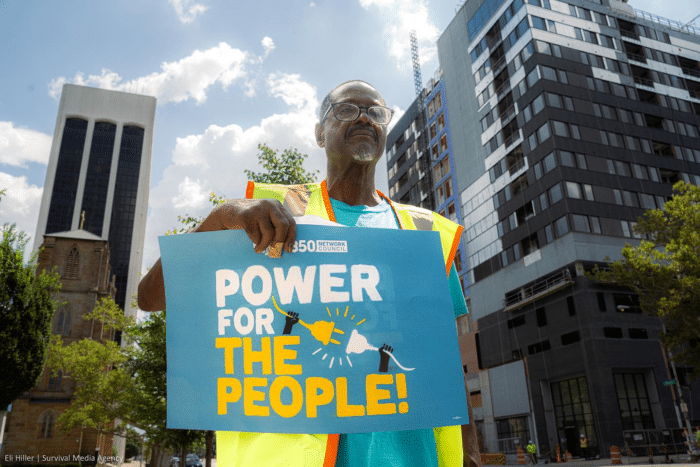
Climate activists across the U.S. took action this year to demand fair, safe, clean and affordable renewable energy for everyone. Photo: Survival Media Agency 350PDX PUSH Buffalo 350 New Hampshire Action
We have been hard at work, organizing and strengthening our grassroots power and reshaping energy policy across the region. In Brazil, we helped win a social electricity tariff reducing and eliminating bills for millions of families, including Indigenous, Quilombola, and low-income households. In Colombia, we helped secure a landmark court ruling requiring community participation in mine closures – a major advance for environmental justice across the Andes and the Amazon. These victories protect critical ecosystems, expand energy access for millions, and defend people’s right to determine what happens on their land.
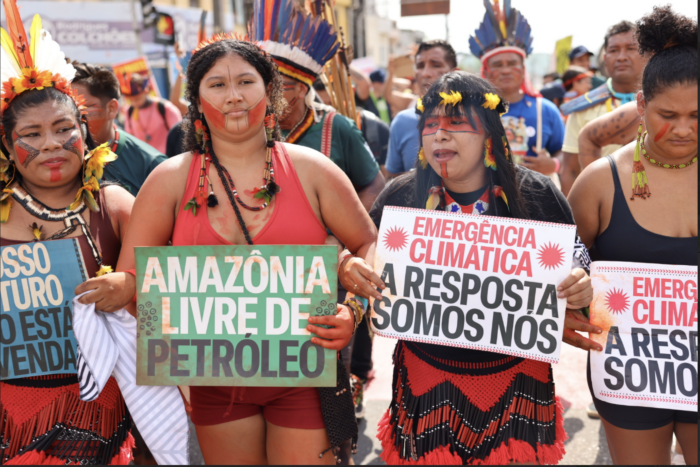
Indigenous leaders march in Belém, Brazil during COP30 demanding climate and energy justice.
We started 2025 by declaring it as the “Year of People’s NDC” (Nationally Determined Contribution climate action plans) and launched a petition that now has over 20,000 signatures. Through the Youth4NDCs initiative, we engaged more than 10,000 people across Bangladesh through consultations, dialogues, and capacity-building initiatives. We reached more than a million people on Facebook, effectively pushing NDCs out of closed-door meetings and into the limelight. Now for the first time, Bangladesh’s latest NDC includes two full pages on youth participation. This formal recognition gives young people a real seat in shaping the country’s low-carbon transition and signals the start of a new phase: ensuring these commitments are implemented, funded, and monitored. It also sets a powerful precedent for climate-vulnerable countries worldwide in recognizing young people as critical actors in driving climate action.
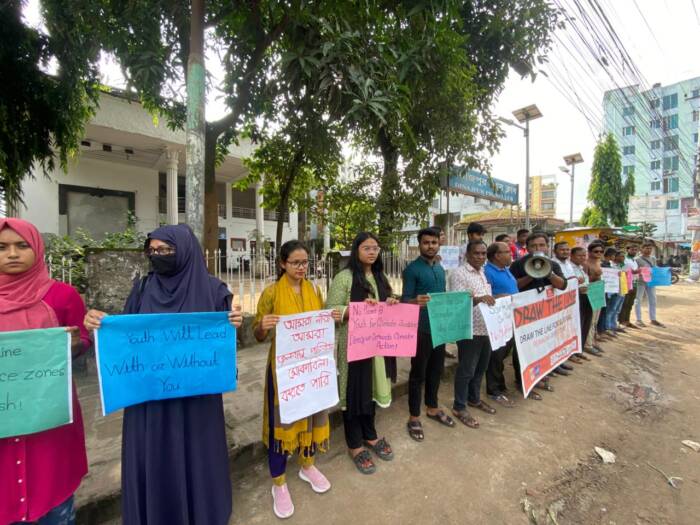
Youth in Bangladesh urge their government to take climate action seriously and urgently, and include them in the decision making. Photo: StepUp 4 Tomorrow
We put economic and climate justice at the heart of France’s political debate. As inequality soars, public services strain, and environmental rollbacks increase, through our Tax Their Billions campaign, we pushed the Senate to consider the Zucman Tax: a 2% levy on fortunes over €100 million that could raise €15–25 billion a year – which could be invested in climate action and public services. Though the proposal narrowly missed adoption (just 30 votes short!), 65,000 people took action, many mayors now publicly back fair taxation, and 86% of the French population is supporting it. This work is now building the momentum for wealth taxes to be included in upcoming national budgets, local elections, and in wider European debates on how taxing the ultra-rich can pay for social housing, clean transport, renewable energy, and strong public services. There is no turning back: European governments can no longer get away with presenting austerity measures as the only way to go and will be held accountable if they fail to tax the super-rich who wreck the planet and fuel social and economic injustices.
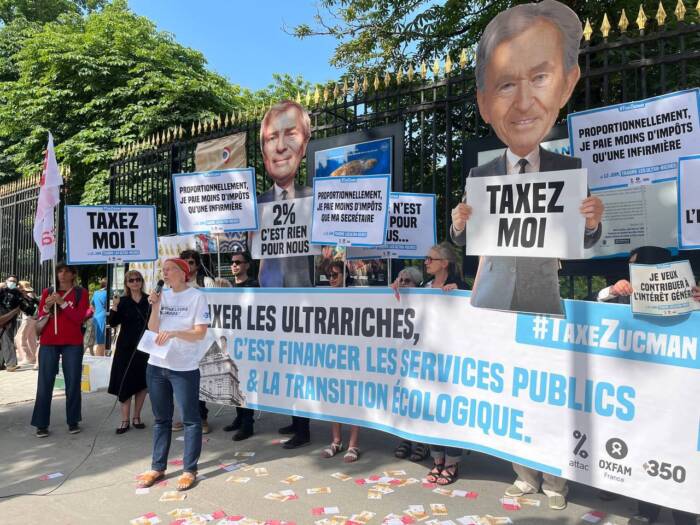
We showed up in Paris, France, outside the Senate, demanding billionaires pay their fair share in taxes.
In Türkiye, community-run renewable energy cooperatives could give people real control over their energy but most remain blocked by outdated rules. To change that, we launched Unite with the Sun, Empower the Future, a gamified campaign where people build their own virtual cooperative, learn how the energy system works, and put pressure on the government for reforms that would allow 45+ real cooperatives to operate. Alongside this, we released new research on the social, economic and environmental benefits of cooperatives, how Türkiye’s energy system blocks community ownership, and what policies could finally unlock clean, affordable, locally run power for everyone. We also shared the stories of cooperatives like Çorum’s successful model and the women-led Kazdağları co-op still fighting to start production. Our work is already shifting political debate: a Parliament Member from Istanbul used our findings to formally request the removal of regulatory barriers during the Parliamentary Budget and Planning Commission session. Bit by bit, we’re opening the door to a fairer, people-powered energy system in Türkiye.
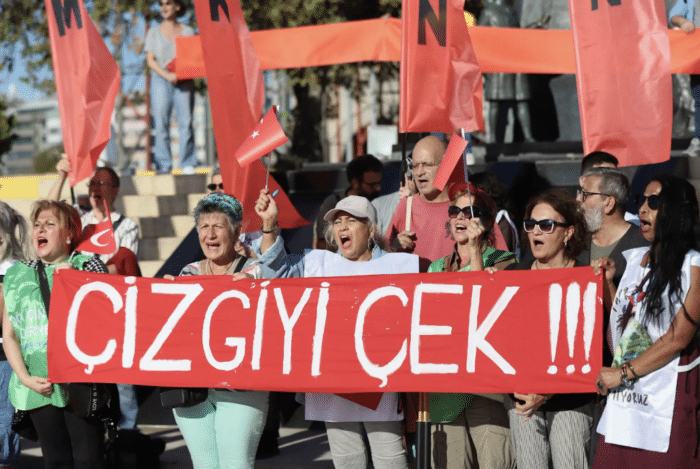
Women, community leaders, activists, environmental defenders, and local communities came together in Istanbul, Türkiye during the Draw the Line mobilization in September, demanding energy justice. Photo: Caner Özkan
We also ran the Pawa to the Ballot campaign this year, helping Pacific Islanders across Australia call for a safe climate, renewable energy access, job security, and a genuine partnership with the Pacific during the 2025 federal elections. We got support from over 10,000 people and ensured political leaders in the region could no longer ignore Pacific voices.
Then at COP30, with the Climate Change Ministers of Vanuatu, Tuvalu, and Australia, we launched this plan as a roadmap to make the Pacific the world’s first region powered by 100% renewable energy, setting the benchmark for the world and for neighboring Australia, a top fossil-fuel exporter, as it co-leads COP31 next year.
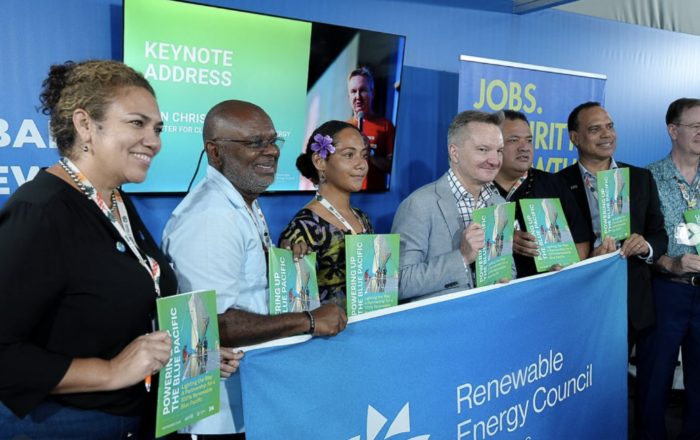
350 Communications Manager & Pacific Climate Warrior, Drue Slatter (third from the left) launched the Powering Up the Blue Pacific report alongside the Prime Minister of Tuvalu and the Climate Change Ministers of Vanuatu, Tuvalu, and Australia at COP30, in Belém, Brazil.
Through these wins, stories of hope and communities in action, we’ve set the stage for climate action to sit front and center on the global agenda. And in 2026, we’re deepening our fights in East Africa, South Africa, Brazil, Japan, Indonesia, France, Canada, Türkiye, the Pacific and the Caribbean through:
The work ahead is big but so is the power we’ve built together. And in 2026, we’re ready to turn that power into even bolder wins.
I'm so grateful for your support, John.
Onwards,
Katrina and everyone at 350
P.S. You can access local information sources for these wins through the blog post version here – and use this link to share the good news!

 |
 |
 |
PO Box 843004, Boston, MA 02284-3004
This email was sent to [email protected]. Email is the most important way we keep in touch with people like you. If you need to remove yourself from our email list, unsubscribe here. You can also sign up to receive fewer emails. Update your email address, location, or language.
350.org is a global movement that fights for a just and equitable world by stopping the fossil fuel industry from continuing to destroy our climate.
Support our fight for a just and renewable future by shopping 350.org's sustainable merchandise.