|
The Memory Problem at the Heart of Gun Violence
Why attention, forgetting, and distance sustain the crisis
|

| |||||||||||||||


 |
America’s gun violence crisis is often explained as a failure of policy or politics. But underneath those explanations is something quieter and just as powerful: a struggle over memory. What a country chooses to remember, what it lets fade, and who decides that process are not neutral habits. They are expressions of power. Gun violence continues not only because of what happens, but because of what we stop holding onto.
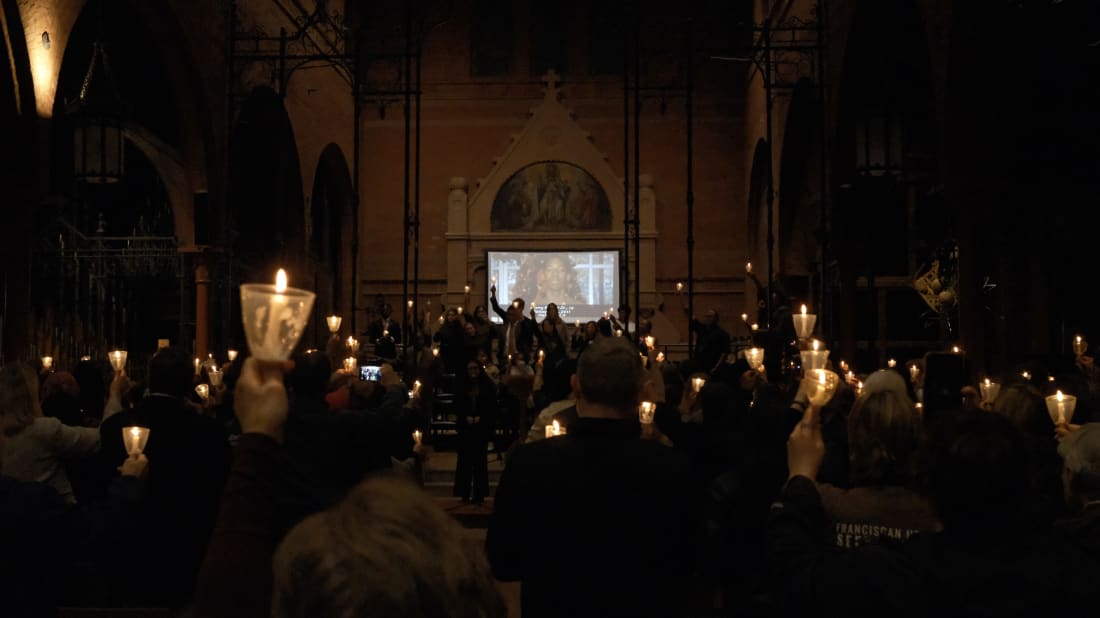
For a time, the country remembered. After Sandy Hook, the coverage lingered. The names were said aloud, again and again. Questions about responsibility stayed in view. The nation was forced to sit with the scale of what had been lost. Today, even mass shootings rarely stay in the public consciousness for long. Tragedy flashes across our screens, then disappears.
The half-life of attention has collapsed.
Technology has accelerated that collapse. Social Platforms built for speed compress events that demand depth into content meant to be consumed and replaced. Stories circulate briefly, stripped of context, before sinking beneath the algorithm. Forgetting is no longer only human behavior. It is embedded in the systems that shape public life.
But this erosion of memory is not simply a technological inevitability, nor a failure of individual empathy. It is reinforced by structural pressures in our information ecosystem. Newsrooms face shrinking budgets and incentives that reward novelty over continuity. Patterns are overshadowed by events. Structural failures by spectacle. The result is a public that experiences gun violence as a series of isolated shocks rather than as a sustained, systemic crisis.

The problem is not only memory. It is also abstraction. In a deeply unequal country, gun violence is distributed unevenly by race, class, geography, and access to resources. For those who have never experienced it up close, gun violence becomes conceptual: a headline, a policy debate, a symbol of dysfunction rather than a lived reality.
That distance matters. When violence is abstract, it is easier to forget. And forgetting is not politically neutral. The gun lobby has long understood that a public without memory is a public without leverage. If tragedies appear disconnected, accountability dissolves. If everyday violence never enters the national frame, it remains someone else’s problem. Erasure becomes strategy.
Movements disrupt this dynamic when they refuse to let the public forget. After Parkland, what shifted the country was not only anger, but insistence: on naming patterns, on connecting personal loss to structural failure, on demanding continuity where the system prefers amnesia. Storytelling was not expressive alone; it was strategic.
But testimony is not enough. If memory is the terrain on which this fight is waged, then movements need infrastructure that can hold it. Ways to preserve context, accumulate evidence, and resist the cycle that reduces every tragedy to the same brief moment of attention. Without that, even the most powerful stories are at risk of being absorbed, flattened, and forgotten.
That is why we are building The Living Record. It is a movement-owned archive designed to document the full scope of gun violence in America, not only the incidents that briefly dominate national headlines. The Living Record exists to hold what media and political culture consistently fail to sustain: the everyday violence, the long aftermath, the survival, the grief, and the organizing that continues long after public attention moves on. Each story is preserved not as an artifact, but as evidence. Together, they form a cumulative record that makes patterns visible and erasure harder.
If you or someone you love has been impacted by gun violence, we invite you to add your story to The Living Record. Submissions may take many forms, including written reflections, audio, video, or art. Contributing is a way to insist that what happened mattered, that it belongs in the public record, and that it will not disappear simply because the news cycle moved on.
We are living in a memory war. Attention will continue to fragment. Political actors will continue to exploit exhaustion. If forgetting enables this crisis, then remembering deliberately, collectively, and publicly becomes an act of defiance.
Gun violence endures in part because America does not remember.
Thanks for reading! Subscribe to stay connected to the young leaders, stories, and ideas shaping the future of this movement.
| ||||||||||

