|
 |
Systemic Discrimination Against White Men
Intercollegiate Review | Conservatism's sharpest voices, curated weekly. ISI's weekly newsletter brings you the best in serious conservative thought.
|

| |||||||||||||||


The Fallout of a Dying Meritocracy
 |
Over the past several years, the DEI counter-revolution has won key legal victories for meritocracy over explicit race- and gender-based discrimination. Yet even as many of the hiring and promotion practices that became common over the last decade are being rolled back, their demographic impact remains.
Writing for Compact, Jacob Savage argues that one group suffered the brunt of the DEI damage: white male millennials. Citing both industry statistics and individual stories, Savage details the way that the DEI apparatus systematically shut out white male millennials in journalism, academia, film, and other top industries. He identifies 2014 as a turning point: those who had already achieved career success (primarily Boomers and Gen X) continued to advance, while younger white men found doors closing in favor of more diverse candidates.
The tools used to reshape workforce demographics varied by field—DEI statements and cluster hires in academia, “diverse only” needs sheets in Hollywood, and similar mechanisms elsewhere—but the outcome was the same. And because of this blatant discrimination, Savage suggests, a whole slice of America has become disenchanted with the American dream.
Read the rest of Savage’s essay here to discover more of the stories from America’s lost generation.
|
Lost Generation or Lost Opportunity?
 |
Jacob Savage’s essay on the plight of the white male millennial (featured above) sparked immediate discussion online. While many praised his in-depth coverage of the dispossession of this demographic, others saw some blind spots in his analysis.
In his Substack The Course of Empire, Jeremy Carl responds directly to Savage’s piece. Carl argues that Savage understates the true extent of the discrimination suffered by white men in America, instead only capturing the plight of “white establishment liberal men.” Carl suggests instead that the suffering of working-class and conservative white men began decades before 2014 and was largely abetted by the creative class featured in Savage’s piece.
But Carl’s biggest critique of Savage is not his portrayal of the problem; it’s his hesitation to fight against it. The only way to combat inequality and discrimination, Carl writes, is to publicly take a stand. Yet nearly all the men Savage interviewed insisted on anonymity, and many of their stories revealed their own complicity in propping up the DEI regime.
In the end, Carl says, Savage and his interviewees have remained loyal to the very elite institutions and ideals that shut them out from success. Carl concludes that this very loyalty limits their ability to move forward.
Read the rest of Carl’s critique of Savage’s piece here.
Compendium
Every article we feature here is available to read for free. Articles from paywalled publications are available through gift links.
Velina Tchakarova on the proper European approach to the New Cold War in The Republic.
Gregory Conti on the nuances of Mamdani’s politics in Compact.
Ilya Shapiro on the continuation of an originalist legal movement in The American Mind.
Leo Koerner on the loss of a Great Books teaching at Harvard in First Things.
Freya India interviews Rusty Reno on young people’s aversion to relationships in her Substack, Girls.
Rose Horowitch on the difficulty of hiring for entry-level positions in The Atlantic.
Alex Komoroske on the pitfalls of relentless optimization in Cosmos Institute.
 |
Upcoming ISI Events
If you enjoy what you’re reading here, we invite you to engage with ISI at one of our upcoming in-person events.
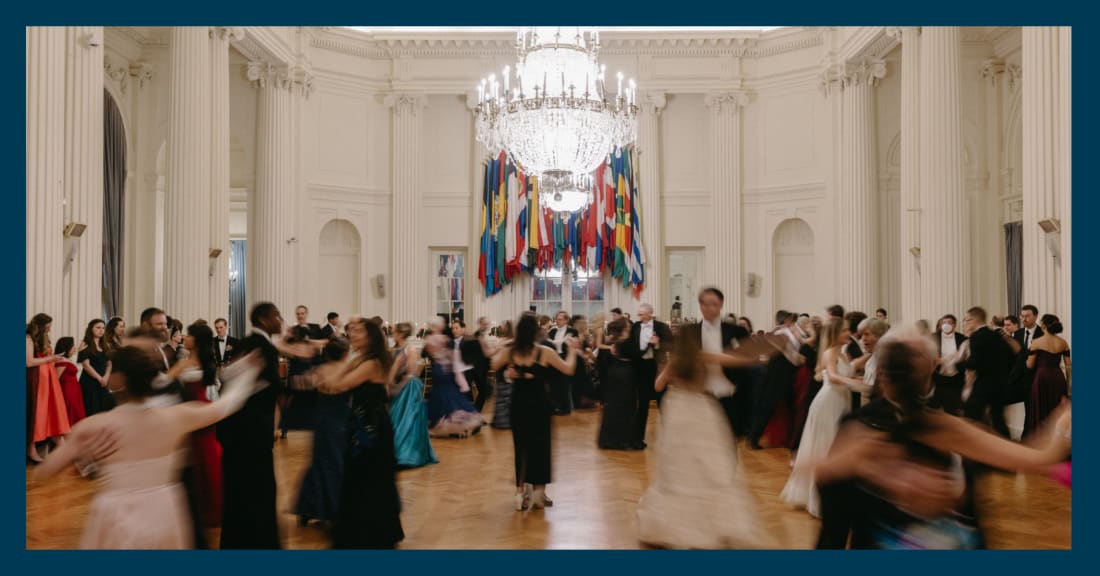
43rd Annual Evening of Viennese Waltzing | February 7 | Washington, DC
Join the Intercollegiate Studies Institute on Saturday, February 7th, at The Organization of American States for the 43rd Annual Evening of Viennese Waltzing! This annual event brings together over 200 couples for a luxurious recreation of the sumptuous balls of turn-of-the-century Vienna.America 500 Gala for Western Civilization | April 30 | Washington, DC
The America 500 Gala for Western Civilization is the flagship event of ISI’s America 500 Campaign that celebrates America’s 250th anniversary. Join us at the Andrew W. Mellon Auditorium on Thursday, April 30, 2026, for an elegant evening with inspiring speakers.Conservative Book of the Year Award Ceremony and Luncheon | May 1 | Washington, DC
ISI’s annual Conservative Book of the Year Award Ceremony honors a distinguished nonfiction work that has contributed to the advancement of conservative thought. Join us on May 1 for a luncheon buffet, award ceremony, and panel discussion in Washington, DC.
Visit our events page on our website to see all upcoming events.
Thanks for reading Intercollegiate Studies Institute! Subscribe for free to receive new posts.

This week, from ISI’s Digital Media:

In the latest episode of Modern Age with Dan McCarthy, Dan breaks down the real causes of the American revolution. He covers the historical origins of the American system, starting with the Glorious Revolution of 1688 and the rise of the Whigs and Tories, to reveal lessons about executive power, liberalism, and today’s populist backlash.
Subscribe to Modern Age with Dan McCarthy here.
This week, from the Collegiate Network:
ISI’s Collegiate Network supports over 80 student-run publications across the country, empowering students to run independent college newspapers, magazines, and journals that report on important issues ignored by the mainstream media.
BYU “Anti-Racism Club” Promotes Openly Racist Literature Despite University Rules Against Political Activism via The Cougar Chronicle
Coverage of Brigham Young University’s sanctioned Anti-Racism Club detailing its promotion of far-left, racially divisive literature and activist organizations, and how those materials appear to violate BYUSA restrictions on political activism.
The Soul of the Core is Alive and Well at the Morningside Institute via The Columbia Sundial
Reflection on the Morningside Institute as a living alternative to credential-driven higher education, highlighting how its seminars and reading groups revive the liberal arts as a lifelong pursuit centered on truth, meaning, and human formation rather than grades, résumés, or professional utility.
“Hi, I’m Paul.” via The Jefferson Independent
Profile of UVA’s interim president tracing Paul Mahoney’s personal history, governing style, and quiet approach to leadership, examining how his emphasis on stability, free inquiry, and measured restraint shapes the university during a period of institutional uncertainty and political pressure.
A Day In the Life of a Notre Dame Seminarian via The Irish Rover
Insight into daily life at the Congregation of Holy Cross, where seminarians balancing academics and prayer describe a close-knit community centered on spiritual discernment, personal growth, and fraternity.
Hidden in Plain Sight: Why Students Are Filling the Gap in Campus Care via The Pepperdine Beacon
A look at how Pepperdine students, galvanized by campus emergencies, organized to supply hygiene products after uncovering shortcomings in the university’s preparedness and student care systems, and how their efforts point to larger questions about institutional responsibility for basic student needs.
Visit our Student Journalism section to read more from the Collegiate Network.
Launching a Legend
 |
J.R.R. Tolkien and C.S. Lewis. Ezra Pound and T.S. Eliot. Mary Shelley and Lord Byron. History often remembers great writers in pairs, as their friendships powerfully shape each other’s works.
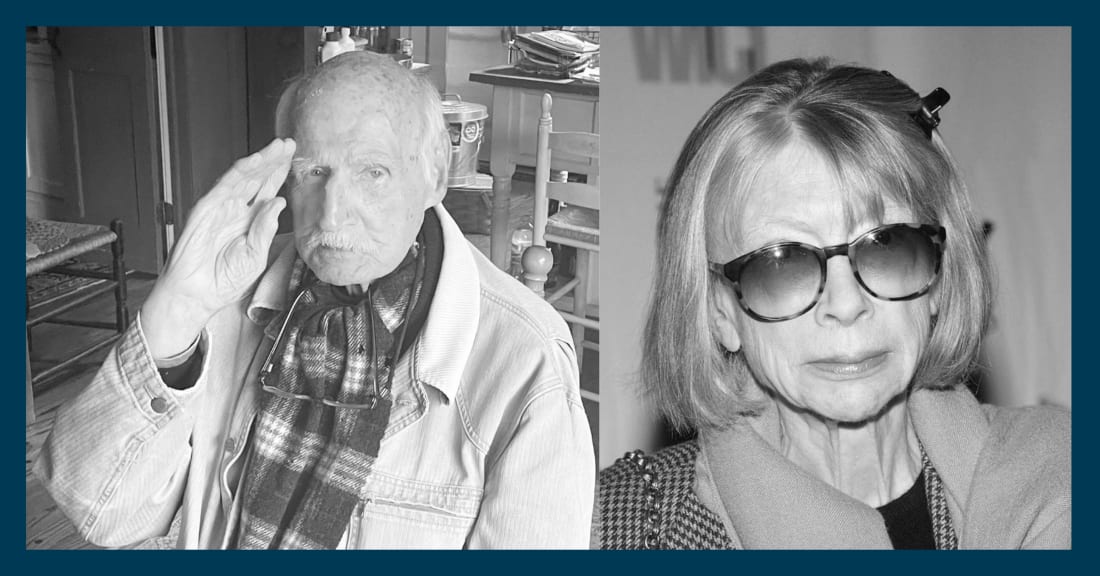
In this week’s article from Modern Age, Daniel J. Flynn highlights a lesser-known literary duo: Noel Parmentel and Joan Didion. While Didion’s marriage to John Gregory Dunne received more attention over the years, her earlier relationship with Noel Parmentel significantly influenced both her career and her personal life. Flynn details how Parmentel helped Didion get her start as a literary critic by connecting her with Frank S. Meyer and helping her secure publication in National Review.
Flynn also explores Parmentel’s complicated relationship to Didion and to conservative figures like Meyer and William F. Buckley. Flynn says that Parmentel “essentially operated as a conservative outside of the movement.” Though his views leaned right-wing, his big personality kept him from falling in line with any organized group. Though Parmentel left no single defining masterpiece when he died in 2024, his influence is evident in the works of Didion and his other protégés.
Read more about Parmentel and Didion here on the Modern Age website.
Modern Age is ISI’s flagship publication. Visit modernagejournal.com and subscribe to receive a free daily newsletter.
“We tell ourselves stories in order to live.”
–Joan Didion, The White Album
Celebrate America’s semiquincentennial with ISI and help shape the next 250 years of our country. Your support of the America 500 Education Fund will help ISI reach, teach, and launch the next generation of conservative leaders. Visit isi.org/america500 to learn more.
| ||||||||||

