2025 Christmas Truce and Wreaths Across America Activities Wrap Up Eventful Year for Doughboy Foundation
The activities from this past weekend were an appropriate way to end the year and celebrate 2025's noteworthy events and big milestones for the Doughboy Foundation.
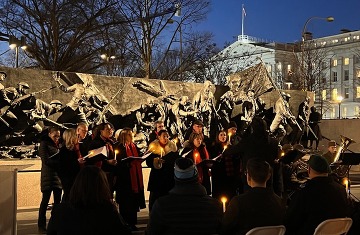
The French Embassy's Chorale de l' Ambassade de France, and the Doughboy Foundation's American Expeditionary Forces Brass Band.
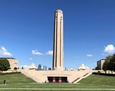
Always focused on remembering those who served in World War I and their families, the Doughboy Foundation held its first annual Christmas Truce event at the National World War I Memorial on Friday, partnering with the Embassy of France. The event featured the Embassy's Chorale de l' Ambassade de France singing Christmas Carols, accompanied by the Doughboy Foundation's own American Expeditionary Forces Brass Band. It was a lovely setting and great way to Keep Faith with the American Doughboy. A reception followed at the Willard Club
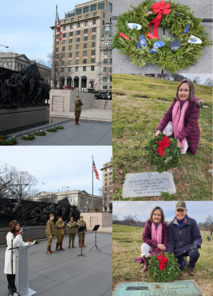
On Saturday, the Doughboy Foundation participated in the national Wreaths Across America program with a ceremony at the National World War I Memorial in Washington, DC. Wreaths were laid in honor of veterans from the Army, Navy, Air Force, Marines, Coast Guard, Merchant Marine Services, Space Force and for all those who remain missing in action. Wreaths sponsored through the Doughboy Foundation were also laid at Arlington National Cemetery. In addition, the Hello Girls Military Honors and Remembrance Project, a Doughboy Foundation Special Project, had its initial Wreaths Across America campaign, with sponsored wreaths laid at Ft. Lincoln National Cemetery in Maryland and elsewhere.
|
2025 was a very eventful year for the Doughboy Foundation, its first full calendar year of operation after completion of the National World War I Memorial in Washington, DC at the end of 2024. Besides last weekend's events, notable activities during 2025 included:

That list just hits the high points of a very active and successful year for the Foundation. We appreciate all the donations and other support that makes it possible for us to continue our work as Stewards of the National World War I Memorial. We're looking forward to another active and eventful year in 2026, and invite you to participate in all the upcoming events you'll be hearing about in each monthly issue of the WWI DISPATCH.
|
Is There Still Enough Hope to Answer the Call…Again?

This winter, Theatrikos Theatre Company in Flagstaff, AZ will present a heartwarming holiday musical based on a true World War I story. Running now through Dec. 21, “The Man Who Saved Christmas,” written by Ron Lytle and directed by Joe Maniglia, has something for everyone to enjoy. Set in 1917, this WWI story follows real-life A.C. Gilbert, a Connecticut inventor and olympic athlete who is also a toy manufacturer. After Congress votes to cancel toy manufacturing in order to more effectively produce materials for the war effort, Gilbert decides to stand up to Congress himself and becomes “The Man Who Saved Christmas.” FInd out more about how Gilbert "doesn’t feel that it’s fair to the children, and he comes from a good place in his heart, so he’s going to talk to Congress...He goes to Washington and changes their minds and comes back and saves Christmas.”
|

The Western Front. Christmas. A German soldier sets down his rifle and steps into No Man’s Land, singing “Silent Night”. Thus begins an extraordinary night of fellowship, music, and peace, told in the words and the songs of the men who lived it. Peter Rothstein’s salute to unsung heroes of The Great War, All Is Calm: The Christmas Truce of 1914, returns to the Historic Asolo Theater after a sell-out run last season. This is the powerful true story of the unofficial ceasefires during World War I among British, French and German soldiers in the trenches along the Western Front around Christmas of 1914. Defying orders, the enemy combatants simply left the trenches for No Man’s Land and exchanged greetings, tobacco and chocolate, photographs… and songs.
|
Dropping the Textbooks:
How 8th Graders from Minnesota Connected with WWI in Washington, D.C.
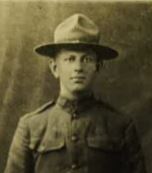
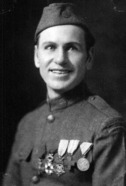
On December 5, 2025, Daily Taps at the National World War I Memorial in Washington, DC was sounded in honor of Thomas Croft Neibaur, a native of Sugar City, Idaho, who was the first soldier from Idaho and the first member of The Church of Jesus Christ of Latter-day Saints to be awarded the Medal of Honor for his actions during World War I.
On October 16, 1918, while serving as an automatic rifleman with the 167th Infantry Regiment, 42nd Infantry Division, Neibaur single-handedly repelled a German counterattack near Côte de Chatillon, France, despite being wounded in both legs and surrounded by 15 enemy soldiers. He killed four of the attackers at close range with his pistol and captured 11 others. His heroic actions, which halted a full-scale enemy assault, were recognized with the Medal of Honor, presented to him by General John J. Pershing at the American Expeditionary Forces headquarters in Chaumont, France, on February 9, 1919. |
|
 |
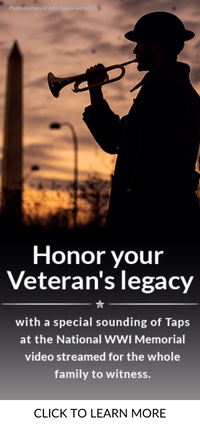
The Daily Taps program of the Doughboy Foundation provides a unique opportunity to dedicate a livestreamed sounding of Taps in honor of a special person of your choice while supporting the important work of the Doughboy Foundation. Choose a day, or even establish this honor in perpetuity. Click here for more information on how to honor a loved veteran with the sounding of Taps.
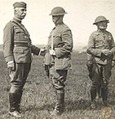
Sometimes in wartime, new units are formed. For example, in World War I, the US Army saw fit to post the four permanent African American regiments (9th, 10th, 24th and 25th) elsewhere, form two entirely new divisions (the 92nd and 93rd Infantry Divisions), and send them to Europe as part of the American Expeditionary Force. But in other cases, units with military heritages dating even before the Revolution, which had been reorganized as National Guard units, were sent overseas under Pershing. Learn how this was the case for the 1st Maryland Regiment, the “Maryland 400,” which had transitioned and played a role in World War I. It is the seventh oldest regiment in the U.S. Army (predating the U.S. Army by seven-and-a-half-months), and it is one of only 30 units in the Army and Army National Guard today that can claim colonial-era lineage.
|
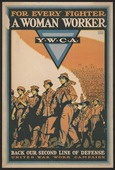
When we think about the First World War, we often picture European battlefields and diplomatic tensions far from the United States. But the war years also triggered major changes at home, especially in cities that were already moving toward an industrial future. Places like San Francisco and Los Angeles didn’t see combat, but they felt the pressure of wartime production, labor shifts, and population growth. These changes didn’t fade after 1918. They shaped how both cities developed throughout the 20th century. Let's dive together into all the ways World War I reshaped industrial cities like San Francisco and Los Angeles.
|
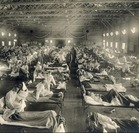
Camp Greene in North Carolina rose from nothing in just 90 days during summer 1917. By December, this massive World War I training site held 60,000 young soldiers, nearly doubling Charlotte’s population. Then came the flu. It struck first on September 20, 1918, when two feverish men checked into the base hospital. Within days, the virus ripped through the camp, hitting Black troops hardest. Leaders locked down the facility on October 3, but death soon followed. By mid-October, coffins stacked floor to ceiling at the railroad station. Read more, and find out how, in all, nearly 300 soldiers died before the pandemic ended in early 1919.
|
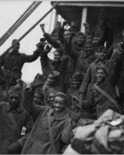
The Harlem Hellfighters fought for a country that didn’t fight for them. In 1917, these Black soldiers from the 369th Infantry were told “black is not a color in the rainbow” and banned from their own farewell parade. Yet once in France, they spent 191 days in non-stop combat, longer than any American unit. Under French command with French weapons, they earned fame when Henry Johnson fought off twelve Germans despite 21 wounds. The entire regiment won France’s Croix de Guerre medal for bravery. Back home in February 1919, they finally got their parade through Harlem’s streets. Learn how the legendary fighting force's story of courage still stands tall in monuments across Harlem today.
|
War on the Porch: A Doughboy’s Interview
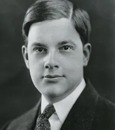
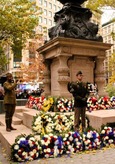
A refurbished memorial plaque honoring Mahwah’s favorite son and poet, Joyce Kilmer, was dedicated in ceremonies at Central Park in New York City on Veterans Day, Nov. 11. Kilmer, a native of New Brunswick, wrote “Trees” in 1913 while a resident of Mahwah. He lived there until his death on July 30, 1918, at the age of 31, during the Second Battle of the Marne while serving with New York’s 69th Infantry Regiment in France during World War I. Read more about Kilmer, and the project to refurbish his memorial, dedicated in 1931 at base of elm tree in Central Park, NYC.
|
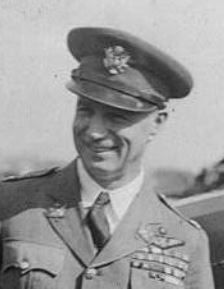
In 1921, after WWI ended, Army Brig. Gen. Billy Mitchell proved airplanes could sink battleships. Three years later, he predicted Japan would launch a surprise air attack on Pearl Harbor at dawn. Navy and Army brass dismissed him. They court-martialed him, forced him out, then spent the next two decades building more battleships. On Dec. 7, 1941, Mitchell’s predictions were proven right, but it was too late. Read more about how Mitchell, a veteran of the Spanish-American War and World War I, spent the late 1910s vocalizing how airpower could dominate the seas, and when he finally proved it, he was court-martialed.
|
 |
|
| |
World War I was The War that Changed the World, and its impact on the United States continues to be felt over a century later, as people across the nation learn more about and remember those who served in the Great War. Here's a collection of news items from the last month related to World War I and America.
|
|
Irving Berlin came home from WWI more famous than ever
The Modern US Passport is a Product of World War I
WWI Museum and Memorial honors US-Australia alliance
The World War I Assault on Free Speech in America
WWI toxic compound sprayed on Georgian protesters says BBC
WWI Cannon was on Texas courthouse lawn until WWII
This Arizona airport is a WWI memorial in disguise
Billy Dunne of Coolaghy, Ireland served in the AEF in World War I
WWI created the close relationship between the USDA’s dietary recommendations and the American agricultural industry
A man is only missing if he is forgotten.
Our Doughboy MIA this month is Sergeant Harry Convin Pruitt. Born September 17th, 1889 Harry Pruitt was a professional soldier, having enlisted in the regular US Army in March, 1913 at the age of 24. He served his first hitch at Columbus Barracks, Ohio, where he was assigned to Company E, 14th Infantry Regiment. He embarked for ‘Over There’ on April 7th, 1918 and in France was reassigned to Company I, 7th Infantry of the 3rd Division; soon to gain fame as the ‘Rock of the Marne’ division. With them he was killed July 15th, 1918 during the Second Battle of the Marne, helping the 3rd earn their title. Originally buried at Fossoy, Marne, his grave was never located after the war. Nothing else is known at this time.
Would you like to be involved with solving the case of Sergeant Harry Pruitt, and all the other Americans still in MIA status from World War I? You can! Click here to make a tax-deductible donation to our non-profit organization today, and help us bring them home! Help us do the best job possible and give today, with our thanks. Remember: A man is only missing if he is forgotten.
|
Merchandise from the Official
Doughboy Foundation WWI Store

The Doughboy Foundation Shop is featuring these beautifully boxed coins available for each military branch and offered at a special holiday price. Produced by the U.S. Mint to commemorate the Centennial of “The War That Changed the World”, each coin set makes an especially thoughtful gift that can be passed down from generation to generation. We have priced these at competitive rates. Have a look and add to your collection today. Please note: Supply is limited!
Proceeds from the sale of these items will help keep watch over the new National World War I Memorial in Washington, DC.
This and many other items are available as Official Merchandise of the Doughboy Foundation.
|
|