Image

Daily News Brief

December 18, 2025

Welcome to CFR’s Daily News Brief. Today we’re looking at the first annual defense spending bill of President Donald Trump’s second term, as well as...

  • A meeting on using Russian assets to support Ukraine
  • The largest-ever U.S. arms package for Taiwan
  • Bhutan’s plan for a Bitcoin city


Top of the Agenda

The U.S. Senate passed an annual defense bill yesterday that approves more than $900 billion in funding. The bill, which the White House said Trump will sign, enables much of the president’s national security agenda, with some effort to strengthen congressional oversight. Lawmakers approved the bill 312–112 in the House and 77–20 in the Senate, underscoring significant bipartisan support for its provisions. Its price tag was $8 billion more than Trump originally requested.


On military workforce policy, the bill will give service members a 3.8 percent pay raise. It ends diversity, equity, and inclusion programming at the Department of Defense and prohibits transgender women from participating in women’s athletic activities at military service academies. 


On Europe, the bill includes $400 million in assistance for Ukraine for each of the next two fiscal years. It blocks the United States from reducing troops levels in Europe below seventy-six thousand—near the current level—without consultations with NATO, despite a pledge in the Trump administration’s recent National Security Strategy to deprioritize Europe. It also renews security cooperation with Baltic countries.


On China, the bill establishes a process to screen U.S. investment in sensitive technologies, bars some Chinese biotech firms from receiving U.S. federal financing, and greenlights funding for continued security cooperation with Taiwan.


On the Middle East, the bill removes congressional sanctions on the Syrian government applied in 2019 in order to support the country’s reconstruction following the ouster of former President Bashar al-Assad. It also repeals congressional authorizations for the use of military force that were approved at the time of the Persian Gulf and Iraq wars. 


On Latin America, the bill authorizes the deployment of active duty troops to the U.S.-Mexico border. It threatens cuts to Defense Secretary Pete Hegseth’s travel budget if the Pentagon does not release unedited videos of controversial boat strikes in the Caribbean to Congress.


“The House and Senate leadership understand how foolish it would be to withdraw American forces from allied countries while Russia refuses to agree to a ceasefire with Ukraine and is conducting hybrid operations in Europe, and as other authoritarian states meddle in their U.S.-aligned neighbors.” 

—the Hudson Institute’s Rebeccah Heinrichs, Foreign Affairs


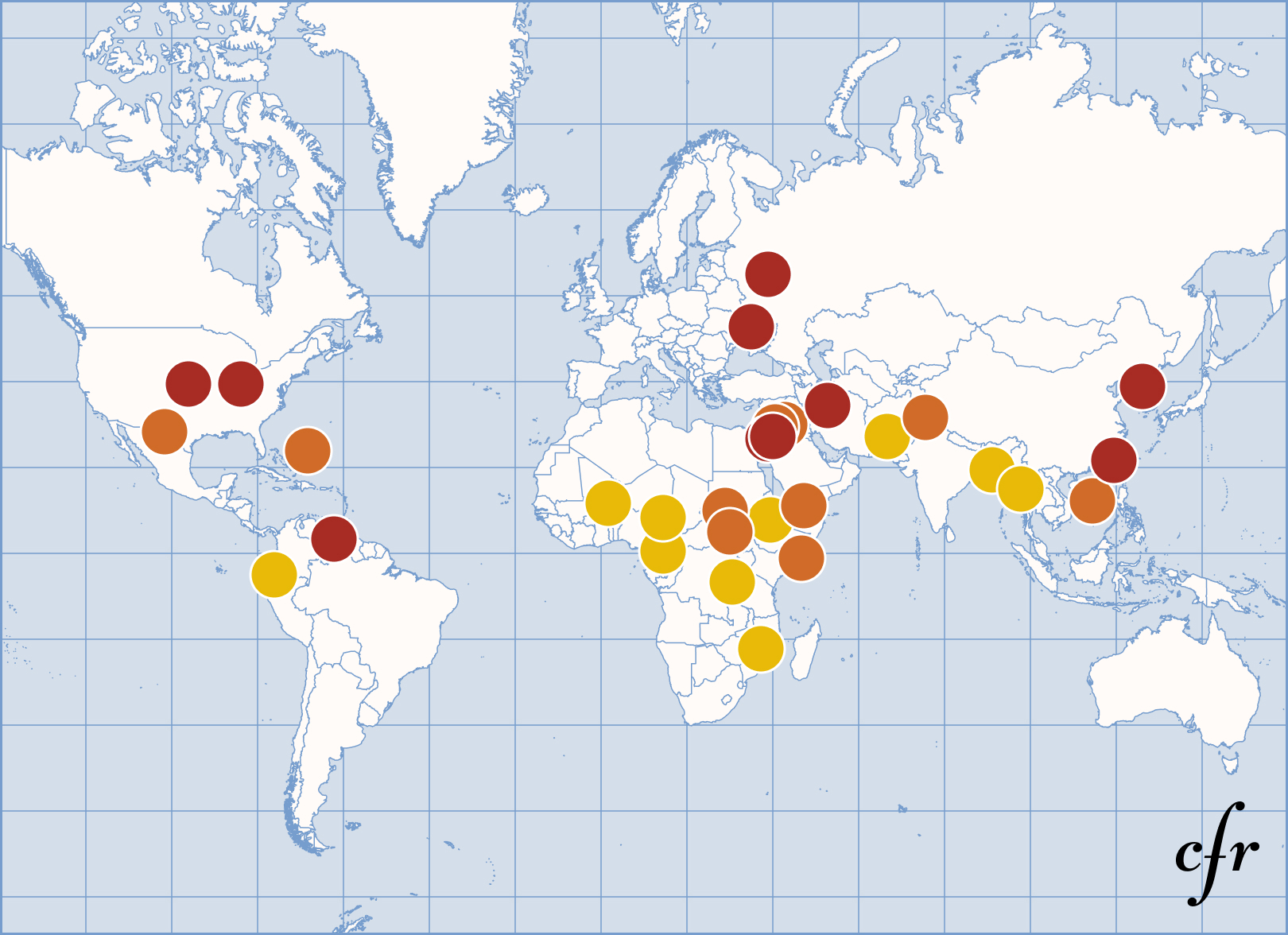
Conflicts to Watch in 2026

View the 2026 Preventive Priorities Survey

CFR’s Preventive Priorities Survey finds that Middle East conflicts, the Russia-Ukraine war, and U.S.-Venezuela tensions are experts’ top global concerns for 2026.


Across the Globe

Meeting on Russian assets. European Union (EU) leaders are meeting today to consider using frozen Russian central bank assets in Europe to back a loan for Ukraine’s defense. Belgium, where most of the assets are held, has reiterated its firm opposition to the plan in recent days. European Council President António Costa said leaders will “never leave” the meeting until an agreement on funding is reached. 


U.S. arms package for Taiwan. The Trump administration has notified Congress of its intent to sell Washington’s largest-ever arms package to Taiwan at an estimated value of $11.1 billion, Taiwan’s defense ministry said yesterday. The sale includes rocket systems and anti-tank missiles. The Department of Defense said the sale helps Taiwan maintain a “credible defensive capability.”


Responses to U.S. threats against Venezuela. Brazil and Mexico both offered to mediate tensions between the United States and Venezuela yesterday after Trump announced a naval blockade on sanctioned ships entering and leaving the South America country. Venezuela requested that the UN Security Council hold an emergency meeting over recent U.S. actions. Some sanctioned oil vessels have avoided Venezuela following Trump’s threat.


UK rejoins student exchanges. The United Kingdom (UK) will rejoin the European study abroad scheme Erasmus in 2027, a senior government official announced yesterday. The UK left the program, which helps students with the cost of studying elsewhere in Europe, as part of Brexit. For now, its return is only confirmed for one academic year.


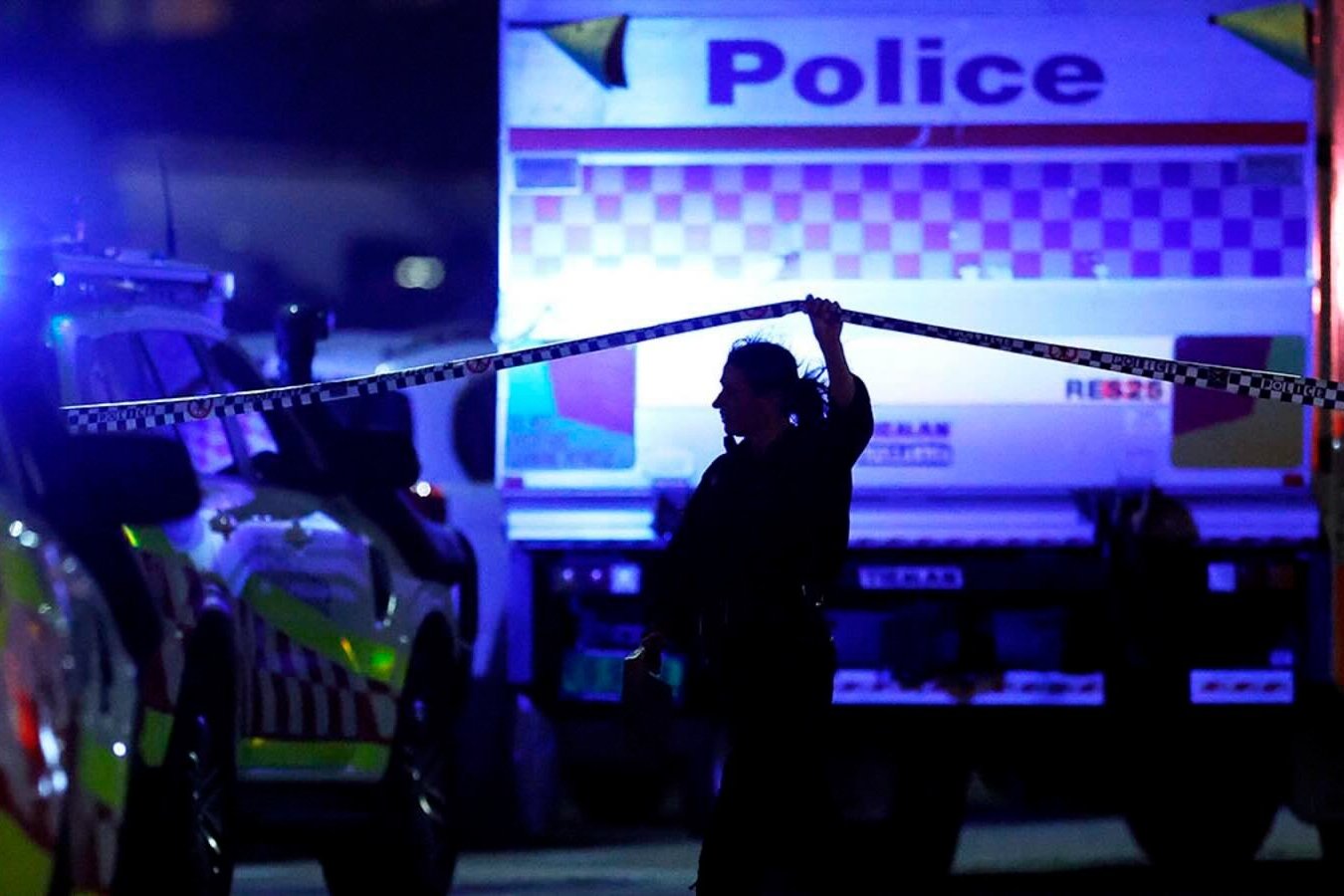
Sydney shooter charged. The surviving suspect of last weekend’s Bondi Beach attack faces fifty-nine charges including murder and terrorism, Australian police said yesterday. Australian and Philippine police are investigating a trip the two accused shooters took to the Philippines last month, though Philippine authorities said yesterday there was no confirmation the pair received “any form of training” there. 


U.S. loan for Angola rail. The U.S. International Development Finance Corporation (DFC) signed a $553 million loan yesterday for Angola’s Lobito Atlantic Railway project, which aims to boost the country’s ability to transport critical minerals. The Development Bank of Southern Africa is also providing $200 million for the project. The head of the DFC said the loan was part of its mission to strengthen African strategic infrastructure. 


India-Oman trade deal. The two countries signed a trade agreement during Indian Prime Minister Narendra Modi’s visit to Oman today that will provide duty-free access to roughly 99.4 percent of Indian exports and 94.8 percent of Omani exports. Oman currently accounts for less than 1 percent of India’s exports, but India’s trade minister described the country as a gateway to the Gulf for Indian goods.


Bhutan’s Bitcoin city. The country announced yesterday it will invest up to $1 billion from its national cryptocurrency reserves to fund a city in a special economic zone. The country has leaned on its abundant hydropower to mine Bitcoin, though it still suffers from widespread unemployment and youth emigration.


The Bondi Beach Attack

A police officer walks along cordon tapeline at the scene of a mass shooting at Bondi Beach in Sydney, Australia on December 14, 2025.

Darrian Traynor/Getty Images

With the self-described Islamic State now allegedly linked to the attack, authorities need to redouble their efforts to counter the group’s enduring appeal, especially during the yearend holiday period, Senior Fellow Bruce Hoffman writes in this Expert Brief.


What’s Next

  • Today, the European Council begins a leaders meeting in Brussels.
  • Today, China’s Hainan Island becomes a free-trade zone.
  • Tomorrow, a summit with Japanese and Central Asian leaders begins in Tokyo.


China’s Long Economic War

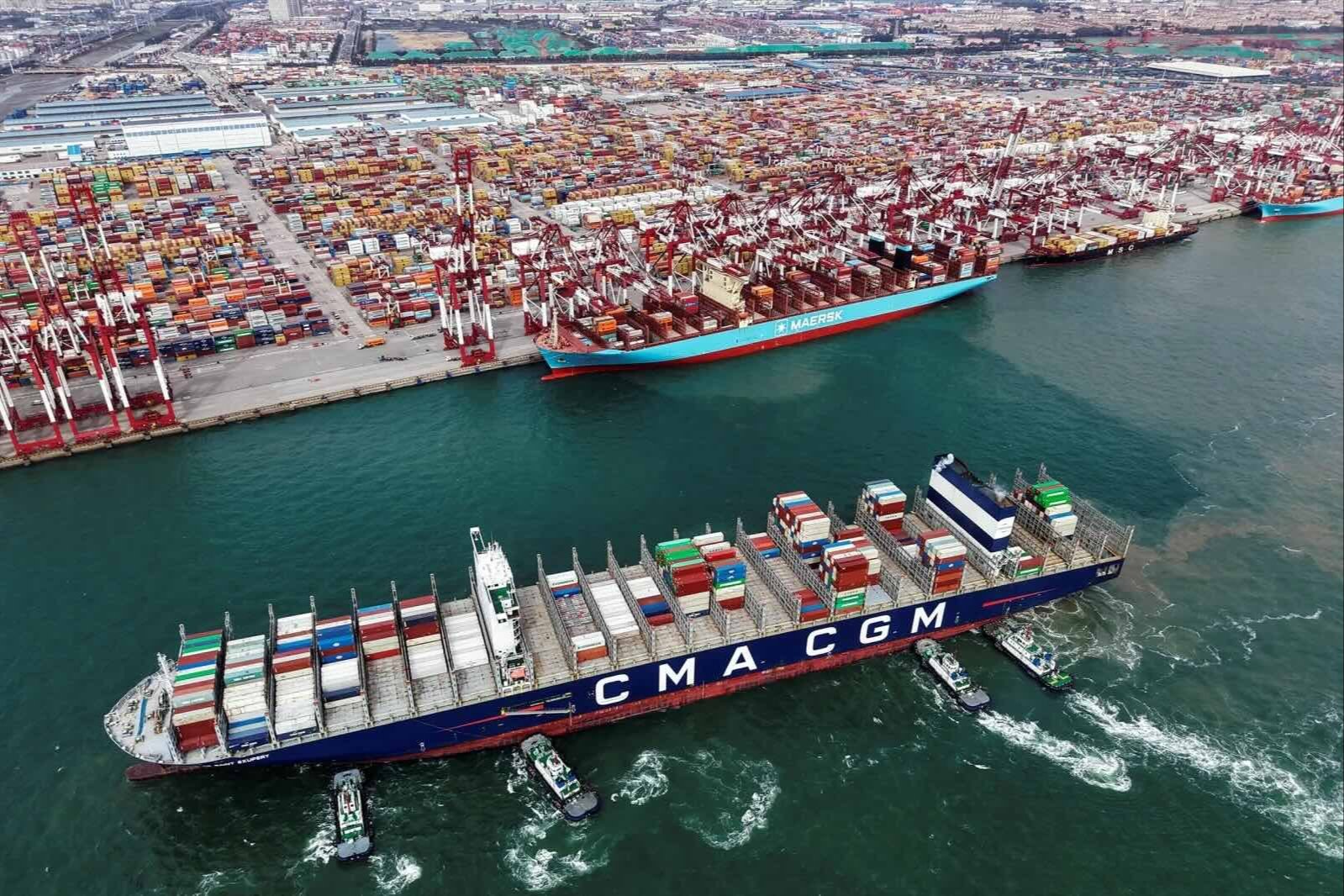
At the port in Qingdao, China, October 2025

China Daily/Reuters

In the long run, China wants to be able to engage economically with the world on terms no less favorable than those accorded to the United States or other great powers, CFR expert Zongyuan Zoe Liu writes in Foreign Affairs.


Council on Foreign Relations

58 East 68th Street, New York, NY 10065

1777 F Street, NW, Washington, DC 20006

Was this forwarded to you? Subscribe to the Daily News Brief

FacebookTwitterInstagramLinkedInYouTube

Manage Your Email Preferences

View in Browser