|
 |
Why The Presidency Has Become So Weak... In Serving the Public
The Supreme Court May Soon Weaken It Further
|

| |||||||||||||||


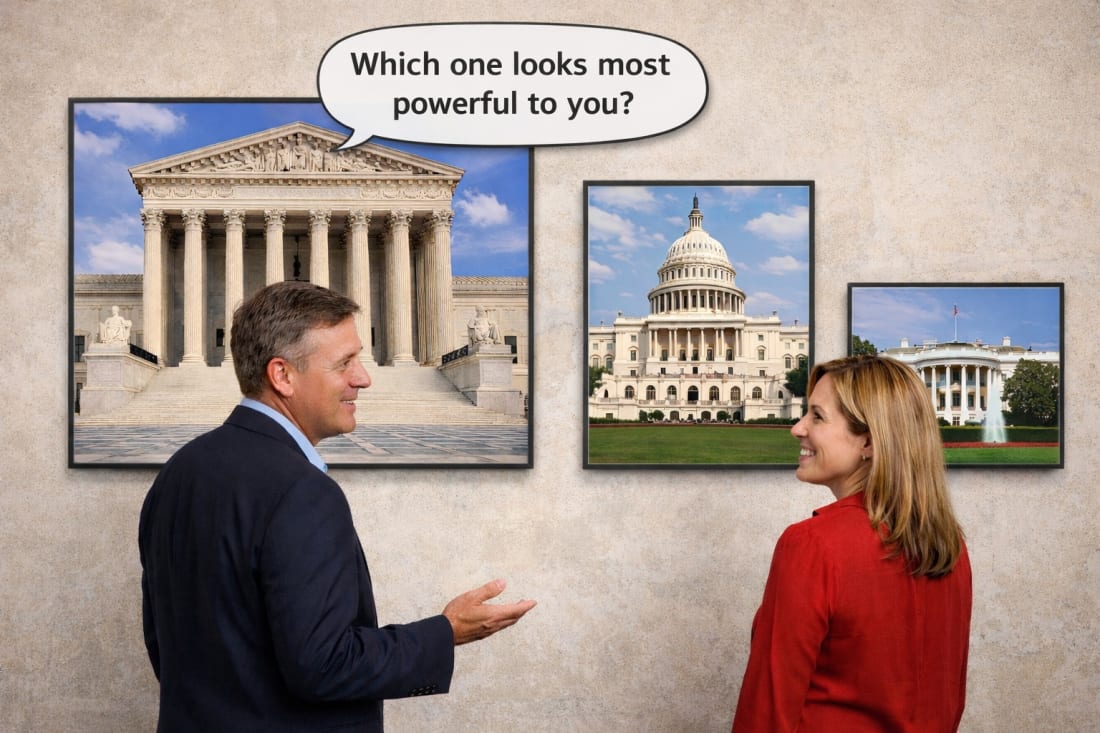 |
In arguments in Trump v. Slaughter, several Supreme Court Justices have contended that Congressional legislation probably violates the Constitution’s separation of powers by denying the President the authority to remove members of independent agencies with fixed-term appointments. This case is just one part of a broader debate about how diminished the powers of the President and Congress have become, with Republicans especially blaming the issue on the delegation of authority to unelected officials and civil servants.
I agree that presidents and Congress have become weaker, mainly in serving the public they represent. However, it’s vital to identify the sources of that weakness, which lie little, if at all, in excessive delegation. In fact, just the opposite. Presidents have weakened their office by centralizing power in the White House in ways that increased partisanship and reduced honest reporting of information to the public. Meanwhile, leaders in both Congress and the White House have also tried to wield excessive power by creating an extraordinary level of permanent commitments. They then weaken their institutions by making it harder for future elected officials to make decisions suited to their time and place.
Why Delegation Arises
Large organizations, by their very nature, must delegate power and decision-making throughout the ranks. Think about the private sector. No industry is as large as the federal government, but imagine if a sector like health or manufacturing required all top executives to be temporary appointees whose main requirement was that they identified as Republicans, Democrats, or loyalists to a single person, and whose secondary requirements included party contributions of time and money, a strong partisan background, and vocal support for the most extreme political claims. That’s not a formula for a thriving industry, nor is it for the federal government.
As Congress struggled to manage both the growth of the federal government and the large private organizations it taxed and regulated, it enacted civil service reforms, established Inspectors General in many agencies within the Executive Branch, and granted partial independence to agencies like the Federal Reserve, Federal Communications System, Securities and Exchange Commission, and the Central Intelligence Agency. Some of these efforts may have been imperfect ways to delegate power, but each aimed to improve government effectiveness in areas where extreme partisanship and patronage had failed.
Controlling the Narrative
One of the primary roles of political appointees in the Executive Branch today is to control the narrative. To do this, Presidents and their immediate staff have increasingly concentrated information flows and other powers within the White House. At the same time, they have limited what approximately two million Executive Branch civil servants, often experts in their fields, can reveal to the public. Agencies rarely publish information about the limitations and problems of the policies they oversee, as the White House often shows little interest. Conversely, many unelected political appointees now spend a lot of their time engaging on social media, criticizing political opponents or anyone who dares to say something negative about the current Administration. And woe to the civil servants who fact-check these claims at risk of losing their jobs.
To clarify that this information-flow problem has been ongoing and didn’t just start with Presidents Trump or Biden, let me give you two older examples from my experience of how it hampers the government’s ability to serve you.
At the end of the Reagan Administration and during the transition to the George H.W. Bush administration, I served as Deputy Assistant Secretary of the Treasury for Tax Analysis. I tried to release a report on the inefficiency and inequity of a tax provision that almost all expert analysts, both inside and outside the government, agreed served the public poorly. It was an ideal time to publish such a report, as it would have little direct political impact on either the outgoing or incoming President. The public would see it simply as a staff study. However, someone from the White House I knew and still respect approached me to say that the “White House” had decided not to allow Treasury to release the report. I am sure this report was of such minor significance that the White House did not involve the President. Still, it was easy to understand its reasoning: no one there would gain any political advantage, and some lobbyists would protest. Those making the decision expressed no concern about the public good or the waste of internal resources involved in developing, then suppressing a report.
One day, an undersecretary of the Treasury told me that if the Congressional Budget Office had studied some issue, he would have taken a different stance on a policy decision. Consider this: here was a senior official in the Executive Branch who felt he relied more on fewer than 300 people in a Congressional office for information than on the huge Executive Branch in which he served. Today, the Executive Branch has become so weakened that agencies most trusted to provide unbiased information, such as the Congressional Budget Office, Joint Committee on Taxation, Government Accountability Office, and Congressional Research Service, primarily sit within the Congressional Branch.
Delegation to the Dead
I have written extensively on how past Congresses and presidents have mandated extraordinary levels of spending and tax subsidies for the indefinite future, far exceeding any expected revenues. As a result, recent Presidents could do nothing new or significant in the budget unless they got Congress to break past promises, asserted questionable legislative authority for the President’s actions, or gave up and agreed with Congress to hand out even more money that would increase deficits. By and large, they have chosen the last option, while filling the courts with cases related to the second route. More than anything else, this delegation of power to now largely dead men (and they were mostly men) explains the current lack of control felt by the President and members of Congress.
Will the Supreme Court Add to the Problem?
If the court decides in Trump v. Slaughter to further politicize and partisanize various Executive Branch agencies, I don’t see how it could help address the three issues I mentioned above. It will allow more delegation of power on even the slightest presidential whim, while fencing off Congress from considering legislative options to limit partisanship in decision-making. It will further encourage the centralization of information, often limited and inaccurate, in the White House. It will further stymie the nonpartisan and bipartisan efforts required to reduce excessive budgetary promises and restore fiscal democracy.
As Donald Moynihan recently put it, Strongman, weak state.
Please read and share my recent book, Abandoned: How Republicans And Democrats Have Deserted The Working Class, The Young, And The American Dream. It lays out the long-term issues that have led to today’s political morass and how efforts to promote upward mobility and wealth building for all must form a significant part of tomorrow’s agenda.
Please also recommend this column to others. Less importantly, if you’re a free subscriber, you can upgrade to paid.
| ||||||||||

