
Dec. 17, 2025
Permission to republish original opeds and cartoons granted.
Can President Trump Bring Peace Between Russia And Ukraine?
|
|
|
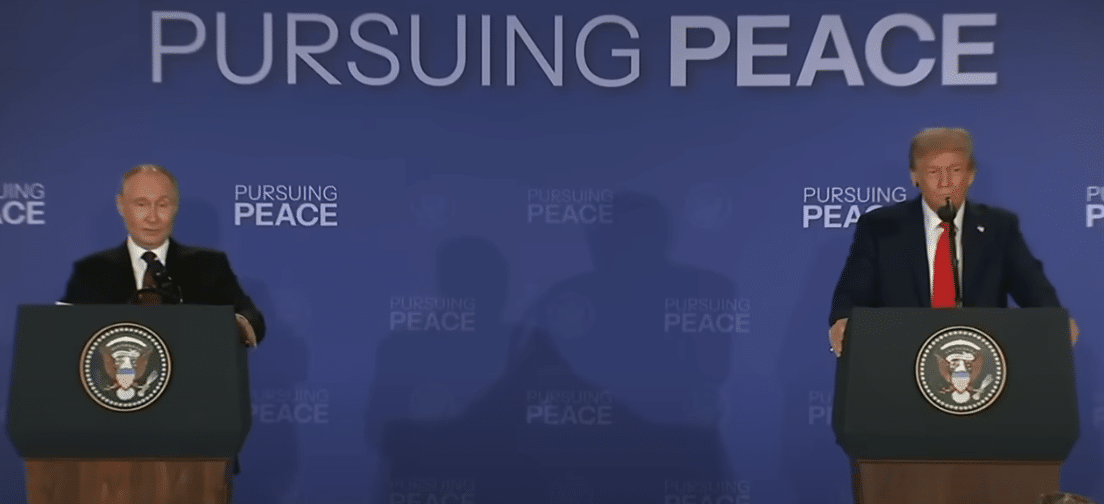
Ukraine has reportedly agreed to abandon its ambitions to join the North Atlantic Treaty Organization (NATO) as the U.S. pushes both Russia and Ukraine to negotiate a ceasefire and peaceful settlement to the war that began in 2014 and expanded in 2022. Instead, Ukraine might join the European Union (EU). Along with it, Ukraine would appear to have also abandoned obtaining the nuclear deterrent that NATO membership implies, that under Article 5 of the treaty, an attack on one is an attack on all, to protect itself from Russia. Or has it? One of the current sticking points reportedly is an Article 5-like security guarantee for Ukraine, which the U.S. is offering on a limited basis, to deter further Russian aggression into Ukrainian territory. The question of Article 5 centers on nuclear deterrence. Generally, a country that falls under either the U.S. or Russia’s nuclear umbrella is “safe”. That is why Ukraine has wanted to get into NATO, beginning the accession process in 2008. But a nuclear war cannot be won and so must never be fought, so the wisdom goes. If there is any “law” that has ensured humanity’s survival every minute of the day since the dawn of the nuclear era, it is that one dictum that arose from the sobering reality of mutually assured destruction. What prevented the Soviet Union in the past from invading Western Europe was mutually assured destruction, that if they did so, it would mean war and a likely end to human civilization. But that also prevented the U.S. from liberating Eastern Europe and the Warsaw Pact nations. Under Article 5, an attack on one is an attack on all, and so Ukraine acceding into NATO particularly when it is currently in the midst of a hot war with Russia would automatically invoke the treaty. NATO would immediately be at war with Russia. Instead of deterring war, it has a high likelihood of starting one, or at least higher likelihood of starting one if the treaty is to be followed by the letter.
|
Measurable Improvement For President Trump Among Swing Voters As Administration Doubles Down On Border And Domestic Issues
|
|
|
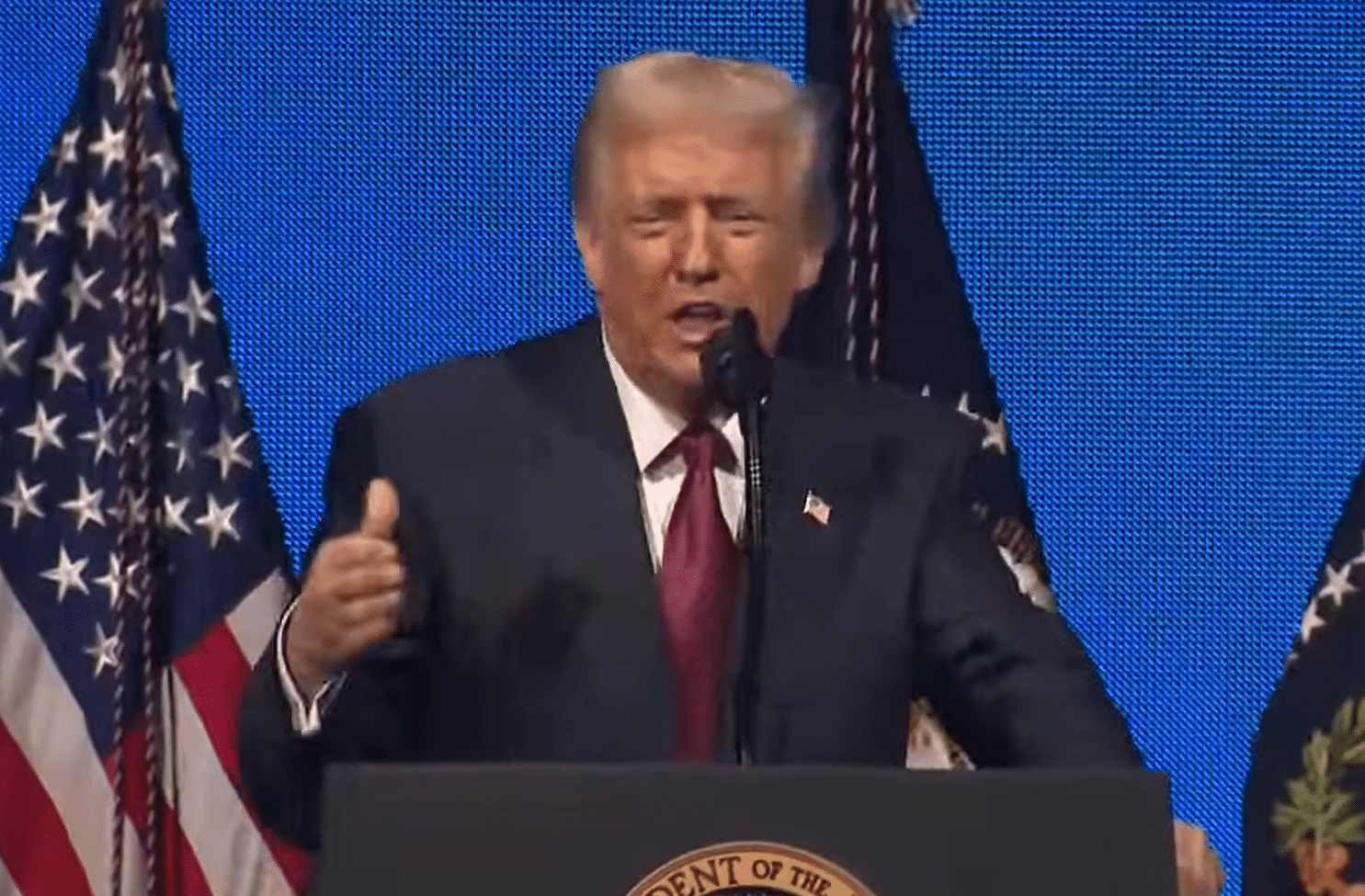
Over the past month, which has included President Trump promising a sweeping overhaul of the green card process after a National Guard member was shot and killed in Washington, D.C., and the federal government reopening as the unpopular government shutdown ended, President Trump has seen a rise in his approval rating among swing voters. President Trump’s approval rating is still below 44 percent according to the latest Real Clear Polling average, largely due to negative perceptions about inflation and the job market, but his approval rating is creeping back up compared to a few weeks ago. Trump’s approval rating clocks in at almost 44 percent (43.9 percent), after stagnating around 42 percent for the past month. Since then, the Trump Administration has been driving home a strong border security message, with the Administration boasting the lowest number of illegal encounters on the southern border in half a century. President Trump also reacted swiftly to the tragic events of November 26th, when two National Guard members were shot, reportedly by an Afghan national. President Trump promised to vet the green card and asylum process and enacted a ban on applications from unstable nations. The Administration is also doubling down on its commitment to childhood health, with Trump ordering a review of the U.S. vaccine schedule which many Americans believe is overly extensive compared to the rest of the developed world. These issues appear to be giving rise to a modest but meaningful increase in approval for President Trump.
|
Can President Trump Bring Peace Between Russia And Ukraine?
By Robert Romano
Ukraine has reportedly agreed to abandon its ambitions to join the North Atlantic Treaty Organization (NATO) as the U.S. pushes both Russia and Ukraine to negotiate a ceasefire and peaceful settlement to the war that began in 2014 and expanded in 2022. Instead, Ukraine might join the European Union (EU).
Along with it, Ukraine would appear to have also abandoned obtaining the nuclear deterrent that NATO membership implies, that under Article 5 of the treaty, an attack on one is an attack on all, to protect itself from Russia. Or has it?
One of the current sticking points reportedly is an Article 5-like security guarantee for Ukraine, which the U.S. is offering on a limited basis, to deter further Russian aggression into Ukrainian territory.
The question of Article 5 centers on nuclear deterrence. Generally, a country that falls under either the U.S. or Russia’s nuclear umbrella is “safe”. That is why Ukraine has wanted to get into NATO, beginning the accession process in 2008.
But a nuclear war cannot be won and so must never be fought, so the wisdom goes. If there is any “law” that has ensured humanity’s survival every minute of the day since the dawn of the nuclear era, it is that one dictum that arose from the sobering reality of mutually assured destruction.
What prevented the Soviet Union in the past from invading Western Europe was mutually assured destruction, that if they did so, it would mean war and a likely end to human civilization. But that also prevented the U.S. from liberating Eastern Europe and the Warsaw Pact nations.
At the height of the Cold War, there were over 60,000 nuclear weapons globally, the number of which has been reduced to about 12,300 via détente, nuclear non-proliferation, arms limitation and ultimately arms reduction treaties between the U.S. and the USSR.
Even now, though, after the Cold War, there is still more than enough firepower in the weapons that are still armed to destroy almost all of humanity. To put the dilemma into perspective, there are 57.5 million square miles of land in the entire world, on which, humans occupy about 6 million square miles.
If every one of these weapons were used in the event of war because of mutually assured destruction — that is, once the shooting starts, it doesn’t stop — the fatalities from the initial blasts might be 1 billion humans simply vanishing into atoms within an hour or so. A few billion more would die in the nuclear winter that followed.
That is what a nuclear war is: An unsurvivable, unwinnable civilization killer. It would be like humanity hitting itself with a large asteroid on purpose. And that’s what every country that builds nuclear weapons risks and must contemplate. You don’t just destroy your enemy, but you destroy yourself. Merely by building them, you become a target in the event the worst happens.
And which is why, on the surface, there being no Ukraine in NATO — as has always been the case since the end of the Cold War and the dissolution of the Soviet Union — makes a degree of sense.
Under Article 5, an attack on one is an attack on all, and so Ukraine acceding into NATO particularly when it is currently in the midst of a hot war with Russia would automatically invoke the treaty. NATO would immediately be at war with Russia. Instead of deterring war, it has a high likelihood of starting one, or at least higher likelihood of starting one if the treaty is to be followed by the letter.
The result would appear to be just as dangerous to Russia as it would be to Europe and the U.S. since presumably the only way to survive the war is to actually never fight it. And, yes, those are all of the risks that were taken when Ukrainian President Viktor Yanukovych was overthrown in 2014, sparking the civil war there, when Russia annexed Crimea in 2014 in response and when Russia invaded the eastern regions of Ukraine in 2022.
All of these events have made a wider war far more likely than pre-2014 — which is why President Donald Trump has been pushing both Russia and Ukraine to end the war on terms that both sides can live with. It’s not just for their survival, to stop the killing, as the President says but also everybody’s survival. For humanity itself.
To put it another way, Ukrainian membership in NATO does not appear to be in Ukraine’s interests, Russia’s interests or NATO’s interests. If that’s what’s being agreed to, then there appears to have been significant progress in the Trump-initiated peace talks. But they’re not out of the woods yet.
What does an Article 5-“like” security guarantee even look like? That is for the three parties of the talks, the U.S., Russia and Ukraine to work out. If the problem for both the U.S. and Russia with Ukrainian NATO membership is the potential for the nuclear trigger, it is hard to see why would a non-NATO but still nuclear trigger be a suitable alternative that both sides would agree to. So, it must be something else.
But NATO membership is not the only potential trigger to a wider . Russia continuing its war poses all of the same risks. Looking into the future, President Trump is in his final term of office. The next administration might be from a different party, might have a different view about how to settle the conflict and so uncertainty enters the equation the longer the war goes on. Uncertainty over whether Russia can continue waging the conflict, whether Ukraine can continue to sustain the conflict on its end and keep its territory and so forth. Today, the U.S. is willing to help settle the war. Tomorrow?
And then there’s Europe itself, which as the regional partner for Ukraine, might have some of the best leverage to push Ukraine to take a deal now while there’s still a deal to be had. Europe should have been begging us to help end the war, but they haven’t. Just as the Europeans can be helpful, they can also be able to push Ukraine to reject a settlement of some kind, and that would be a tragedy that we all may end up regretting.
The truth is, President Trump is not getting any younger. And the deal that is on the table now might be the last, best deal either side can hope for. That goes for Russia and Ukraine — and everyone else. Whatever is on the table right now, that could be as good as it gets. If nothing else, living to fight another day might have to be good enough for now, with the hope that both sides eventually appreciate the longer term benefits of peace. Or, they could just keep fighting — and we’ll eventually find out how it ends.
But there might not be another peace president. This could be it.
Robert Romano is the Executive Director of Americans for Limited Government Foundation.
To view online: https://dailytorch.com/2025/12/can-president-trump-bring-peace-between-russia-and-ukraine/
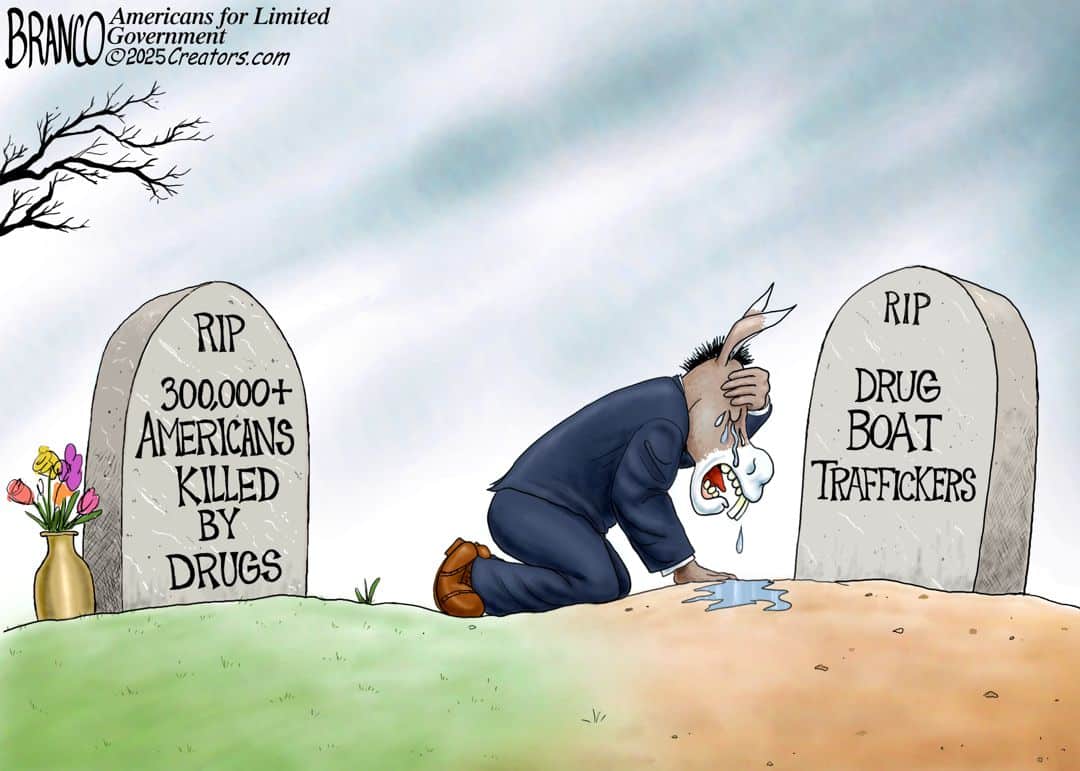
Cartoon: Graveside Manner
By A.F. Branco
Click here for a higher level resolution version.
To view online: https://dailytorch.com/2025/12/cartoon-graveside-manner/
Measurable Improvement For President Trump Among Swing Voters As Administration Doubles Down On Border And Domestic Issues
By Manzanita Miller
Over the past month, which has included President Trump promising a sweeping overhaul of the green card process after a National Guard member was shot and killed in Washington, D.C., and the federal government reopening as the unpopular government shutdown ended, President Trump has seen a rise in his approval rating among swing voters.
President Trump’s approval rating is still below 44 percent according to the latest Real Clear Polling average, largely due to negative perceptions about inflation and the job market, but his approval rating is creeping back up compared to a few weeks ago. Trump’s approval rating clocks in at almost 44 percent (43.9 percent), after stagnating around 42 percent for the past month.
Trump’s approval rating has seen a modest but meaningful turnaround among moderates (+10 points), voters under age 30 (+8 points), women (+5 points), independents (+5 points), and Hispanics (+4 points) since driving home a strong border security message, calling for a review of childhood vaccine recommendations, and reopening the federal government. While polling numbers shift rapidly, it is worth noting where Trump may be gaining ground with swing voters ahead of the midterm cycle.
Four weeks ago, the federal government was finally reopening after a deeply unpopular 43-day shutdown that had many government services from air traffic control to the Supplemental Nutrition Assistance Program (SNAP) under threat. Republicans had just received a wakeup call that suggested the midterm cycle could be especially challenging, with Democrats sweeping the Virginia and New Jersey Governor races, and New York City electing its first Democratic Socialist mayor.
Since then, the Trump Administration has been driving home a strong border security message, with the Administration boasting the lowest number of illegal encounters on the southern border in half a century. President Trump also reacted swiftly to the tragic events of November 26th, when two National Guard members were shot, reportedly by an Afghan national. President Trump promised to vet the green card and asylum process and enacted a ban on applications from unstable nations. The Administration is also doubling down on its commitment to childhood health, with Trump ordering a review of the U.S. vaccine schedule which many Americans believe is overly extensive compared to the rest of the developed world.
These issues appear to be giving rise to a modest but meaningful increase in approval for President Trump. Comparing polling from the Economist/YouGov from Nov. 24 to polling from Dec. 15, President Trump’s approval rating has inched up, and gained momentum with swing voters. Trump’s overall approval rating has gained four points overall according to the survey, going from 38 percent the week before Thanksgiving to 42 percent as of Dec. 15.
Trump’s approval rating has risen significantly among moderate voters as shutdown fears have receded, with the president’s approval rating rising ten points over the past three weeks, going from 27 percent to 37 percent. President Trump also gained eight points with voters age 18-29 during the same period, going from 29 percent to 37 percent.
Women and independents are also backing Trump at a higher rate than they were three weeks ago, with President Trump’s approval rating among women rising five points from 31 percent to 36 percent. His approval rating is up five points with independents as well, going from 27 percent to 32 percent over the past three weeks. President Trump also received a four-point bump from Latinos since Nov. 24, with his approval rating rising from 34 percent to 38 percent.
The reopening of the federal government and the Trump Administration’s focus on domestic issues such as border security and health issues, appear to be boosting President Trump’s approval rating particularly among moderate and independent voters, young people and women, and Latino voters.
While a persistently high unemployment rate that skyrocketed under President Joe Biden and has yet to recede is still driving down President Trump’s approval rating, there are signs of improvement. Economic issues, including persistent unemployment and inflation, have been dragging down the president’s approval rating all year and will play a significant role in whether the GOP loses substantially in the House in 2026. That said, there are signs President Trump’s other domestic accomplishments, including strict immigration enforcement and focus on improving national health, are making an impact in his approval rating among swing voters.
Manzanita Miller is the senior political analyst at Americans for Limited Government Foundation.
To view online: https://dailytorch.com/2025/12/measurable-improvement-for-president-trump-among-swing-voters-as-administration-doubles-down-on-border-and-domestic-issues/