|
|
|
monthly news from ASAP | December 2025 | asapconnections.org
|
| |
|
|
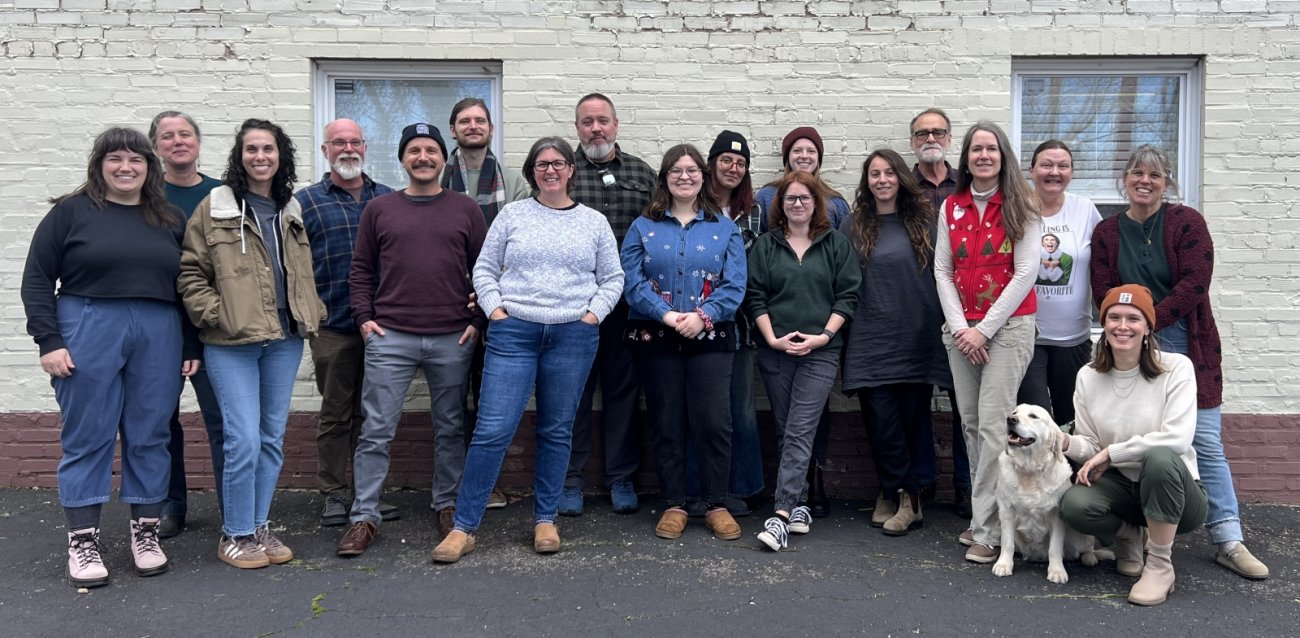
Happy holidays from the ASAP staff!
We are so grateful for your support in 2025. This was a challenging year with ongoing Helene recovery and uncertainty in funding at the federal and state levels. Despite these challenges, we achieved so much—with your help. Here’s a few highlights from the year.
Our continued Helene recovery work throughout 2025, including the Appalachian Farms Feeding Families program, through which ASAP strengthened connections between farms, restaurants, childcare centers, and schools and provided funding to purchase directly from the farms.
Our Business of Farming Conference last February was incredibly impactful as a place where farmers could gather and talk to their peers about the challenges and successes in the ongoing recovery process —as well as their farm businesses in general. We're already hard at work on the 2026 conference, which will take place Feb. 28 in Asheville.
ASAP's Local Food Research Center published six reports this past year, including two reports on Helene impact and recovery (May and November), as well as consumer research, the expansion of the Double SNAP program, and models for integrating farm to school education.
The Growing Minds Farm to School team successfully piloted the Farm to Early Care and Education (ECE) Academy, a cohort of ECE educators who received customized training, materials, and peer learning. Many of the participating centers were also part of the Appalachian Farms Feeding Families program, which allowed us to deepen that support. Local sourcing connections at the K-12 level expanded as well, and our Growing Minds team began building relationships with school nutrition directors we hadn’t previously engaged with.
Work in our farmers market incentive programs, including Farm Fresh Produce Prescription and Double SNAP, required several pivots this year to respond to funding uncertainty, including cuts to HOP and disruptions to SNAP benefits. Both programs continue to help hundreds of households and farm businesses and remain a consistent source of support for our communities.
We couldn't accomplish this work without your continued support! We are so grateful to work in these communities and with all of you.
|
|
 |
Last-Minute Local Food Gift Ideas
|
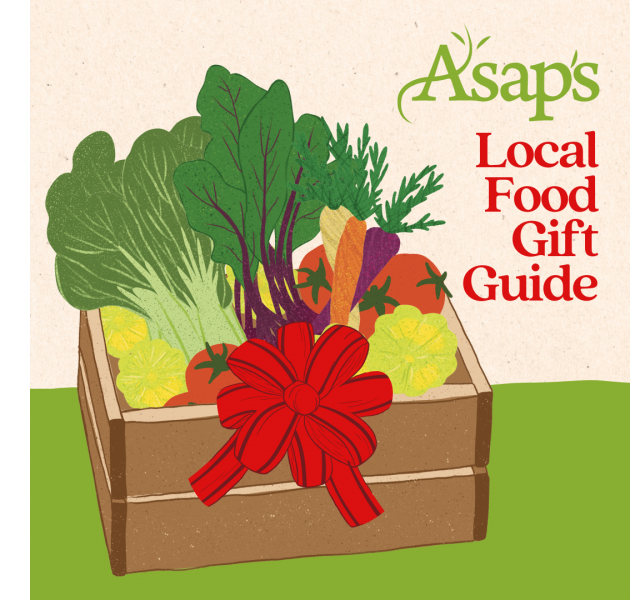 A CSA share is the holiday gift that gives and gives again, providing a weekly box crammed full of seasonal produce, meats, flowers, and more. Income from a CSA can help a farm get much-needed supplies to start a new season. Start your CSA search in the Local Food Guide. Look out for more CSA information and farm features during CSA Month, Feb. 15 to March 15. A CSA share is the holiday gift that gives and gives again, providing a weekly box crammed full of seasonal produce, meats, flowers, and more. Income from a CSA can help a farm get much-needed supplies to start a new season. Start your CSA search in the Local Food Guide. Look out for more CSA information and farm features during CSA Month, Feb. 15 to March 15.
Farmers market tokens make great stocking stuffers and let the recipient select the products they want the most. You can still pick up tokens (or other last-minute gifts) at markets in the coming week, including:
- Today, Wednesday, Dec. 17: River Arts District Farmers Market (Asheville, NC), Weaverville Tailgate Market
- Saturday, Dec. 20: Asheville City Market, Black Mountain Tailgate Market, Jackson County Winter Farmers Market (Sylva, NC), Johnson County Winter Farmers Market (Mountain City, TN), North Asheville Tailgate Market, Nourish Knoxville's Winter Farmers Market, Rutherford County Winter Farmers Market, Transylvania Farmers Market (Brevard, NC), Winter Farmers Market by Grown Oak Ridge (Oak Ridge, TN), Winter King Street Market (Boone, NC)
- Tuesday, Dec. 23: West Asheville Tailgate Market
- Daily: WNC Farmers Market (Asheville, NC)
Check the linked Local Food Guide listings for market hours and locations.
Have a farmer (or aspiring farmer) on your list? A Business of Farming Conference registration (Feb. 22 in Asheville) lets them know you support the success of their farm business. In addition to the general business and marketing tools covered annually, this year's conference will focus on post-storm recovery and planning for resilience.
Find more ideas, explore local artisan makers, farmers markets, farm experiences, and more in ASAP's online Local Food Guide.
|
|
|
Kids Activities from Growing Minds
|
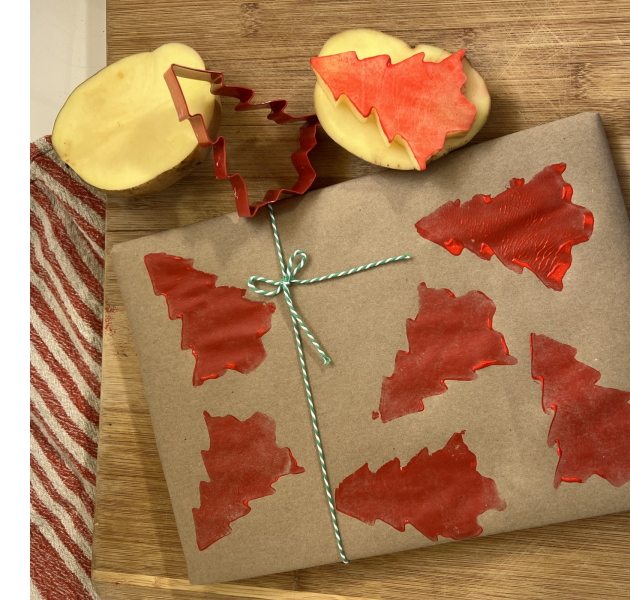 Looking for indoor activities to do with the kids while they are home from school this winter break? Check out the archive of Growing Minds Day by Day activities for December and January! Looking for indoor activities to do with the kids while they are home from school this winter break? Check out the archive of Growing Minds Day by Day activities for December and January!
These guides are packed with seasonal recipes, books, and activities for kids that work in both a classroom and home setting. Check out:
And so much more!
|
|
|
 FACES OF LOCAL FACES OF LOCAL |
| | 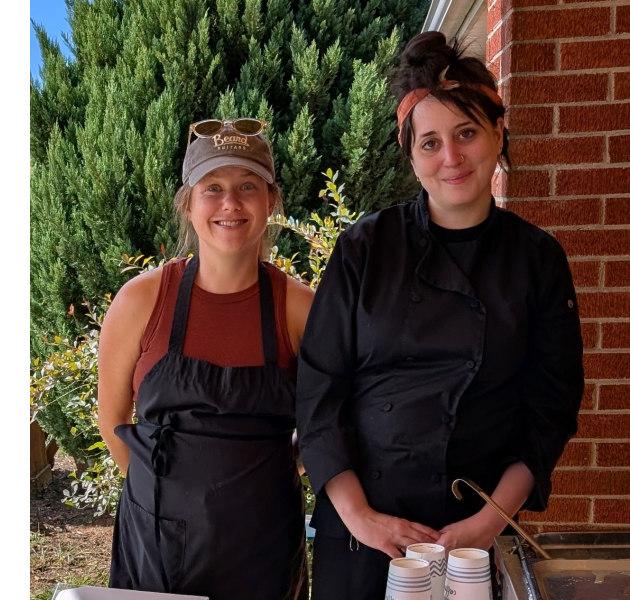 Emily Green is executive chef and co-owner of Bone & Broth on Charlotte Street in Asheville, North Carolina. Both & Broth features dry-aged cuts from regional farms, mountain-grown produce, and fresh-baked goods from local bakeries. When Emily isn’t in the kitchen preparing decadent meals woven with local ingredients, she’s immersed in her community—including shopping at farmers markets and volunteering with ASAP’s Growing Minds farm to school program through recipe development and cafeteria taste tests. She's pictured on the right, along with another Growing Minds volunteer (Emily Pickelhaupt), serving a meal for WNC Source educators at Bearwallow Valley Farm. Emily Green is executive chef and co-owner of Bone & Broth on Charlotte Street in Asheville, North Carolina. Both & Broth features dry-aged cuts from regional farms, mountain-grown produce, and fresh-baked goods from local bakeries. When Emily isn’t in the kitchen preparing decadent meals woven with local ingredients, she’s immersed in her community—including shopping at farmers markets and volunteering with ASAP’s Growing Minds farm to school program through recipe development and cafeteria taste tests. She's pictured on the right, along with another Growing Minds volunteer (Emily Pickelhaupt), serving a meal for WNC Source educators at Bearwallow Valley Farm.
Tell ASAP a little more about yourself and how you came to be a chef.
I was at the University of Georgia pursuing a graduate degree in Historic Preservation when I happened to take a catering job at a historic ballroom. Despite having no formal culinary training I suddenly found myself in the kitchen, putting together canapes. When I wasn’t there, trying to fake my way through a pâte à choux, I was in the library researching Appalachian vernacular kitchen gardens and lost varietals of apples. Between the kitchen, the library, and a side gig selling heirloom tomatoes at a local farmers market, I came to realize the intersection of my passions for local food, weird veggies, and regional cooking traditions could be realized in a restaurant setting. After years of working the line, seven of which have been at Bone & Broth, my husband and I had the opportunity to purchase the restaurant, of which I am now executive chef.
How do you integrate Bone & Broth into the community/neighborhood?
Knowing our neighborhood guests’ names (and orders) is a joy, but what I love most about running a local bar and grill is the opportunity to be a blank canvas for people’s memories. Whether it’s a casual burger and beer on a Tuesday or an elopement on the mountain followed by a romantic multicourse meal, we provide a cozy third space for life’s savourable moments.
One of my favorite parts of my job is creating recipes that allow people to expand their palates. I find that a guest is more likely to choose a new experience if it is presented in an approachable, accessible way, and the same goes for kids! I love seeing our younger gourmands skip the butter noodles in favor of a bowl of braised collard greens and potlikker or al-dente haricots verts with garlic and shallot. Working with Growing Minds has helped me find a way to bring that to the classroom. For our last taste test, I created a Moroccan-inspired carrot salad (see recipe below), made with local veggies, raisins, and harissa-lemon dressing. Hearing that the kids were eager to try cultural flavors they may have not previously encountered, and providing them the chance to recreate that experience at home, was incredibly fulfilling. Watching children learn about the source of their food while making decisions about how to nourish their bodies and their minds is a powerful experience.
As a chef, what are some of the benefits of working directly with farmers and how does your commitment to sourcing local ingredients shape what you make?
I love knowing my farmers. We source our beef from Apple Brandy Farms, which has grazing rights on the Parkway and provides their pasture raised cattle free-choice feed, resulting in a product that is both ethical and extremely high quality. Knowing I can rely on Lee’s One Fortune Farm to harvest the perfect varietal of mustard green for a wine dinner or working with Asheville Microgreens to determine the perfect kind of sprout to complement some grilled shellfish allows me to deliver the highest-possible quality dish to our guests. My favorite thing about working directly with farmers, however, is allowing seasonality to guide my menus. It’s always a magical time of year when I receive the first black pearl mushrooms from Black Trumpet Farm, or put the Candy Roaster squash I’ve been saving since late summer in the oven. Working with farmers in Western North Carolina, where each season is distinctly unique, pushes me to showcase the beauty of seasonally available ingredients in a way that will make our guests appreciate them as much as I do.
Do you have any favorite winter meals you’re cooking at home?
Winter always makes me crave a cozy soup or stew. My favorite thing to make right now is a pureed soup of seasonal vegetables, like carrot, turnips, potatoes, and leeks. Try pairing it with some locally baked sourdough, a compound butter made from cold-hardy herbs like rosemary and sage, and a mug of locally pressed hot apple cider.
|
|
|
|
 RECIPE OF THE MONTH RECIPE OF THE MONTH |
| | 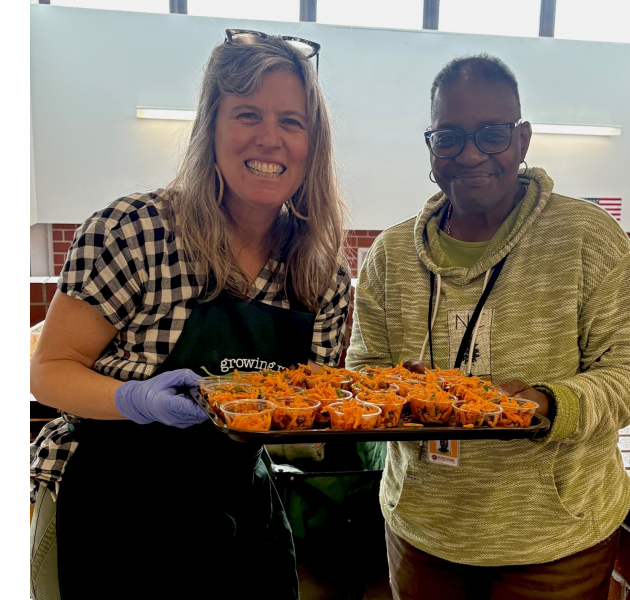 Chef Emily Green of Bone & Broth, interviewed above, serves as a volunteer with ASAP's Growing Minds farm to school program. She created this recipe for a cafeteria taste test at W.D. Williams Elementary this fall. Chef Emily Green of Bone & Broth, interviewed above, serves as a volunteer with ASAP's Growing Minds farm to school program. She created this recipe for a cafeteria taste test at W.D. Williams Elementary this fall.
Ingredients
- 1 pound carrots
- 2 tablespoons raisins
- 2 tablespoons lemon juice
- 2 tablespoons olive oil
- 1/2 teaspoon harissa paste
- 1/8 teaspoon kosher salt
- 1 bunch Italian parsley
Directions
- Shred the carrots into a large bowl.
- Blend together the oil, lemon juice, harissa paste, and salt.
- Roughly chop the parsley and add it and the raisins to the bowl.
- Dress the salad and allow to sit for at least 20 minutes before serving.
Find more recipes at growing-minds.org and asapconnections.org.
|
|
|
|
 MEDIA HIGHLIGHTS MEDIA HIGHLIGHTS |
| | “A lot of federal funding was kind of frozen and in this limbo state at the time (of the last survey) and since then, things have gotten moving a bit more. So, I do expect that we should hear more farms have actually received their funding through government contracts or at the very least heard back from the agencies that they applied to.”
— Jessica Ruiz, ASAP community research coordinator, speaking about ASAP's interim Helene impact report to Hendersonville Times-News |
|
|
|
|
|
|
| | |
ASAP's mission is to help local farms thrive, link farmers to markets and supporters, and build healthy communities through connections to local food.
|
|
|
|
|
|
|
|
|
|
|