|
Critical State: Border Wall Transforming National Park to Military Zone
If you read just one thing this week … read about the fragile desert landscapes turning into militarized enclaves.
|

| |||||||||||||||


 |
As a nonprofit newsroom, Inkstick Media depends on donations and reader support to do its work. Between now and the end of the year, Inkstick is participating in the NewsMatch fundraising campaign, which means any and all donations will count as double without costing you any extra. Will you support Inkstick today?
Ecosystems on the Chopping Block
At The Border Chronicle, Myles Traphagen reports that escalating border enforcement efforts have transformed fragile desert landscapes into militarized zones, with lasting consequences for both ecosystems and nearby communities.
Traphagen is the Borderlands Program Coordinator for the nonprofit Wildlands Network based in Tucson, Arizona. In the piece, he describes how US border wall construction has relied on repeated dynamite explosions to carve through protected lands in southern Arizona, including wildlife refuges and sacred Indigenous sites.
Traphagen poses the questions: “They are literally blowing up part of a national park. How can this be possible? Aren’t these protected lands?”
Not entirely, he explains. “Congress inserted a provision into the Real ID Act of 2005 granting the secretary of Homeland Security — a nonelected, politically appointed official — the authority to waive virtually all laws for border wall construction.”
He details how the blasts destroyed habitats, disrupted migration corridors, and permanently altered desert hydrology.
“Building this wall will waste millions of gallons of groundwater, permanently altering the lives of every being that depends on this land,” Traphagen says.
The piece also examines how federal agencies have bypassed environmental laws under national security waivers, leaving little recourse for local residents or conservationists.
If You Read One More Thing: Affordability in US-North-South Diplomacy
Megan Messerly reports at Politico that concerns over inflation are likely to constrain Donald Trump’s threats to withdraw from the US-Mexico-Canada Agreement (USMCA) as the pact approaches a high-stakes review.
The article explains that affordability pressures heading into the 2026 midterm elections shaped White House calculations. Officials in Mexico and Canada have expressed cautious optimism that Trump might avoid actions that could raise consumer prices.
Messerly details how the agreement governed roughly $1.5 trillion in annual trade and included a “sunset review” requiring renewal.
The USMCA has helped keep costs down by allowing most compliant goods to flow duty-free, even amid recent tariff threats.
“Frankly, I don’t see [the US pulling out of USMCA] as that realistic because it would be a disaster for all three countries,” Canadian Senator Peter Boehm, told Politico. “As you get close to the midterms, I think there will be some moderation in what the Trump administration is doing.”
Do We Need ICBMs?
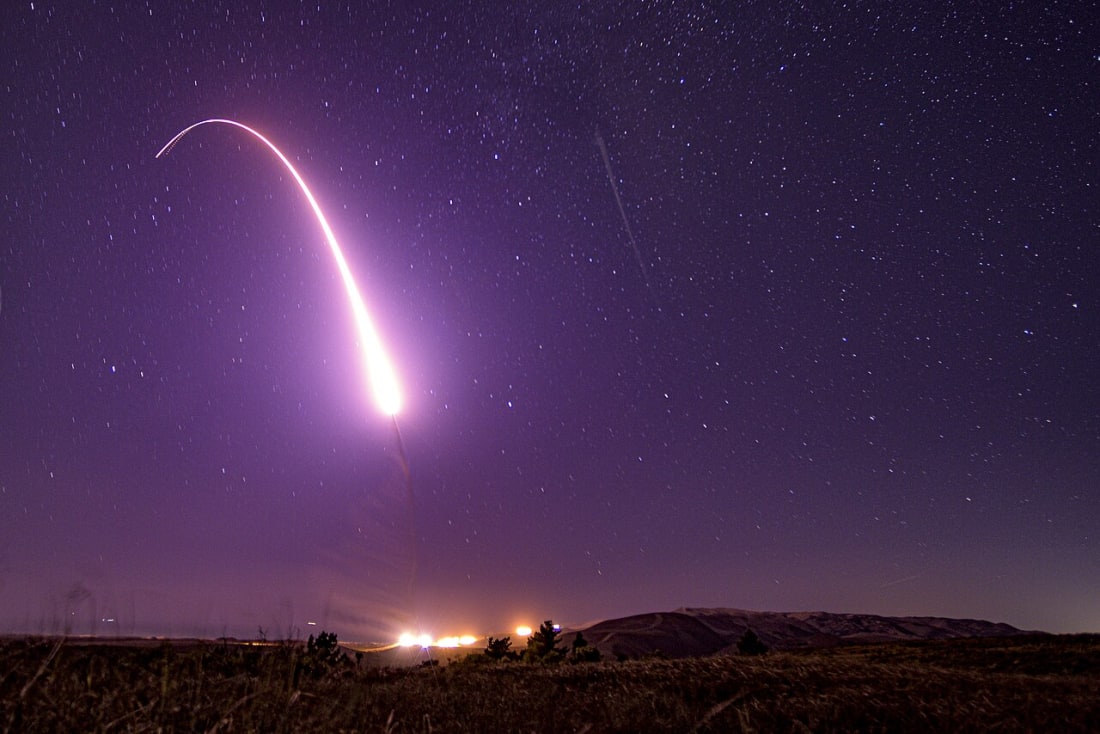 |
Robert Rudney asks what reason The US has for replacing its intercontinental ballistic missiles at The American Prospect.
Rudney questions whether modernization makes strategic or moral sense. He argues that the Minuteman III replacement program, now known as the Sentinel, imposes enormous financial, environmental, and safety costs while offering questionable deterrent value.
ICBMs were originally designed for Cold War conditions that no longer exists, he explains, noting that their vulnerability to first strikes increases the risk of accidental nuclear war.
There has been bipartisan skepticism, including past remarks by Donald Trump, about the logic of expanding land-based nuclear forces. The article contrasts ICBMs with submarines and bombers, which Rudney describes as more stable deterrents.
Deep Dive: The 2025 National Security Strategy Risks Weakening NATO and Indo‑Pacific Deterrence
Brookings scholars have collectively assessed the Trump administration’s 2025 National Security Strategy (NSS) and conclude that it represents a marked departure from recent US strategic orthodoxy, reorienting priorities toward the Western Hemisphere and economic instruments while downplaying the centrality of great‑power military competition. The new NSS, according to the report, “does not expressly reference major power competition once.”
Contributors — including Scott R. Anderson, Aslı Aydıntaşbaş, Pavel K. Baev, Vanda Felbab‑Brown, Mara Karlin, Patricia M. Kim, Michael E. O’Hanlon, and others — each parse different regional and thematic implications, producing a mosaic of critique and cautious endorsement.
The commentators argue that the NSS de‑emphasizes major‑power competition, notably by omitting explicit framing of China and Russia as primary strategic rivals; instead, the document privileges hemispheric concerns such as migration, trade, and economic rebalancing. “Mass migration is deemed to be the major external threat to the United States,” the report notes.
The analysts observe that this rhetorical shift signals a willingness to tolerate regional balances of power and to “rebalance” economic ties rather than pursue sustained ideological or military containment strategies, a change that many saw as potentially inviting strategic risk in Europe and the Indo‑Pacific.
Several authors focused on Europe and Russia. Pavel K. Baev and Steven Pifer warn that the NSS’s treatment of Europe and Russia effectively reduces the perceived threat from Moscow and risks signaling ambivalence about NATO commitments, a posture that Moscow could exploit to press nuclear and strategic advantages. Commentators also note that the strategy’s language on Europe — framing European political trajectories as a problem to be cultivated against — have the potential to deepen transatlantic rifts and to embolden populist, illiberal forces across the continent.
On the Western Hemisphere, Vanda Felbab‑Brown and others described the NSS as advancing a “Trump Corollary” to the Monroe Doctrine, elevating migration, drugs, and China’s regional influence as primary threats and endorsing a more interventionist posture against criminal networks and foreign economic footholds. Felbab-Brown argues that the “Trump Corollary” could turn the US into a “neo-imperialist presence in the region.”
“Notably, China is never named directly in the discussion of the Western Hemisphere, but there is little doubt that Beijing is the intended target when the document refers to ‘non-Hemispheric competitors’ to be pushed out of the region,” the report says. “How this demand will be balanced against the stated priority of trade negotiations remains an open question.”
Critics argue this approach risked perpetuating long‑standing resentments in Latin America and could produce open‑ended security commitments.
In Asia, Patricia M. Kim and Lynn Kuok find continuity in specific policy lines — support for Taiwan’s status quo, freedom of navigation, and regional partnerships — yet they emphasize that these positions are embedded within a far narrower global vision that deprioritizes the Indo‑Pacific relative to the Western Hemisphere. Analysts warn that sidelining the rules‑based international order and international law could undermine US leverage and complicate alliance diplomacy in Asia.
Economic and resilience themes have drawn mixed reactions. Kari Heerman and Michael O’Hanlon praised the NSS’s emphasis on economic vitality and technological strength as foundations of deterrence, while cautioning that heavy‑handed economic tools (notably tariffs) could erode long‑term leverage and alienate partners. Stephanie K. Pell highlights cyber and communications resilience as central to the strategy’s infrastructure priorities, noting the administration’s preference for industry partnerships and deregulation.
Across the essays, Brookings experts repeatedly stress that the NSS functions more as an ideological statement than an operational blueprint: It reflects internal political priorities, lacks budgetary alignment, and offers limited guidance for implementation. Several contributors conclude that the document has clarified the administration’s worldview — America First, transactional alliances, and hemispheric focus — even as it raises profound questions about alliance cohesion, international law, and the future shape of US global leadership.
Show Us the Receipts
Inkstick Managing Editor Patrick Strickland examines how Donald Trump’s repeated use of “invasion” rhetoric to describe immigration draws on a long-held, often violent conspiracy theory that has led to deadly consequences since the early 19th century. The essay traces how Trump popularized the framing during the 2018 migrant caravan, portraying asylum seekers as hostile forces rather than civilians fleeing violence. Strickland writes: “By latching onto the invasion trope, Trump and his allies were tapping into a grim American tradition whose history predates and inspires modern iterations of both the white genocide myth and the great replacement theory.”
Also at Inkstick, Nicholas Lokker argues that the global order faced cannot be preserved without meaningful punishment for Moscow over Russia’s war against Ukraine. “Forcing Kyiv into a lopsided agreement would not only suppress its future sovereignty — it would imperil the broader principles underpinning global order,” Lokker writes. The article examines the post–World War II norm against territorial conquest, enshrined in international law, which has helped reduce interstate war but is now under severe strain. He warns that Russia’s failure to face decisive consequences emboldens other states to use force. Safeguarding the global order requires denying Russia the benefits of its invasion, Lokker wrote.
At The World, Namrata Kolachalam has reported that India’s mango farmers are scrambling to adapt as climate change and global market disruptions upend a cornerstone of the country’s agricultural economy. The article focuses on Chittoor, Andhra Pradesh, where roughly 75,000 farmers depend on mango production and pulp exports. Kolachalam describes how erratic rainfall damages crops while wars and shipping disruptions, including Red Sea blockades, have stalled exports and driven prices down. Pulp manufacturers accumulate unsold stock, while farmers face falling incomes. The piece highlights efforts to stabilize supply chains and innovate farming practices, underscoring how climate stress and geopolitics increasingly shaped rural livelihoods.
NewsMatch Season: Support Independent Journalism
Between now and Dec. 31, you can help Inkstick expand its reporting, better compensate its contributors, and continue digging into the stories you won’t find at corporate media outlets. By donating through our annual NewsMatch campaign, your contribution will count double for us. If you send $50 today, Inkstick will get $100.
Nonprofit newsrooms are entirely dependent on donations and reader support to continue doing their work. At Inkstick, your money will go directly toward our reporting. Click here to learn more about how you can help us keep exposing the war profiteers, would-be authoritarians, and defense companies who would rather see an independent press silenced.
Critical State is written by Inkstick Media in collaboration with The World.
The World is a weekday public radio show and podcast on global issues, news, and insights from PRX and GBH.
With an online magazine and podcast featuring a diversity of expert voices, Inkstick Media is “foreign policy for the rest of us.”
Critical State is made possible in part by the Carnegie Corporation of New York.
You're currently a free subscriber to Inkstick’s Substack. For the full experience, upgrade your subscription.
| ||||||||||

