ProPublica on the Fair Food Program: “…The Fair Food Program’s protections currently extend to more than 20,000 farmworkers in nearly half of all states. It has led to workers getting paid more than $50 million in premiums. It is embraced by federal officials… The participants include other large tomato growers in Florida, corn harvesters in Colorado and sweet potato farmers in North Carolina.”
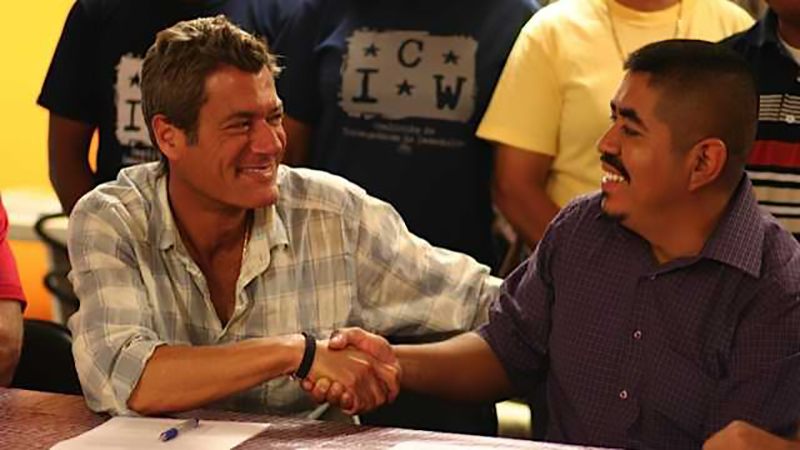
Jon Esformes, CEO Pacific Tomato Growers and first major grower to join the FFP: “All of these things that are illegal were going on under the labor contractor system on every farm, including ours,” Esformes said. “I’m not sitting here with my head in the sand saying we were squeaky clean before. We knew there were problems. We wanted them fixed.”
Since its inception 15 years ago, the Fair Food Program has ushered in a new day for farmworkers across the United States, guaranteeing essential human rights protections against a raft of longstanding abuses — including wage theft, sexual harassment, retaliation, and modern-day slavery.
The program’s unprecedented success is a testament to the extraordinary passion and commitment of the Fair Food community — from farmworkers in Immokalee to students, people of faith, and everyday consumers across the country. We are deeply grateful to everyone who has contributed their time, effort, and resources over the past 25 years to make that success possible.
In many ways, the extraordinary story of the Fair Food Program is the story of all who have stood with farmworkers year after year, demanding a life of freedom and dignity for the people who feed this country. Because of your support, tens of thousands of farmworkers are empowered to serve as frontline monitors of their own rights — and countless more will soon gain that power as the Fair Food Program expands nationwide and the broader Worker-driven Social Responsibility (WSR) model gains momentum around the world.
Today, with the holidays all but upon us, we are excited to share the latest installment in an ongoing investigative series by ProPublica, the nation’s leading investigative journalism outlet. While the first article in the series, published back in September, examined the horrifying conditions uncovered in Operation Blooming Onion — a sprawling modern-day slavery case first brought to light by the CIW more than a decade ago — today’s installment focuses on how the Fair Food Program prevents such extreme abuses from happening in the first place, while creating a rare win-win for both workers and growers in the process.
Help Us Keep the Fair Food Program on the Road
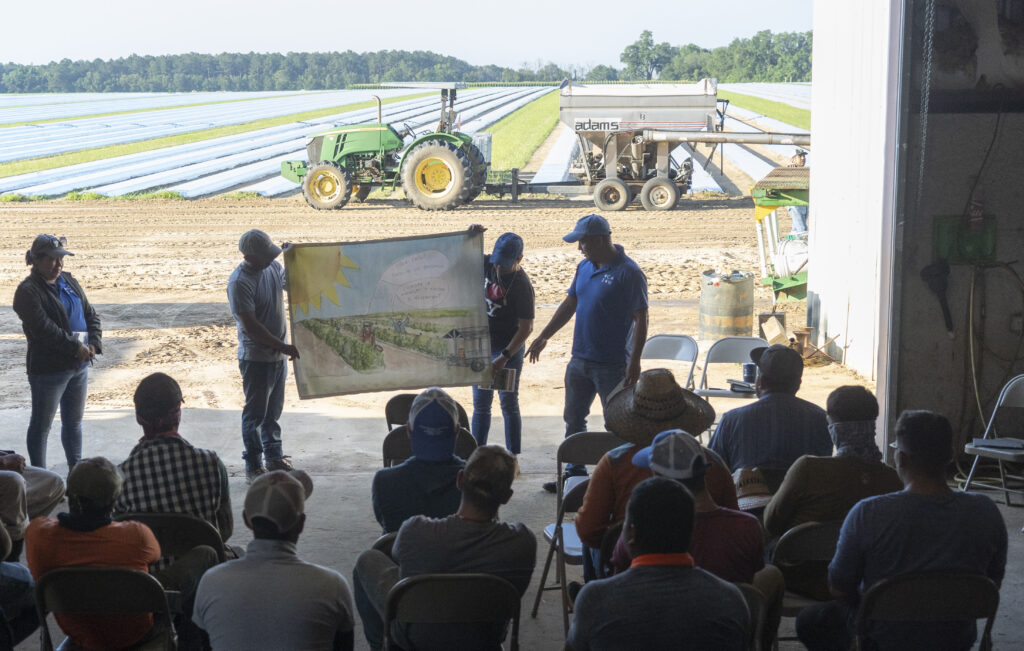
Before sharing key excerpts from this important reporting, however, we want to pause to ask for your support. The advances in fundamental human rights on Fair Food Program farms highlighted in the latest ProPublica article would not be possible without it. And today, we need your help to keep our Worker-to-Worker Education Team on the road, leading essential rights education workshops on FFP farms from Florida to California.
Most large-scale farms in this country span endless acres of land divided into blocks of row crops and crisscrossed with sandy and muddy dirt roads — roads that can easily trap a regular vehicle and are difficult to escape without specialized equipment. As a general rule, busy tractor drivers are not eager to stop work to pull a stuck car from the dirt. Yet Fair Food Program education sessions — like the one pictured below — take place on the clock and on the farm, usually just before the day’s picking begins. The FFP Education Team always aims to get in and out of the fields with as little disruption to the hard work underway as possible.