Rob Reiner, who has died aged 78, was an actor, director and producer whose career path went from playing Mike “Meathead” Stivic, son-in-law of Archie Bunker in Norman Lear’s television sitcom All in the Family in the 1970s, to directing a remarkable run of hit films between This Is Spinal Tap in 1984 and A Few Good Men in 1992 that included The Princess Bride (1987), When Harry Met Sally (1989) and Misery (1990).
He also co-founded the production company Castle Rock Entertainment, which made In the Line of Fire, City Slickers and Lone Star, as well as the Stephen King adaptations The Shawshank Redemption, Dolores Claiborne and The Green Mile, and the TV comedy Seinfeld. After selling Castle Rock to Turner Broadcasting in 1993, Reiner undertook more activism and made smaller movies. “I came into this business to express myself and tell stories,” he told the Guardian in 2018, “not just to churn out a product.”
Reiner’s career in many ways echoed that of his father, Carl Reiner – and, like Carl, he often drew on his own life in his work. Carl was a successful comedian and writer, a product of Sid Caesar’s Your Show of Shows; Rob’s mother, Estelle (nee Lebost), was an actor and jazz singer. Rob was born in the Bronx, New York, and grew up around such people as Mel Brooks, with whom Carl made the hit comedy record The 2,000 Year Old Man. The family moved to the affluent suburb of New Rochelle, which provided the material for Carl to create The Dick Van Dyke Show, with Van Dyke playing a comedy writer living in the suburbs with his wife (Mary Tyler Moore) and kids.
Eventually the family moved to Los Angeles, where Rob made his TV debut with a small part in the series Manhunt when he was 14. He acted in his high-school drama class, and at his parents’ urging did summer theatre back east in the resorts of the Pocono mountains. At 19 he and Larry Bishop (son of the Rat Pack comic Joey) were the opening act for the singer Carmen McRae at the Hungry I club, San Francisco, and, inspired by the comedian Mort Sahl, were part of a satirical improv group called the Committee.
Reiner had a small part in the fabulous comedy Where’s Poppa? (1970) and acted in numerous TV shows, including episodes of the military comedy Gomer Pyle, USMC, playing a beatnik, and That Girl, opposite Marlo Thomas. Meanwhile, he was writing liberal satire for The Smothers Brothers Comedy Hour (partnered with Steve Martin).
In 1971 he won the part of Meathead (Lear’s All in the Family was a US Version of the UK show Till Death Us Do Part, and the corresponding role in the BBC version was played by Tony Booth) over Harrison Ford and Richard Dreyfuss, his high-school best friend. Playing the liberal punching bag for Carroll O’Connor’s Archie, Reiner won two Emmys for best supporting actor in a comedy.
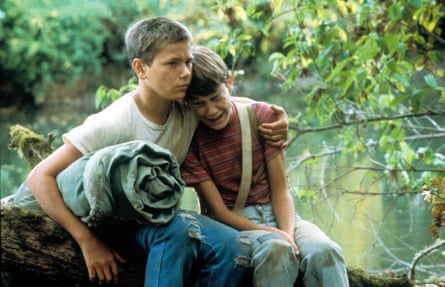
River Phoenix, left, and Will Wheaton in Stand By Me, 1986. Photograph: Allstar Picture Library Limited/Alamy
In 1971 he married Penny Marshall, who also progressed from comedy actor to director; they had been neighbours in the Bronx without knowing each other. He adopted Marshall’s daughter Tracy before the couple divorced in 1981.
Reiner’s first directing job was the TV movie Sonny Boy (1974). He left All in the Family in 1978, but made a couple of appearances in the spin-off series Archie Bunker’s Place. Then he began working on This Is Spinal Tap, the rock mockumentary in which he played the director Marty DiBergi (a parodying tip of the hat to Martin Scorsese), whose key scene about Nigel Tufnel’s amp “going up to 11” has become a classic.
Stand By Me (1986), an adaptation of King’s novella The Body, is arguably his most personal work, a coming of age story that never puts a foot wrong. Reiner’s instinct for the truth in King’s non-horror writing began a long working relationship; King would option his work to Reiner for $1.
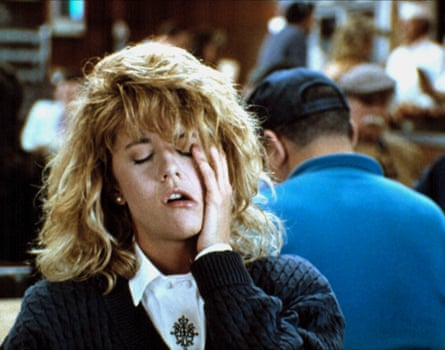
Reiner appreciated great writing. Nora Ephron based much of When Harry Met Sally on Reiner’s own difficulty dating after his divorce. He met his second wife, the photographer Michele Singer, on the film’s set. It was Reiner’s mother, too, who delivered the film’s zinger line (suggested by the star Billy Crystal) after Meg Ryan demonstrates faking an orgasm over lunch at Katz’s deli. “I’ll have what she’s having,” Estelle says, knowingly.
William Goldman adapted his own novel for The Princess Bride, which works because it takes its fantasy tale seriously, while wrongfooting the audience’s disbelief with comedy. Goldman also helped adapt Aaron Sorkin’s original play into A Few Good Men, which was nominated for the best picture Oscar and demonstrates the trademark Sorkin social liberalism laced with respect for institutes and fetishising of the military.
After Turner’s purchase of Castle Rock (along with its distribution arm New Line), in a deal worth hundreds of millions, Reiner’s public profile as a liberal activist and Democratic party mover rose. He co-founded the American Foundation for Equal Rights, which helped to overturn California’s state ban on gay marriage, and worked to supply more state and federal funding of child development. At one stage, his name was floated to run against Arnold Schwarzenegger for California’s governorship, but, he said: “I don’t want to be an elected official, I want to get things done.”
Meg Ryan in When Harry Met Sally, 1989. Photograph: Columbia Pictures/Allstar
His most popular later work was probably The Bucket List (2007), a comedy with Jack Nicholson and Morgan Freeman; the least was North (1994), a father/son coming of age drama. The Sorkin-scripted love story The American President (1995) was one of many politically themed films, which included two written by Joey Hartstone, the 2016 biopic LBJ and Shock and Awe (2017), detailing journalists’ struggles to report George W Bush’s 2003 Iraq war accurately, in which Reiner played an editor. Ghosts of Mississippi (1996) dealt with bringing the killers of the civil rights activist Medgar Evers to justice. His 2012 release, 8, filmed Dustin Lance Black’s original theatre production built from the transcripts of the court case against the law banning gay marriage.
Being Charlie (2015), which Reiner and his son Nick wrote together, fictionalised Nick’s struggles with addiction and rehab, and his parents’ reliance on expert help at the expense of mutual understanding. The father in the script is a movie star running for political office.
Reiner had a lifelong interest in the JFK assassination, and in 2023 he released a podcast, Who Killed JFK?, co-hosted with Soledad O’Brien, that purported to name the actual assassins, though it served better as an introduction for many listeners to the questions never solved by official accounts. His most recent film was the Spinal Tap sequel Spinal Tap II: The End Continues (2025).
Reiner and his wife were found dead at their home in Los Angeles in what the city’s police department described as “an apparent double homicide”. He is survived by their children, Romy, Nick and Jake, and by his daughter Tracy.
Robert Norman Reiner, director, producer, screenwriter and actor, born 6 March 1947; died 14 December 2025
===
Being free from billionaire and corporate ownership means the Guardian will never compromise our independence – but it also means we rely on support from readers who understand how essential it is to have news sources that are immune to intimidation from the powerful. We know our requests for support are not as welcome as our reporting, but without them, it’s simple: our reporting wouldn’t exist. Of course, we understand that some readers are not in a position to support us, and if that is you, we value your readership no less.
But if you are able, please support us today.