|
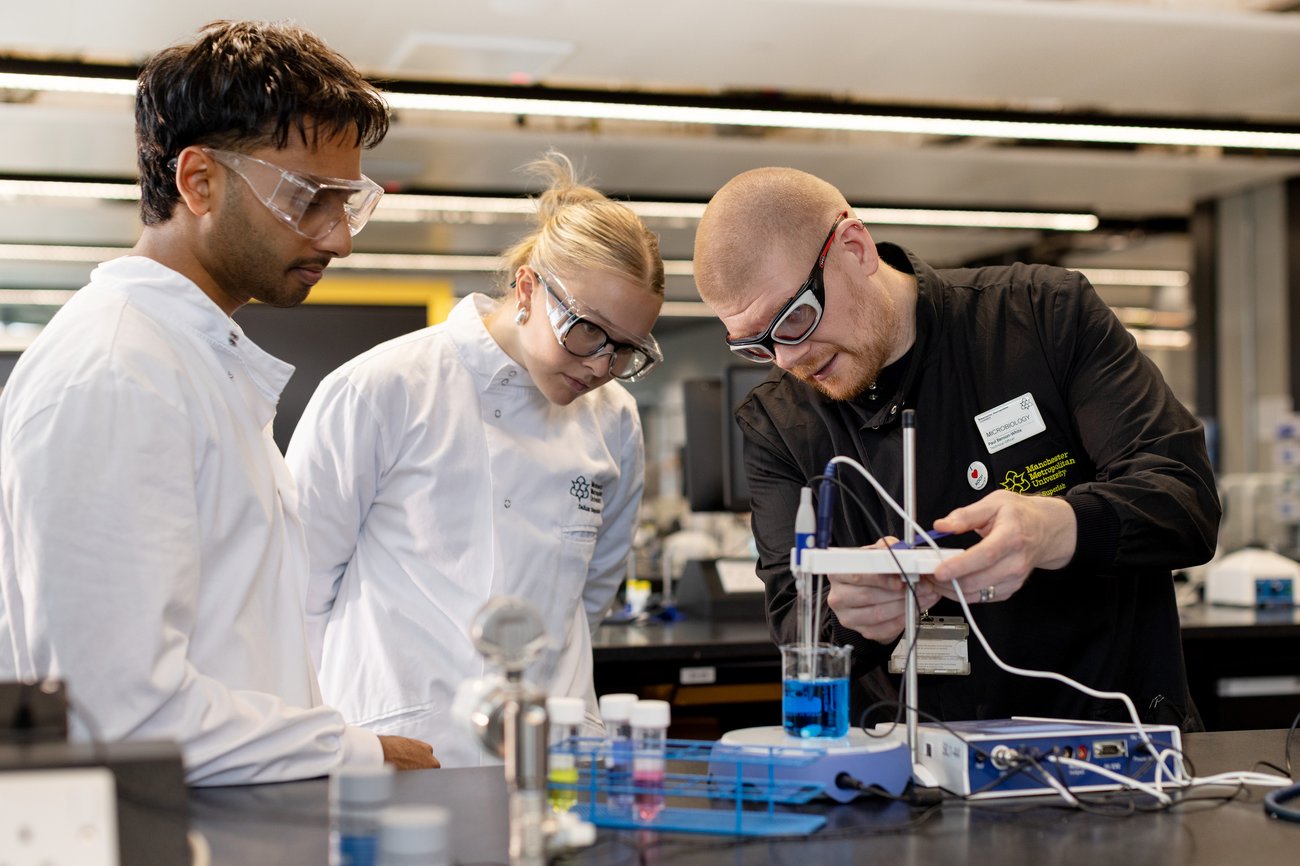
Ishan Goshawk, an apprentice with global pharmaceutical company AstraZeneca, donned a lab coat and safety glasses and entered a room filled with robots.
His first stop was a machine programmed to fill dozens of tiny vials with a compound he needed for an experiment. Everything seemed in order, so Goshawk went to check on a second robot, a gleaming apparatus that, he noted, cost half a million pounds (about $620,000). When the first robot finished filling the vials, Goshawk would bring them here, to test how efficiently drug compounds can be purified using different solvents.
Most students here and in the United States wouldn’t get access to expensive equipment like this until graduate school. Goshawk — a 21-year-old undergraduate student and one of 149 “degree apprentices” employed by AstraZeneca across the U.K. — started using them his second week in.
“It shows the trust we’ve been given,” said Goshawk, who is working nearly full time while studying toward a degree in chemical science at Manchester Metropolitan University that his employer is paying for. By the time he graduates next spring, he will have earned roughly 100,000 pounds (approximately $130,000) in wages, on top of the tuition-free education.
Degree apprenticeships like Goshawk’s have exploded across England since their introduction a decade ago. More than 60,000 apprentices began programs leading to the U.K. equivalent of bachelor’s and master’s degrees in the 2024-25 academic year, in fields as varied as engineering, digital technology, health care, law and business.
Close to 90 universities in England and Wales now participate, including elite institutions like the University of Cambridge. Major British and multinational companies — Deloitte, Rolls-Royce, Unilever, JP Morgan and Microsoft among them — have signed on.
The programs are so popular that it’s become harder to get some coveted apprenticeship slots than it is to get into elite colleges like Oxford or Cambridge.
|

 Donate