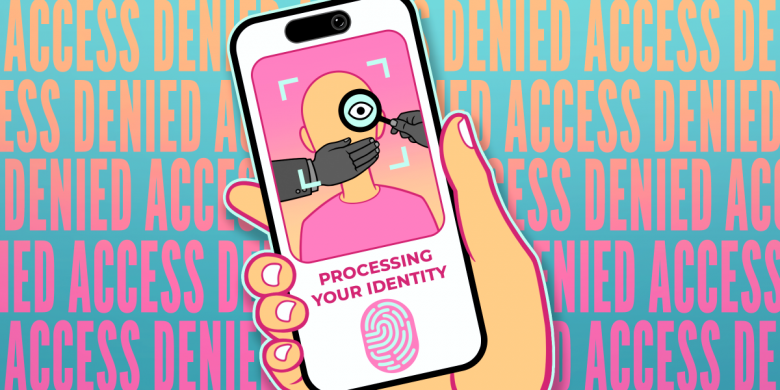
Age verification laws are rapidly proliferating around the world, creating a dangerous and confusing tangle of rules about what we’re all allowed to see and do online. In the U.S., more than half of all states have now passed laws imposing age-verification requirements on online platforms. And just last week, an Australian law barring access to social media for anyone under 16 went into effect. Though these mandates claim to protect children, in practice they create harmful censorship and surveillance regimes that put everyone—adults and young people alike—at risk.
The term “age verification” is used to describe a wide range of age assurance technologies, including age verification systems that force you to upload government ID, age estimation tools that scan your face, and other technologies that infer your age by making you share personal data. While different laws call for different methods, every approach to age verification out there collects your sensitive, personal information and creates barriers to accessing the internet.
If you’re feeling overwhelmed by this onslaught of laws and the invasive technologies behind them, you’re not alone. It’s a lot. But understanding how these mandates work and who they harm is critical to keeping yourself and your loved ones safe online. Age verification is lurking around every corner these days, so we must fight back to protect the internet that we know and love.
That’s why we recently launched EFF’s Age Verification Resource Hub (eff.org/age): a one-stop shop to understand what these laws do, what’s at stake, and why EFF opposes all forms of age verification. You can also learn how to protect yourself and how to join the fight for a free, open, private, and, yes, safe internet.
To celebrate the launch of eff.org/age, and to hear directly from you how we can be most helpful in this fight, we’re also hosting two exciting events: Through Wednesday, Dec. 17, we're hosting a Reddit AMA on r/privacy where our experts will answer your questions on age verification. And on Thursday, Jan. 15, we'll livestream a free panel discussion about age verification. Explore, share, and join us in the fight for a better internet.
READ MORE…
👹 BAD PATENTS: EFF recently submitted comments to the U.S. Patent and Trademark Office (USPTO) to oppose proposed rules that would sharply restrict the public’s ability to challenge bad patents. More than 4,000 supporters have now added their voices—an extraordinary response. This massive wave of public comments sends the USPTO a clear message: don’t shut the public out of patent review.
🤖 CHATBOT PRIVACY: When people talk to a chatbot, they often reveal highly personal information they wouldn’t share with anyone else—making them tempting targets for law enforcement. As we write on our blog, AI companies have a responsibility to their users to make sure warrant requirements are strictly followed, to resist unlawful bulk surveillance requests, and to be transparent with their users about the number of government requests they receive.
🇪🇺 CHAT CONTROL: After a years-long battle, the European Commission’s “Chat Control” plan, which would mandate mass scanning and other encryption-breaking measures, at last codifies agreement on a position within the Council of the EU. The good news is that the most controversial part, the forced requirement to scan encrypted messages, is out. The bad news is there’s more to it than that. Here's what you should know.
🚘 ALPR AT THE BORDER: Law enforcement agencies have installed a massive dragnet of vehicle-tracking automated license plate readers (ALPRs) in the U.S.-Mexico borderlands. In many cases, the agencies have gone out of their way to disguise the cameras from public view. So, what do these cameras look like? Read our guide to identifying ALPR systems when you're driving the open road along the border.