|
 |
How Musk and Bezos Plan to Escape the Coming AI Meltdown
While the giants gamble everything on trillion-dollar Gigafactories, a quiet rebellion is forming that could reshape who survives the age of artificial intelligence
|

| |||||||||||||||


 |
The tech world is racing toward a breaking point.
In our last report, we explained why a Big Bang is coming to artificial intelligence.
The industry is scaling models past the limits of physics, electricity, and economics. The cost curves are breaking. Private labs are burning cash at a pace never seen in the history of technology. And most have no clear path to ever recoup their money.
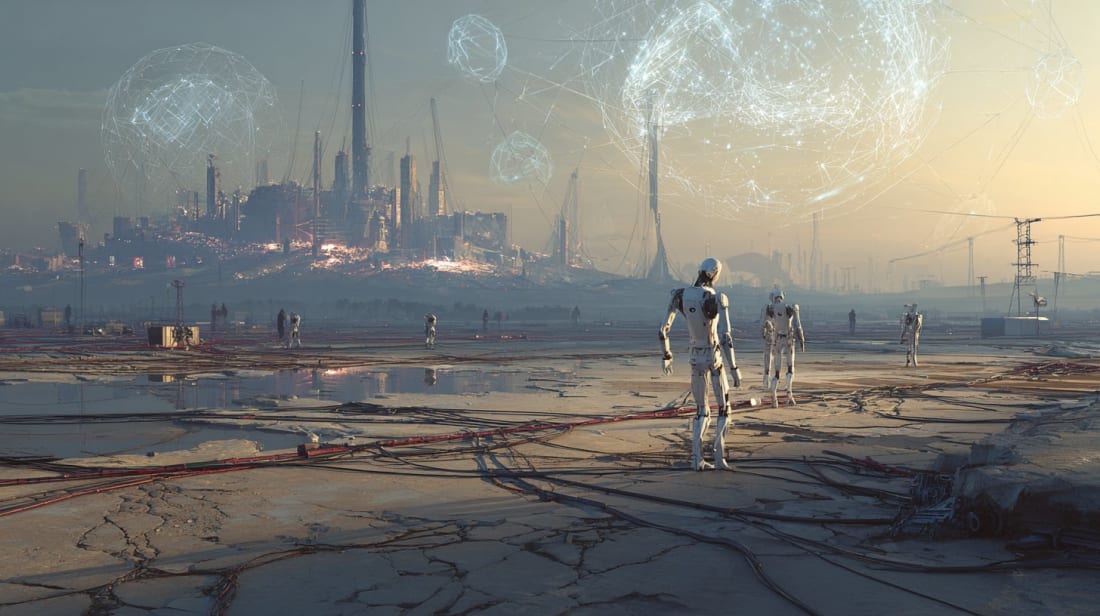
Across the world, tech giants are racing to build colossal AI Gigafactories designed to train frontier models at the scale of nations.
These facilities consume enough power to light entire cities. Their price tags run into the billions. They represent a kind of technological desperation. Bigger is the only strategy they have left, an approach that mirrors Caesar’s crossing of the Rubicon: Success or death.
But there is a question almost no one in the mainstream press seems willing to ask.
If this runaway race ends in bankruptcy for the major AI labs, what happens to the tech billionaires who were smart enough to avoid the scaling war?
What happens to Musk? What happens to Bezos? What happens to the builders who no longer control the center of the AI universe?
The answer is emerging in plain sight.
A rival revolution is forming.
And it could be the escape route the old titans have been waiting for.
 |
The Rise of Physical AI, the New Exit Ramp
While AI giants pour billions into clusters that may never pay for themselves, another movement is accelerating.
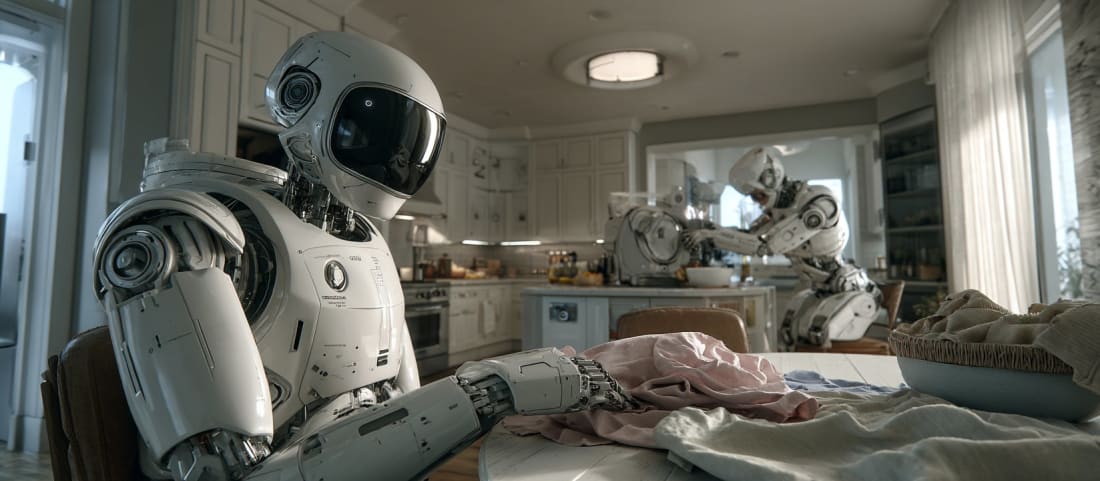
It is called Physical AI. It is the marriage of robotics, world models, and machine intelligence that can interact with the real world.
Think Rosie the Robot, stripped of comedy and upgraded with superhuman perception, speed, and autonomy.
Rosie is not about chatting. She is about doing. Doing your laundry. Walking your dog. Cooking your food. Bringing you a nighttime snack. She is something people instantly understand, something that can be sold, monetized, and welcomed into everyday life.
That is a very different proposition from an AI locked inside a Gigafactory, trained to out-reason the world’s brightest minds, plot the course of nations, and optimize every minor and major decision in human life.
How do you sell that to John and Jane Doe? How do you explain its value? How do you justify its cost?
Physical AI feels helpful. Gigafactory AI feels abstract, distant, and unsettling. And that difference matters more than most people realize.
In other words, Physical AI rewards everyone, not just those who seek to control everyone. This is a significant pivot in artificial intelligence, one that the Gigafactory builders may one day wish they had seen coming.
AI researchers are shifting away from giant text models and toward world models that can understand the environment as humans do. These systems are trained in massive physics simulators.
They can pilot helicopters through wildfire smoke. They can deliver medical supplies. They can weed entire fields. They can manipulate the real world rather than describe it.
We are entering the first global competition to give AI a body.
And that changes everything.
 |
Why Musk and Bezos Need This Revolution to Succeed
The Gigafactory arms race has only two possible outcomes.
Either governments take control of the largest AI labs, or these labs collapse under their own weight. Microsoft and Google can absorb losses of that magnitude. Most others cannot.
But Musk and Bezos can leapfrog the meltdown by shifting to Physical AI.
Physical AI has lower compute requirements. Its value comes from deployment, not scale. It builds machines that work in factories, farms, hospitals, and disaster zones.
It is the real-world version of AI. It is also much harder for governments to regulate because it involves hardware, private robotics labs, and distributed autonomy.
It gives Musk and Bezos a battlefield where brute-force compute does not determine the winner.
It gives them a place to innovate without begging for H200 clusters.
It gives them a future outside the shadow of Microsoft and OpenAI.
Most importantly, it positions them ahead of the next phase of AI.
Because once digital models mature, the world will rush to endow them with physical capabilities. Someone will build the bridge between language models and action. Whoever controls that bridge will control an entirely new economy.
Physical AI is not a side project for them.
It is their way out.
Why No One Is Talking About This Split
Physical AI and digital AI are treated as two unrelated conversations. But they are converging fast.
And they are being driven by two factions of the tech world with completely different incentives.
The world is watching the AI meltdown at the top of the industry. It is not watching the billionaires quietly building the machines that will take AI out of the cloud and into the real world.
Once these two paths meet, the consequences will be historic.
This is the story almost no one is telling.
Below the fold, I explain why this split between digital AI and Physical AI may be the most dangerous technological shift of our lifetime, and how it aligns with the pattern of deception Scripture warns about.
The next phase of artificial intelligence will not simply talk. It will act. It will move. It will intervene in human spaces. And it will arrive under the control of private empires, outside public oversight, during the exact moment the world is distracted by the meltdown of the first AI race.
This is where the prophetic danger begins...

Continue reading this post for free in the Substack app
| ||||||||||

