|


In today’s newsletter:
The latest NESO report on Net Zero
Why is the economy contracting?
& more!
Critics of the last two decades of UK climate policy are used to being an ignored minority. This is changing. As virtue signalling plans to save the polar bears with more electricity pylons are replaced by vague infrastructure projects, bills have risen, living standards have stagnated, and industries closed. Global emissions and aggregate temperatures meanwhile have continued to rise, and Parliament’s consensus has shattered.
Until now, the last true believer in Net Zero, our globe-trotting Energy Secretary Ed Miliband could at least rely on the ‘green blob’ for support: the network of job-swapping lobbyists, trade bodies, and regulators tasked with selling high prices and eco-unemployment as the British Dream. No longer.
NESO, the state corporation tasked with ensuring the lights stay on, issued an economics update to their future energy scenarios this week. All three of their policy-compliant net zero by 2050 targets, they noted, were likely more expensive than going more slowly. Rather than save households £300 a year on their energy bills, as Ed implausibly claimed before the 2024 election, they would rise by £500.
The £14bn per year total cost difference is staggering and such an unfortunate number. This is the annual sum Lord Stern, the intellectual architect of the Climate Act, said in 2006 was all that would be needed from the UK to decarbonise. Now it’s the discount on saying ‘enough’. It’s the sum the End Fuel Poverty Coalition said in 2022, at the height of the Russia crisis, would be needed to protect vulnerable families. The hidden welfare costs of higher prices, doubling the impact of bad decisions.
Being a good scenarios report, it is of course heavily hedged with caution about uncertainty and modelled assumptions, several of which have already been criticised for being too optimistic. For example failing to account for the full system costs of renewables, and over-optimism on the pace of change in transport and heat. But in this they draw in other Government reports.
Perhaps their most valuable statement is in the summary, cautioning all policymakers that whatever path is pursued, it should be done so as efficiently as possible. That means removing regulatory costs, a battle slowly being won, for example in nuclear permitting. And a shot across the bows to the new wave of nimby populists, who for example are promising to bury all power cables at 3 to 10 times the cost of overhead lines. Unusually then, Parliament is being given good advice rather than political cover. More please.
Andy Mayer
COO & Energy Analyst
The best way to never miss out on IEA work, get access to exclusive content, and support our research and educational programmes is to become a paid IEA Insider.
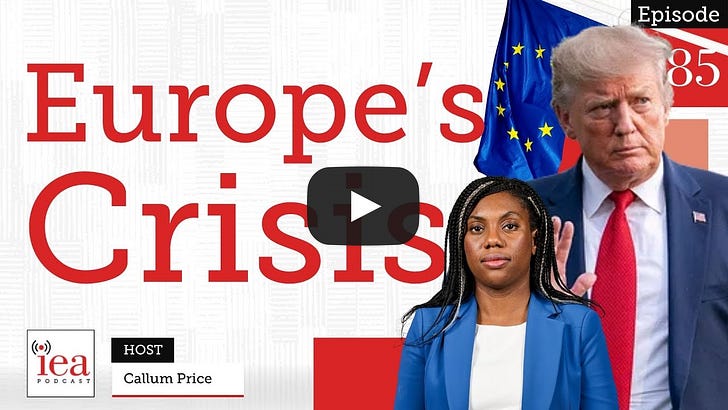
IEA Podcast: Director of Communications Callum Price is joined by Managing Editor Daniel Freeman and Economics Fellow Julian Jessop to discuss Trump, suggestions we should return to the Customs Union, and Kemi on Welfare — IEA YouTube
Budget speculation kills growth
Responding to the latest growth figures, Julian Jessop, Economics Fellow at the Institute of Economic Affairs said:
“The further contraction in the UK economy in October confirms that Budget speculation has killed growth. Indeed, the latest business surveys suggest that November was even worse.
“The burst of growth at the start of the year is now a distant memory. The economy began to falter in the spring when the increases in employers National Insurance and other business costs in last year’s Budget finally kicked in.
“There was then a brief recovery as fears of a global trade war faded, but this was followed by an extended period of uncertainty ahead of this year’s Budget. The leaks, unhelpful speculation and negative briefings clearly damaged confidence and activity across large parts of the economy.
“The Bank of England is now almost certain to cut interest rates again next week, but only because the weakness of the economy and especially of the jobs market are offsetting worries about high inflation. This is nothing to cheer.
“Some easing of uncertainty after the Budget might still allow another bounce in activity next spring. In contrast to 2024, most of the latest tax increases will not take effect for several years. Nonetheless, it is very hard to restore economic confidence once it has been lost.
“The government appears to have given up on growth in favour of policies aimed at redistributing income and increasing state intervention across the economy. This has undermined the incentives to work, save and invest, and squeezed any positivity out of the private sector.”
News and Views
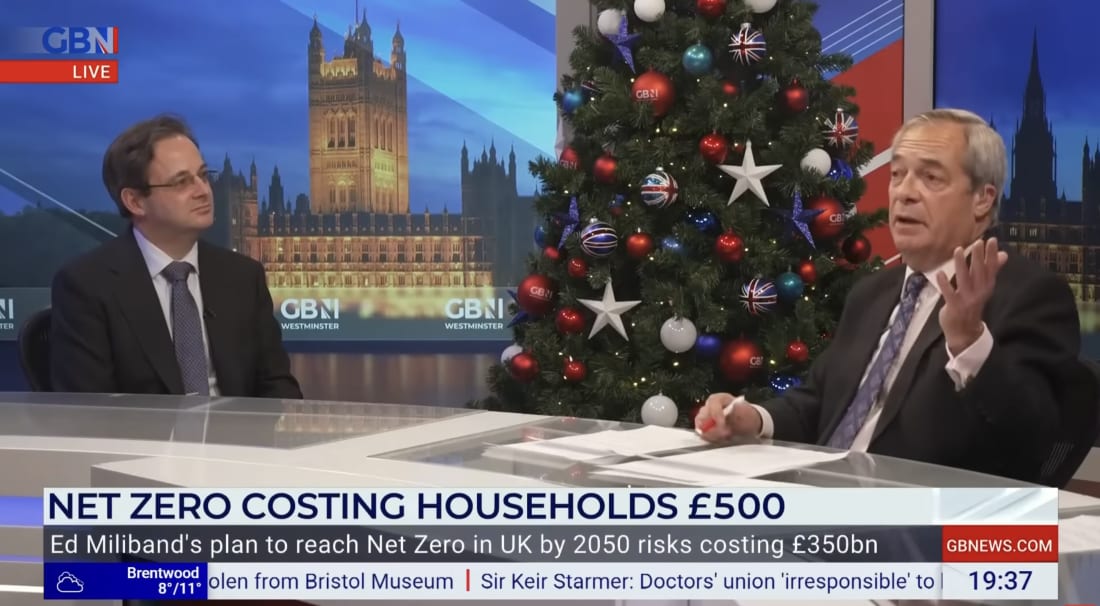
Net Zero & NESO, Energy Analyst Andy Mayer appeared on GB News with Nigel Farage
 |
Bad public health research could drive a man to drink, Head of Lifestyle Economics Chris Snowdon, The Critic
Some things are so absurd that only a public health academic could believe them, as George Orwell so nearly said. A study published last week claimed that people living in England increased their alcohol consumption by 34.5 per cent between February and April 2020 and spent the next five years drinking more than they did before the pandemic.
Don’t be fooled by Labour’s new workers’ rights, Head of Media Reem Ibrahim, CapX
In the end, only the outcomes matter. Unless the Government acknowledges the unseen consequences of the disastrous Employment Rights Bill, it risks creating a labour market that is simply less open, less dynamic, less flexible and less fair – precisely the opposite of what it is trying to achieve.
AI Won’t Save Socialism | Prof Peter Boettke | IEA Interview, Editorial Director Kristian Niemietz interviews Prof. Peter Boettke, IEA YouTube
Discredited Angela Rayner’s workers’ bill is cynical ploy – we know who pulls strings, IEA research quoted in the Daily Express
And arguably it won’t even help workers as the forced measures could see higher costs being absorbed by staff through smaller pay rises and hidden taxes, according to the Institute of Economic Affairs.
Wealth inequality is not a problem in Britain, Editorial Director Kristian Niemietz, CapX
On 4 December, the LSE Hayek Society organised a panel debate between Gary Stevenson and Kristian Niemietz on the question ‘Are the super-rich destroying the UK?’. The article below is based on Niemietz’s opening remarks.
Should the Government provide free housing?, Head of Media Reem Ibrahim appeared on the Jeremy Vine Show on Channel 5
 |
UK property tax burden closes doors, Editorial Director Kristian Niemietz quoted in CityAM
Kristian Niemietz, editorial director at the Institute of Economic Affairs, said: “Britain does not just raise more revenue from property taxes than most other OECD countries. Britain also raises more revenue from property taxes alone than Spain, Norway and Switzerland (the only three European countries that still have wealth taxes) raise from property and wealth taxes taken together.”
Book review: "The Laissez-Faire Experiment" by W. Walker Hanlon | ||||||
| ||||||
 | ||||||
This book review was first published by the Centre for Enterprise, Markets and Ethics | ||||||
|
How can we achieve a smoke-free country?, Head of Media Reem Ibrahim appeared on BBC Radio Wales
“We’re going to be in an absurd position where a 35 year old will be able to buy tobacco and a 34 year old will not be able to buy tobacco. This is extremely draconian and authoritarian.”

You’re currently a free subscriber to Insider. For the full experience, upgrade your subscription.
Paid subscribers support the IEA's charitable mission and receive special invites to exclusive events, including the thought-provoking IEA Book Club.
We are offering all new subscribers a special offer. For a limited time only, you will receive 15% off and a complimentary copy of Dr Stephen Davies’ latest book, Apocalypse Next: The Economics of Global Catastrophic Risks.
| ||||||||||

