Hey! Small favor to ask before you scroll down to what you came here to do (read an excellent piece by Bob Kuttner). What has allowed Bob, Harold Meyerson, and David Dayen to write such illuminating work over the years are readers like you. We don't rely on corporate advertising or billionaire donors to fund our work – we’re beholden to no one but you, our readers, and our core mission of reporting on ideas, politics, and power. We have big plans for 2026 and we need to hit our $100,000 fundraising goal to
do our critical work. If you believe in reader-supported, independent journalism can you chip in today to support our work?
|
| SUPPORT US TODAY
|
|
|
|
|
|
The Republicans’ endangered health
|
The refusal to extend ACA subsidies becomes a huge political liability and signals deepening splits.
|
On January 1, some 22 million Americans will face massive increases in their health insurance premiums, as enhanced tax credits for policies under the Affordable Care Act expire. According to KFF, a health policy research organization, the average annual premium will rise from $888 to $1,904.
In some states, the increase will be several times that. For a 60-year-old making roughly $60,000 annually in Wyoming or West Virginia, premiums will increase by more than 400 percent. In Colorado, it will be 600 percent.
This has created a crisis for Republicans and exposed fractures that will only widen. On Thursday, Democrats proposed a simple three-year extension of the tax credits. Four Republicans joined in support, enough for a 51-49 majority but well short of the 60 votes needed to break a filibuster. Republicans voting with the Democrats were Lisa Murkowski and Dan Sullivan of Alaska, Susan Collins of Maine, and Josh Hawley of Missouri. The Senate then rejected a Republican plan for far less generous health savings accounts.
Meanwhile, the Republican leadership in the House faced growing defections. Republicans have signed on to two separate discharge petitions—one led by Rep. Brian Fitzpatrick (R-PA), the other by Reps. Josh Gottheimer (D-NJ) and Jen Kiggans (R-VA)—that would force floor votes on extending ACA subsidies.
Fitzpatrick’s bill would extend the tax credits for two years and add new income caps, as well as minimum monthly premiums. Gottheimer and Kiggans’s bipartisan bill to extend the ACA subsidies for a year has 16 Republican co-sponsors. Fitzpatrick’s discharge petition has 11 Republican signatures and Gottheimer’s has 11 as well. If either bill comes to the floor, more Republicans would feel compelled to support it, and if Democrats join either petition en masse, there would be enough supporters for a House majority.
|
|
|
|
If legislation were to pass the House, it would then go back to the Senate, where there would be more pressure on more Republicans to vote for it. However, House Speaker Mike Johnson’s strategy is to run the clock to prevent either measure from coming to a vote. Congress is set to adjourn for the year on December 18. And President Trump has been AWOL.
If Johnson does succeed in blocking a vote on the legislation, it will be a Pyrrhic victory, and a short-lived one. Not only will Democrats get to keep attacking Republicans for causing skyrocketing premiums, but the issue will not go away. Pressure will only increase as legislators hear from outraged constituents, and there will be more votes in the next session of Congress.
More broadly, the Republican quandary on the ACA subsidies is a sign of a weakened Trump presidency, highlighted by the willingness of more and more GOP legislators to defy both the congressional leadership and their president, on multiple fronts.
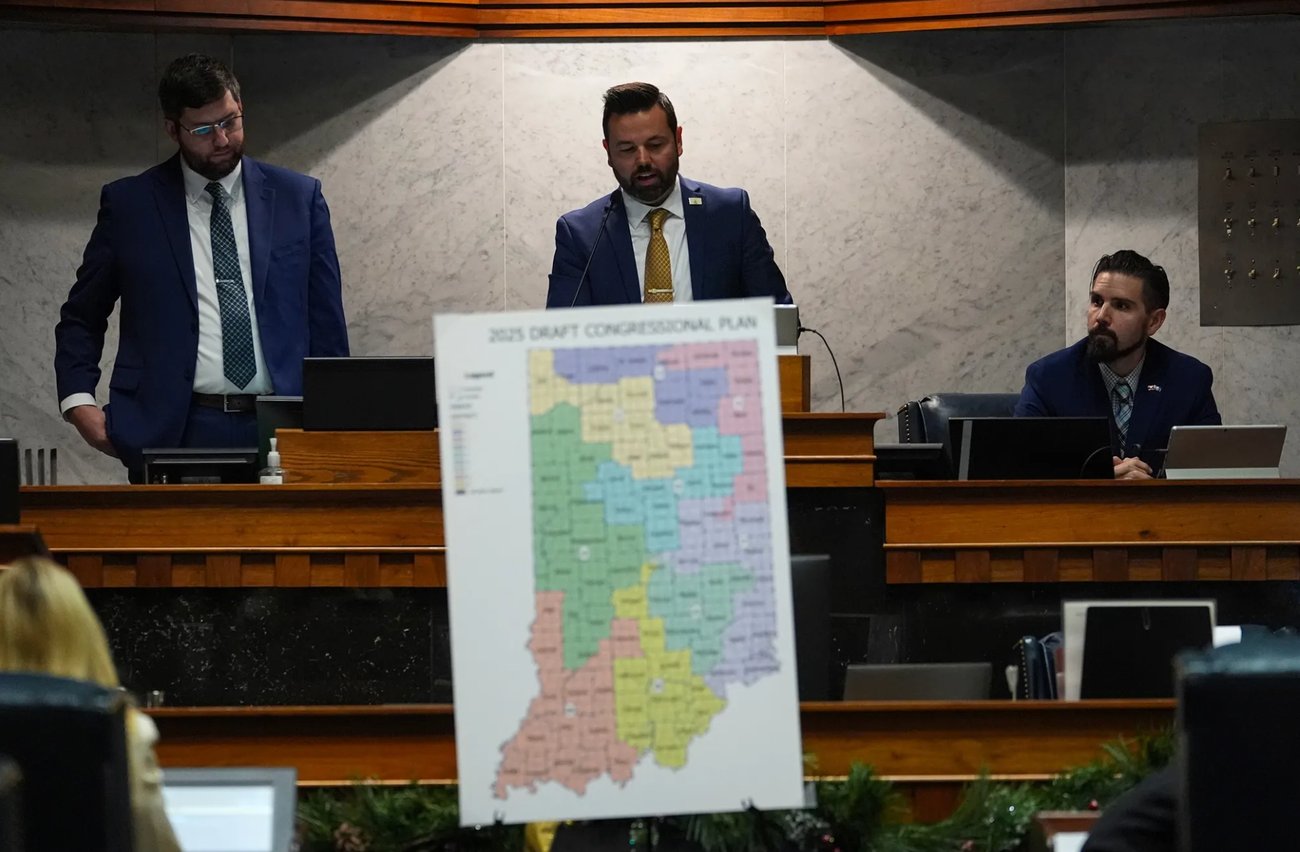
Underscoring that defiance, as my colleague David Dayen reports, Indiana Republicans, who massively rejected Trump’s demands for gerrymandering, did not seem troubled by his threats to sponsor primary opponents. Increasingly, as Trump becomes more and more unpopular, Republican willingness to stand up to Trump is seen as a source of strength.
This distancing only increases as Trump’s outbursts become more and more floridly insane and impolitic. For Christmas spirit, from a man with gold toilets, it’s hard to beat this: “You don’t need 37 dolls for your daughter. Two or three is nice.”
|
|
|
|
|
|
|
|

|
The American Prospect, Inc., 1225 I Street NW, Suite 600, Washington, DC xxxxxx, United States
Copyright (c) 2025 The American Prospect. All rights reserved.
To manage your newsletter preferences, use our preference management page.
To unsubscribe from all American Prospect emails, including newsletters, follow this link to unsubscribe.
|
|
|
|
|