|
 |
Executive Order Directs Antitrust Agencies to Investigate Food Companies
Antitrust enforcement could bring down grocery prices, but will Trump’s FTC and DOJ deliver? The agencies have been weakened by firings.
|

| |||||||||||||||


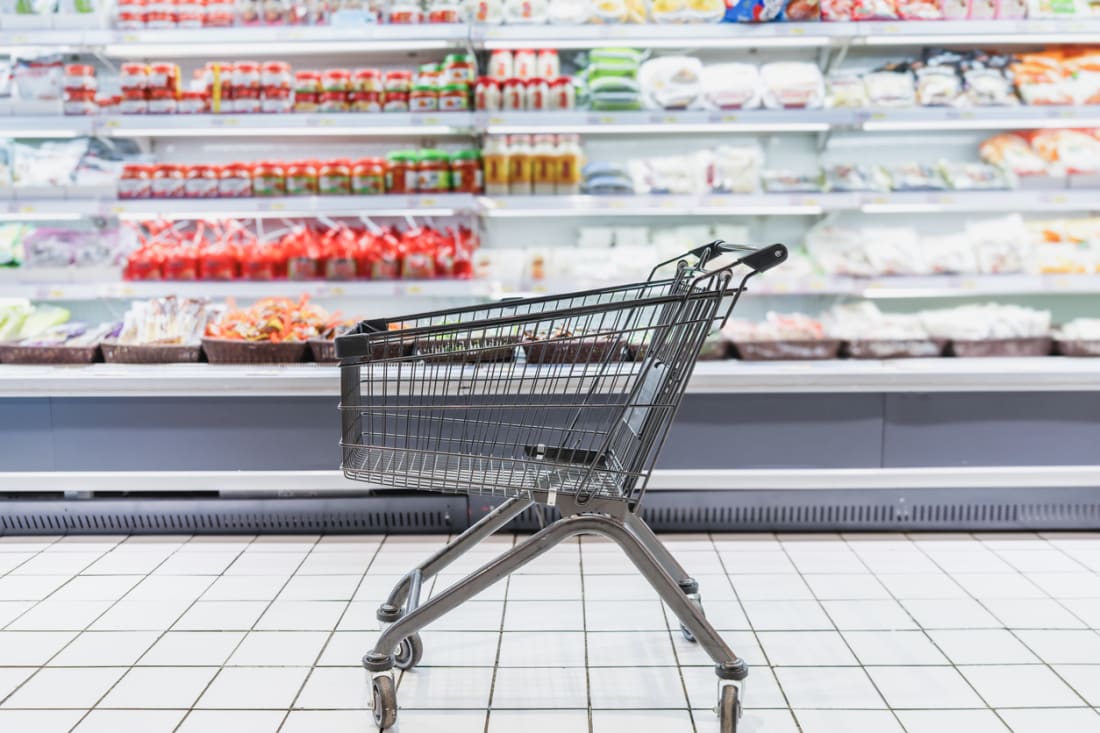 |
Photo courtesy of iStock/4045
Why does this issue of F&P look a little different? After a trial period, we have decided to move Food & Power entirely to Substack! For most of you, we recently ported your e-mail from our old newsletter distribution platform to Substack.
Food & Power will remain a free newsletter. You do not have to do anything to keep receiving our stories in your inbox. You do not have to download the Substack App. (Though if you already use Substack and want to subscribe to Food & Power through a different account, please do!)
We found that e-mails sent through Substack are less likely to end up in your spam folder, and this platform helps more new people find Food & Power, so we decided to make the big switch.
If for whatever reason you’re not comfortable receiving F&P this way, we understand, and you can unsubscribe. But we hope you stay and continue to support our reporting on monopoly power in the food system!
Over the weekend, the Trump administration signed an executive order on food price-fixing. It directs the Department of Justice (DOJ) and Federal Trade Commission (FTC) to form a task force to investigate “whether anti-competitive behavior exists in food supply chains” and “whether control of food-related industries by foreign entities is increasing the cost of food products.” It also orders antitrust agencies to bring lawsuits and propose new rules “to remedy any anti-competitive behavior” they find.
Some farm groups were happy to see the White House acknowledge that the food sector has a monopoly problem. But the order lacks concrete commitments. While the Trump administration says it wants to take on food chain consolidation, its actions to date have primarily undermined antitrust enforcement.
As consumers struggle with high food prices, there is no doubt that price-fixing and other antitrust violations are serious problems. Over the past five years, meat corporations that process canned tuna, beef, pork, chicken, and turkey have collectively paid hundreds of millions to settle allegations that they illegally coordinated with competitors to raise prices. A canned tuna executive even went to prison for price-fixing. Food corporations in other industries, including sugar, eggs, and frozen fries, face lawsuits alleging price-fixing.
Many other unfair and domineering tactics by large food and agricultural corporations diminish competition and contribute to decreased variety and higher prices. The Biden administration sued pesticide corporations for paying distributors loyalty rebates to sell their pricier brand-name products and not carry lower cost competitors. Farm equipment manufacturers limit farmers’ and independent repair shops’ ability to fix their equipment, driving up costs and wait times. Independent grocers pay more for the same goods than massive chains, even when they can buy in bulk, meaning rural and low-income communities that rely on independents pay higher prices.
While the order calls for some important enforcement tactics, such as criminal charges and new rulemaking, there is less to it than meets the eye. Its only explicit action item is the creation of a task force with representatives from the DOJ and FTC that must brief Congressional leaders on its progress after six months and again after one year. The order does not give antitrust agencies any authorities they don’t already have.
The order does nothing to ameliorate the damage the administration has already done to the food sector by firing public law enforcers and walking back Biden-era antitrust advancements. For example, President Trump repealed the Biden administration’s executive order on competition, which committed the USDA, FTC, and DOJ to a longer list of concrete actions to make the food industry more fair. These included specific directives to prohibit repair restrictions by equipment manufacturers, protect farmers from abuse by meatpackers, and investigate grocery concentration. The future of litigation and rulemakings started under this executive order are in jeopardy. For instance, at the National Chicken Council conference, a USDA official said that the agency had paused implementation of Biden-era rules that would protect contract poultry farmers from the worst abuses of the tournament payment system, calling the rules “un-American.” It remains to be seen if the USDA will move to repeal these new Packers and Stockyards rules.
President Trump also undermined antitrust enforcement by firing two Democratic members of the Federal Trade Commission, Alvaro Bedoya and Rebecca Kelly Slaughter. Bedoya and Slaughter took a stronger stance on expanding antitrust enforcement than current commissioners, Andrew Ferguson and Mark Meador. Even though they were no longer on the Commission, both spoke out against the FTC’s decision to withdraw its lawsuit against Pepsi, which sought to prevent Pepsi from giving special prices to large, big box stores at the expense of smaller independent grocers. Withdrawing the suit kept the full scope of allegations against Pepsi out of the public record.
Bedoya and Slaughter also sought to use the FTC’s fair competition rulemaking authority, which has untapped potential to prohibit corporate conduct that restricts competition and drives up prices, such as exclusive dealing. (Full disclosure: The Open Markets Institute petitioned the FTC in 2020 to ban exclusive dealing.) Ferguson does not believe the FTC should issue fair competition rules and Meador doubts their efficacy. Ferguson has also been accused of weaponizing the agency to pursue social and political agendas over consumer protection, such as targeting health clinics that provide gender-affirming care or approving an advertising merger on the condition that they abstain from advertising boycotts. This weaker, hyper-partisan approach to fighting monopolies leaves farmers and consumers more vulnerable to harmful mergers and unfair conduct.
Congress established the FTC as an independent, bipartisan agency, and the law states that commissioners can only be fired for “inefficiency, neglect of duty, or malfeasance in office.” This week, the Supreme Court heard oral arguments in Slaughter’s lawsuit charging that the President did not have the authority to fire her. Legal observers expect the President to prevail.
Trump has also hurt consumers by prioritizing the interests of lobbyists over public law enforcers within the Department of Justice’s antitrust division. His Assistant Attorney General for Antitrust, Gail Slater, has, to be sure, spoken publicly about the importance of antitrust enforcement in agriculture. Yet this summer, the DOJ fired two of Slater’s top deputies after they opposed a weak settlement that permitted Hewlett-Packard to acquire a competitor, Juniper Networks. One of the fired officials, Roger Alford, spoke out publicly about the corrupt influence of lobbyists in this corporate-friendly deal.
What We’re Reading
In another example of the Trump administration siding with Big Ag, the Department of Justice filed a brief in support of Monsanto in its Supreme Court “Cancer Gag” case. Monsanto (owned by Bayer) seeks to avoid liability for state-level standards that protect consumers when pesticide companies fail to warn users about the harms of using their products. (Food & Water Watch)
President Trump authorized a $12 billion bailout to farmers struggling with high input costs and low prices (in part due to tariffs). While farmers welcome the aid, they note that it is not a long-term solution for crop market dysfunction and monopolized seed, fertilizer, and chemical providers. (Fortune)
More local governments rely on Amazon Business for public procurement contracts, particularly for buying school supplies. A new report by the Institute for Local Self-Reliance finds that Amazon’s fluctuating prices can cost schools more. Independent suppliers can provide the same goods for less, and keep public dollars invested locally; however, Amazon’s dominance shuts out the competition. (Institute for Local Self-Reliance)
Follow F&P on Twitter | Subscribe to this Newsletter | F&P Website | Contact Us
 |
Food & Power is a free publication of the Open Markets Institute. If you enjoyed this post and want to support our work, you can donate to Open Markets. Thank you!
| ||||||||||

