|

|
The cryptocurrency industry is ballooning in size, and some people are getting very, very rich, while others are losing their life’s savings. [1]
How can we protect people, while also allowing risk in investments? And if we zoom out, what does this all mean for our payments system, the finance industry, our politics, and our economy?
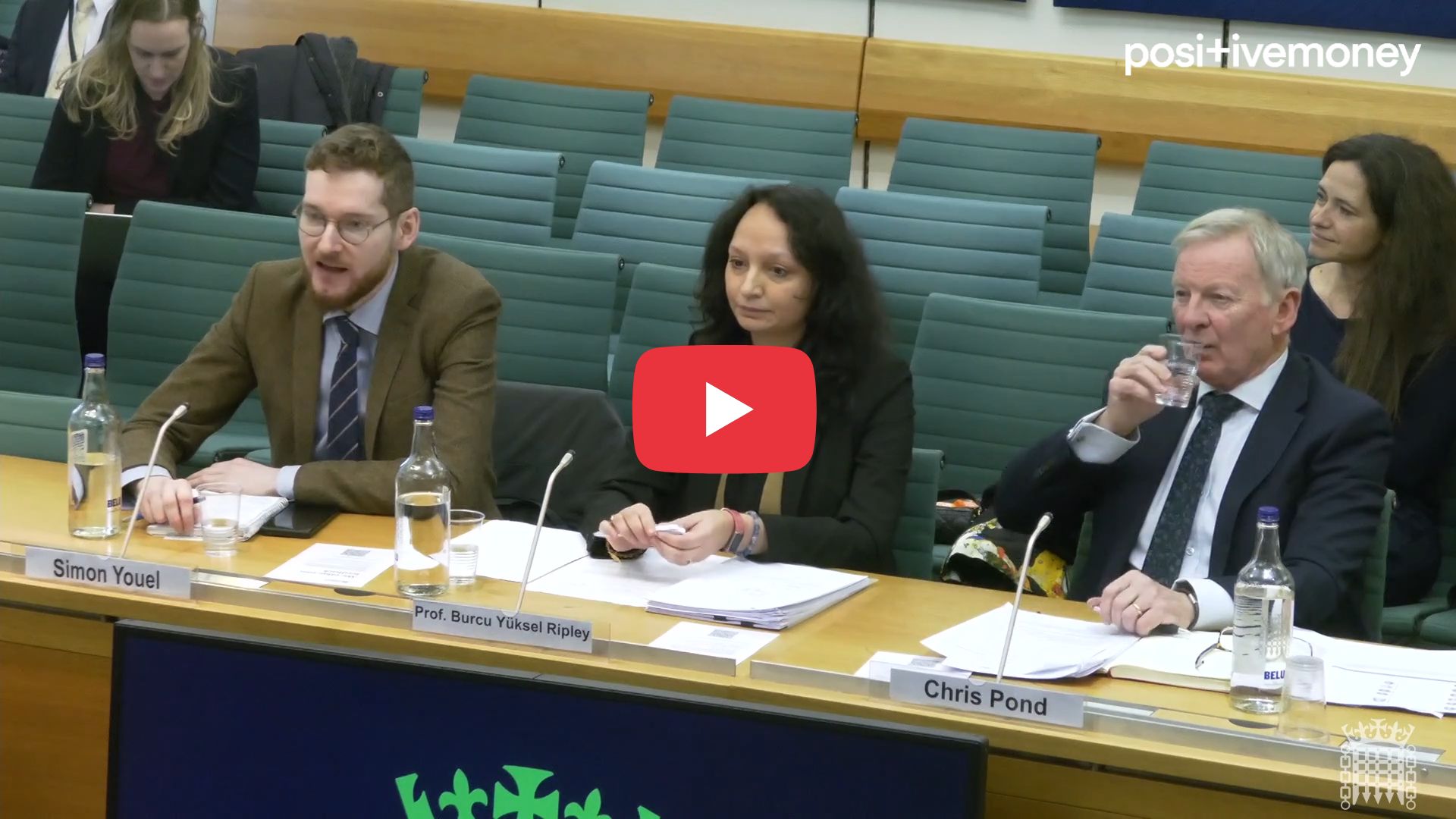
These are the kinds of questions that MPs are starting to think about, and it’s why I was asked to give evidence on cryptocurrencies to the Treasury Select Committee (TSC) in Parliament last month. |
|
Want to know my thoughts? Read on and watch the video of my testimony on YouTube 👇 |
|
|
The crypto industry would love to sell us the dream that they’re revolutionising our money and payments system - it’s anything but the truth.
The ‘cypherpunks’ who inspired cryptocurrencies like Bitcoin had good intentions in their vision for peer-to-peer digital cash. [2] But, as I shared with the TSC, the problem is that it’s been hijacked by people who want to get rich quick, and it's turned into a form of digital gold - a vehicle for pure speculation that generates nothing of value.
As I shared with the committee, the industry has a massive energy and water footprint, and those resources could certainly be put to better use. [3] And, for people looking to invest, we could create an investment product that actually contributes to building British industries, rather than driving more financial speculation.
However, with the government overreaching to spy on people’s bank accounts (something we’ve pushed back against), it’s easy to see why people are concerned, and looking to crypto to be a privacy-enhancing alternative. But it’s not a silver bullet.
Crypto is often framed as a disruptor - but really, we’re seeing many of the same concerning patterns as traditional finance: intense lobbying of regulators, a revolving door between politicians and the industry, and the richest and most powerful benefitting. [4] We have to do better than this - and publicly issued digital money is part of the solution.
We’ll always call for protecting cash (you can sign our #KeepCashAlive petition here), and it’s because we believe in the benefits of cash, not in spite of it, that we need a form of digital cash which also guarantees privacy by design. A well-designed, publicly issued digital pound could help make our payments system more resilient and less dependent on big banks and card companies, while being risk-free, unlike crypto. [5]
But it’s not going to be easy. You can see it playing out in the US - President Trump has gone out of his way to prevent digital money being issued by and for the public, all while his own family have made $500+ million from cryptocurrencies in the first half of 2025. [6]
And over in Europe, our colleagues are seeing the same thing as the European Parliament consults on the Digital Euro - banking industry lobbyists don’t want a publicly issued digital alternative to the current system that’s making them billions - and it’s these same lobbyists who are getting pretty much all the facetime with legislators. [7]
It’s a real case of David and Goliath as we go up against these hugely powerful banks and crypto companies - but getting to put our arguments in front of the Treasury Select Committee means our voices, for ordinary people not for big banks, are being heard. And it’s your support that enables us to be there.
Thank you so much,
Simon |
|

|
Positive Money relies on donations from generous individuals like you to carry out our work to redesign our economic system for social justice and a liveable planet. |
|
FOLLOW US ON SOCIAL MEDIA |
|

|

|

|

|

|