|
 |
We need to find other ANGRY DEMOCRATS. Please consider sharing and subscribing to fuel the ANGER for change.
Stop Talking About Labels. Start Talking About Bills.
You win by raising the floor for everyone — the Union Method.
|

| |||||||||||||||


I got an email last year from a local Democratic club working to “organize resistance to the Trump administration.” On the surface, it sounded fine. Until I read the actual agenda. It was the same tired, identity-based checklist that lost us voters in 2020, 2022, and 2024. A list that claims to represent “the people,” yet somehow forgets the actual economic pain that people are living through.
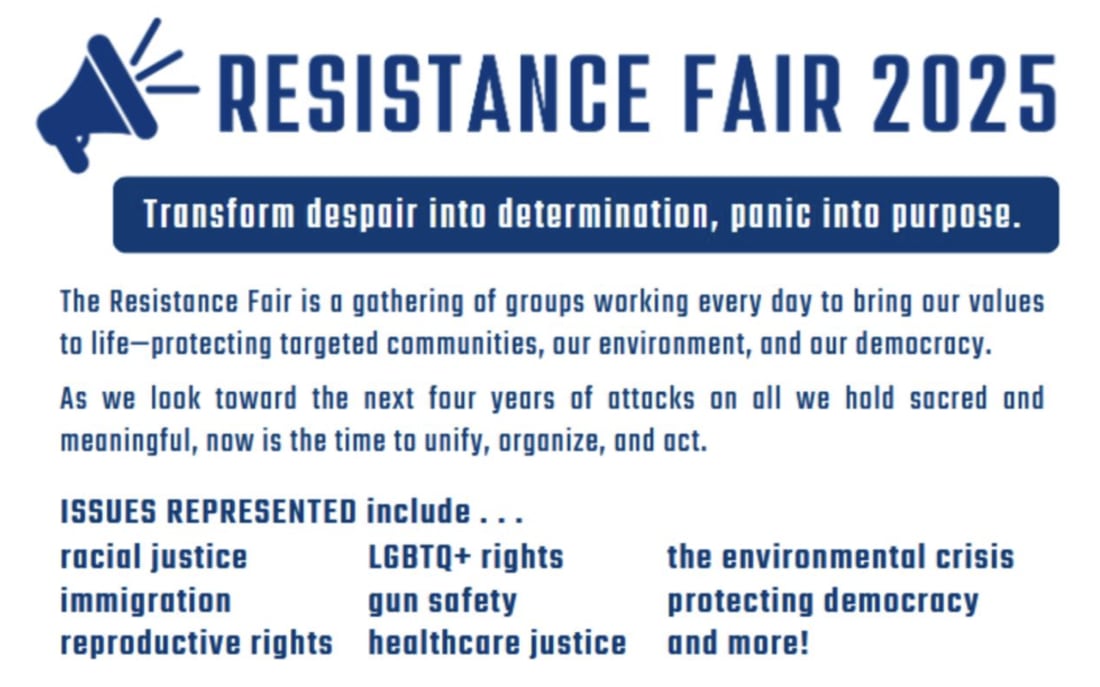 |
Not one mention of rising costs. Not one mention of government waste or efficiency. Not one mention of building shared prosperity. Nothing about housing affordability, healthcare costs, childcare costs, or the fact that people in Northeast Ohio cannot even buy a starter home anymore.
It was a list for consultants, not the working class. And it reminded me exactly why I talk about what I call “The Union Method.”
Unions Fought for Everyone. We Should Too
When unions were strong in Ohio, they did not divide people by race, gender, pronoun, or label. They fought for workers. Period.
Black, White, Hispanic, Asian. Catholic, Protestant, Jewish. Men and women. Steelworkers in Cleveland. Auto workers in Lordstown.
They fought for higher wages, safer workplaces, better benefits, and time off. They fought to raise the floor for everyone. That was the power of the labor movement. It unified people under a shared economic mission.
Somewhere along the line, Democrats forgot that.
The Union Method Means Universal Policy
Instead of dividing people into a dozen buckets with a dozen targeted programs, the Union Method starts with this simple idea:
When policies lift everyone, the whole country rises.
Universal healthcare.
Lower Crime.
Strong education.
Economic security for working families.
Programs that do not require a flowchart to understand.
Take healthcare. Yes, Black mothers face significantly higher rates of maternal mortality, and Black infants have worse health outcomes. Those are real facts backed by decades of data. But the solution isn’t designing a healthcare system around one demographic—it’s making sure everyone actually has access to quality care.
States that expanded Medicaid saw maternal and infant mortality drop across all racial groups, and the racial gaps narrowed, even if they didn’t disappear entirely. Internationally, countries with universal coverage also show smaller racial and socioeconomic disparities in outcomes.
Better access consistently reduces inequality.
The solution is universal systems, not identity sorting.
Housing Should Not Be an Identity Debate
Everyone in Northeast Ohio needs a roof over their head at a price that does not crush them. That is not an identity issue. That is supply and demand.
Right now the United States is simply not building enough homes. Depending on the model you use, we are short somewhere between about 3.7 million and 4.7 million housing units nationwide. When you have that big of a gap between how many households exist and how many homes are available, prices go up. Since the pandemic, home prices have climbed by roughly 55 percent and rents by more than 30 percent nationwide, with many metros seeing even bigger jumps. That is not because one group is suffering and another is not. It is because the system is undersupplied.
Housing policy that matters is boring and universal. Reform zoning so more duplexes, triplexes, and small apartment buildings can be built in neighborhoods that currently only allow single family homes. Speed up permitting so it does not take years to add new units. Invest in basic infrastructure so more sites are actually buildable. Expand tools that already work, like the Low Income Housing Tax Credit, which has helped finance millions of below market units nationally and requires those units to stay affordable for decades.
In Northeast Ohio, that means building near transit corridors, job centers, and older suburbs that already have roads, schools, and sewers in place. It means making it easier to add an extra unit to a house, convert unused commercial space to apartments, and build mixed income projects instead of fighting every new development because of parking complaints or fear of change.
People do not care what demographic category a housing bill claims to help. They care whether they can pay the rent, keep the mortgage current, and live in a neighborhood that is safe and functional. Identity politics does not fix that. Building more housing and lowering the cost of shelter does.
Debt, The Dollar, And Why Families Feel Poorer
While we are arguing over labels, the math in the background is getting ugly.
As of fall 2025, the national debt is a little over 38 trillion dollars, up more than 2 trillion dollars in a single year. Servicing that debt now costs hundreds of billions of dollars a year in interest payments alone. That is money that cannot go to roads, schools, childcare, or anything else people actually touch in their daily lives.
At the same time, prices have quietly climbed almost 25 percent since before the pandemic. If something cost 100 dollars in 2019, on average it now costs around 125 dollars. Wages are up on paper, but for many families the raise disappears at the grocery store, the gas pump, the pharmacy, and the daycare. Housing costs sit on top of that. The median first time homebuyer is now about 40 years old, the oldest on record, because it takes that long to scrape together a down payment in this environment of high prices and high interest rates.
This is what people feel when they say the dollar is being devalued. It is not about some abstract chart of the exchange rate. It is the fact that the same paycheck buys less food, less housing, less healthcare, and less future than it did five years ago. It is the fact that the government keeps layering on debt and interest while failing to deliver visible improvements in quality of life.
And are we running on that? No.
Are we admitting it is a problem? No. Not Trump. Not Biden. No one is being straight with the people about being slowly cooked like a frog in boiling water with rising costs.
Union Method politics can actually change things, instead of just slicing people into groups and giving them slogans.
Education is Universal. Opportunity is Universal.
Universal pre-K.
Better school accountability.
Affordable college and trades.
Economic mobility.
These are not identity programs. These are American programs.
Today, programs like the Earned Income Tax Credit remain some of the most successful anti-poverty tools we have. They are universal. They help everyone who works. They support families. They improve children’s futures.
Identity Politics Is Not a Strategy. It Is a Distraction.
For three cycles in a row, Democrats have leaned into identity politics while ignoring the economic collapse happening in front of everyone’s eyes. People in Ohio are not furious about pronouns. They are furious about property taxes, healthcare bills, daycare costs, and groceries. They are furious that rent is up, wages are flat, and everything feels harder.
People want the American Dream. A house. Kids. Stability. A future. A country where hard work actually pays off.
Identity-based messaging does nothing to deliver that.
Universal programs do.
It Is Time for a Shared American Platform
We need a political agenda that:
• Delivers universal healthcare or at least a real Medicaid expansion
• Builds housing and real zoning reform
• Funds and strengthens education
• Tackles the US debt and inflation.
• Encourages economic mobility for every worker and every family
This is how you win back working class voters.
This is how you rebuild trust.
This is how you offer a vision that unites instead of divides.
Unions understood that when they fought for workers across every division society tried to impose. They lifted everyone together. They won together. And they built the most prosperous middle class the world had ever seen.
We should try that again.
Let’s stop dividing people.
Let’s stop running campaigns built on labels.
Let’s return to policies that raise the standard of living for everyone.
This is the Union Method.
This is the path forward.
This is how Democrats win again.
Matt Diemer is an ANGRY DEMOCRAT. Support him by becoming a paid subscriber and sharing his newsletters.
Join other ANGRY DEMOCRATS by support Matt’s work. Subscribe and Share!
| ||||||||||

