We asked you about doctor salaries and you answered! In fact, our poll was so popular last week that it crashed. Thanks to everyone who responded — and apologies to those who couldn't. We've fixed the issue and would love your responses this week! |
|
But before we get to that, here’s the answer:
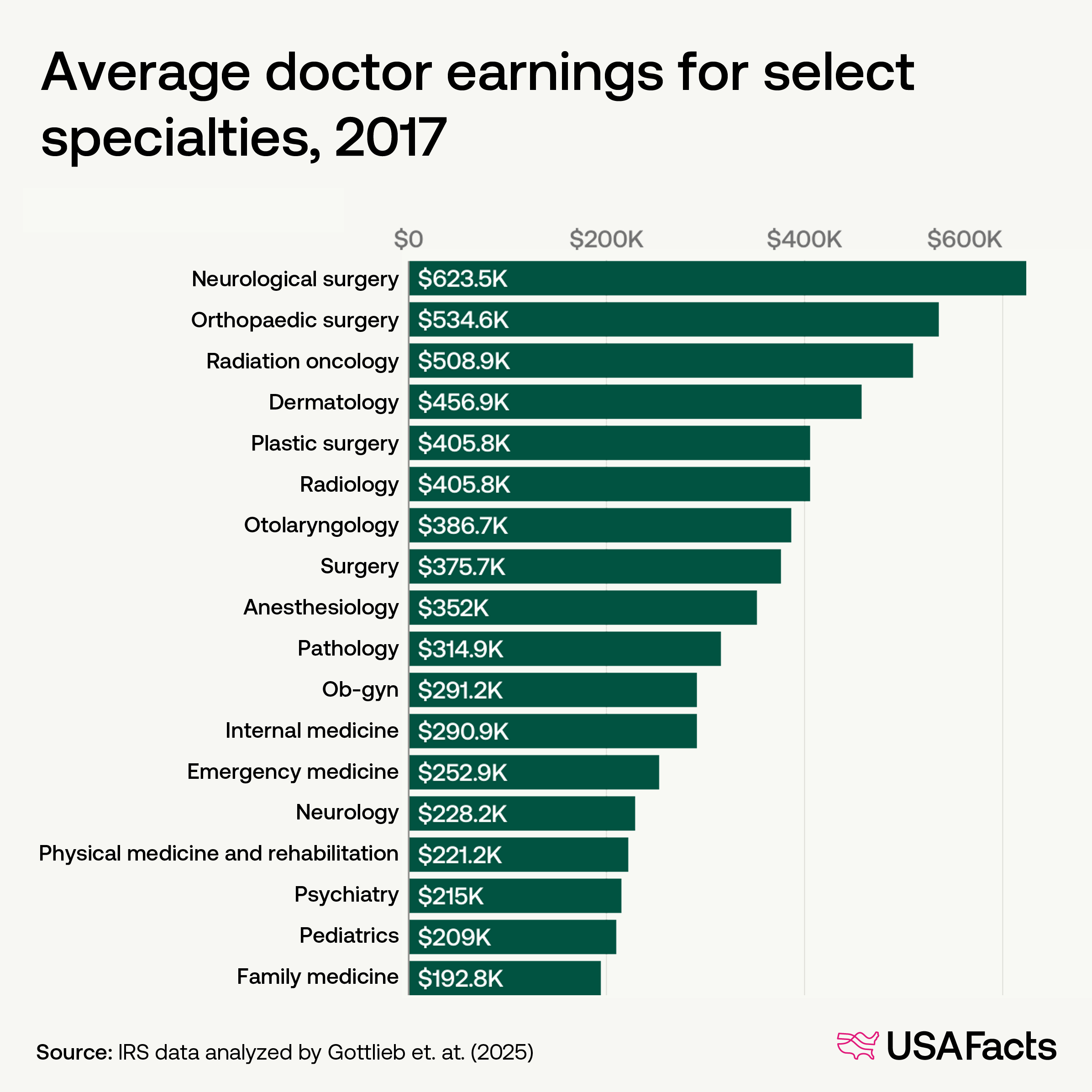
The average doctor in the US earned $350,000 in individual total income in 2017. That’s about 1.75 times what most people guessed ($200,050). But, of course, doctors of certain specialties earn more than others. And earnings vary by state — and the top state might surprise you.
- The highest-paid doctors live in South Dakota. There, the average physician earned $432,800 in 2017. Compared to other states, South Dakota had a median household income below the national average, at $56,521 in 2017.
- Workloads for different specialties also contribute to income differences. Neurosurgeons earned an average of $623,500 in 2017, over three times more than family medicine doctors ($192,800). They also worked about 16 more hours per week on average: 63.6 compared to 47.4.
|
|
- Some jobs, like lawyers, have pay that tracks closely to state household income. Physician pay follows no such pattern. This is partly due to how Medicare adjusts reimbursements, particularly in rural areas.
- The top 1% of the nation’s doctors earned an average of $4 million annually, largely from business income and capital gains.
|
|
The facts on the Affordable Care Act |
|
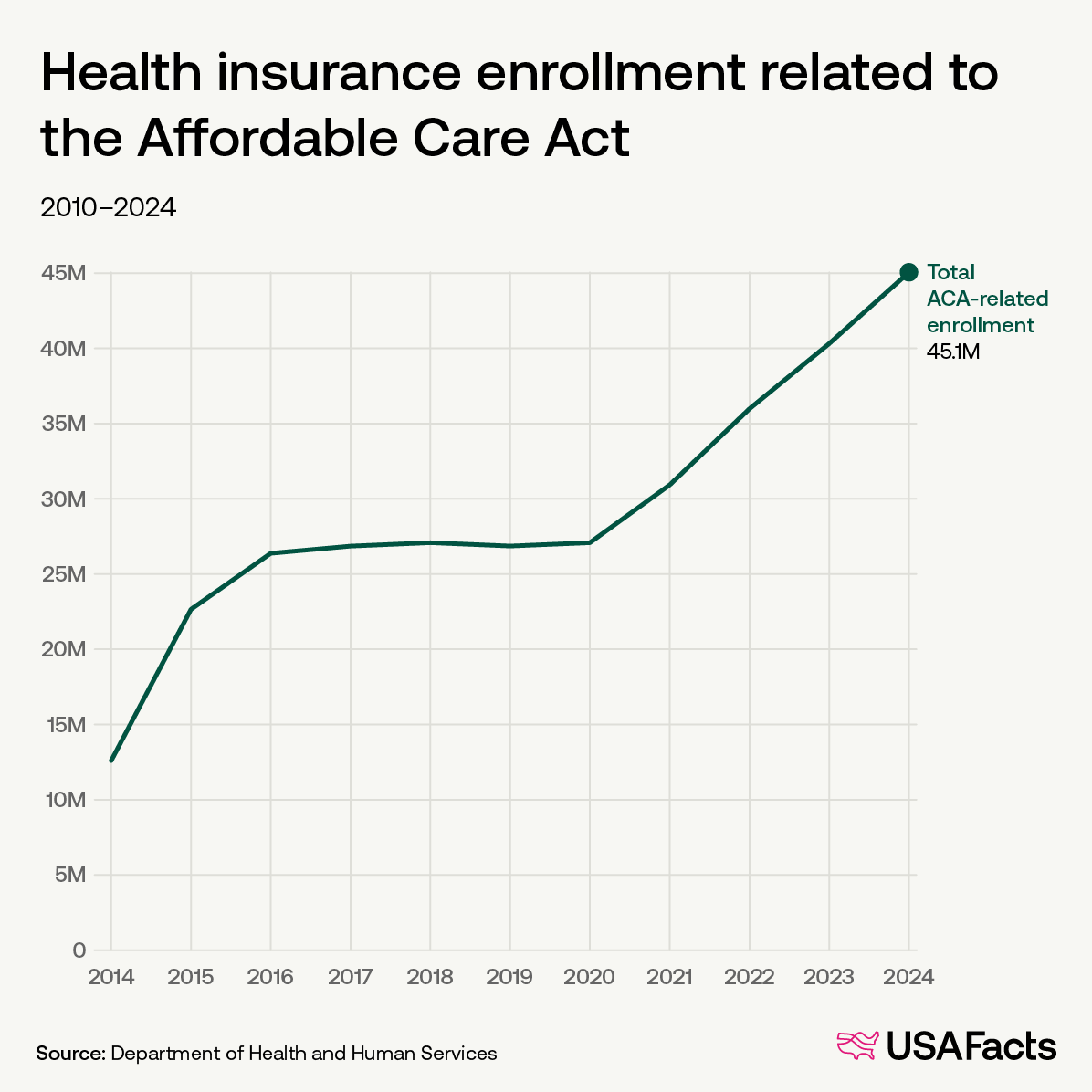
As part of the agreement to end the recent government shutdown, Republican leadership promised to hold a vote on the expiring Affordable Care Act (ACA) tax credits. That vote might be coming soon. The ACA, also known as Obamacare, reshaped how Americans get health insurance — and who can afford it. The share of uninsured Americans has dropped since the ACA took effect in 2014, and millions of people rely on ACA-related coverage today.
- As of early 2024, more than 45 million people had enrolled in ACA-related health insurance plans.
|
|
- In 2013, the year before the ACA went into effect, 14.5% of Americans didn’t have health insurance. By 2016, 8.6% of Americans were uninsured — a 5.9-point drop.
- From 2010 to 2024, public insurance coverage increased from 29.7% of the population to 35.5%, while private coverage remained relatively stable, growing from 65.8% to 66.1%.
- The ACA outlawed health insurance providers denying coverage based on a "preexisting condition." Around that time, it was estimated that between 19% to 50% of Americans younger than 65 had a preexisting condition.
- The ACA also established that dependents could stay on a parent’s insurance plan until their 26th birthday. The percentage of 19- to 25-year-olds without health insurance fell from 32.8% in 2009 to a low of 13.9% in 2014.
|
|
We want to hear from you! Weigh in on next week’s article below. |
|
| Children who grow up in which state have the greatest likelihood (per capita) of becoming inventors? | | Come back next week for the answer! | | | | | | | | | | | | |
|
The Agriculture Department has stated that it plans to withhold funds for the Supplemental Nutrition Assistance Program (also known as SNAP or EBT) from certain states unless those states provide information about individuals receiving assistance. See how many people use SNAP benefits in your state. Last week, a committee at the Centers for Disease Control and Prevention voted to stop universal hepatitis B vaccinations for newborns. Here’s the latest data on how many kids are vaccinated against hepatitis B and other diseases.
|
|
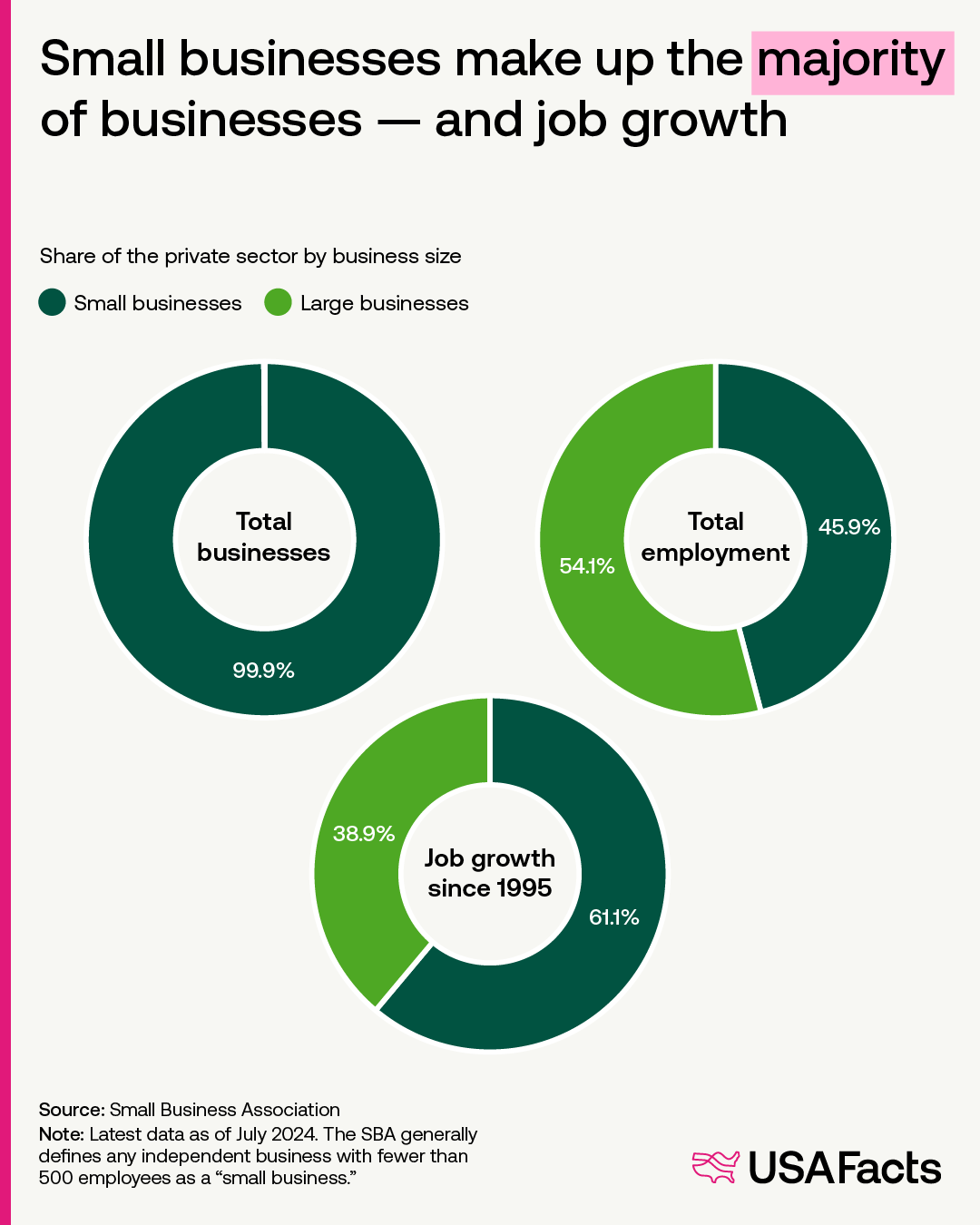
The Small Business Administration generally defines a small business as any independent business with fewer than 500 employees. These businesses comprise 99.9% of all businesses in the US. As of July 2024, the nation had 34.8 million small businesses that employed 59 million people, or 45.9% of all private-sector employees. For comparison, the nation had 19,688 large businesses in July of last year. |
|
|
|
|