Image

Daily News Brief

December 8, 2025

Welcome to CFR’s Daily News Brief. Today we’re covering comments from Hamas and Israeli leaders about the next phase of the Gaza truce, as well as...

  • International reactions to the new U.S. National Security Strategy

  • Renewed fighting on the Cambodia-Thailand border 

  • The European Union (EU) fine on X


Top of the Agenda

A senior Hamas official said yesterday the group is open to “freezing or storing” its arms as part of the next phase of the ceasefire. That potentially paves a way forward for one of the most sensitive and controversial elements in the U.S.-backed peace plan. Israeli Prime Minister Benjamin Netanyahu said he would discuss the next phase of the truce with Washington this month. Hamas official Bassem Naim’s comments to the Associated Press came as Axios reported that envoys from the United States, Israel, and Qatar—home to Hamas’s political bureau—held talks in New York yesterday. The public comments from both Israel and Hamas suggest discussions on the peace deal are progressing, though both sides have accused each other of ceasefire violations. The recent war was triggered by Hamas’s October 7, 2023 attacks.


What Hamas is saying. Naim, who is based in Qatar, said Hamas is open to “freezing or storing or laying down” its arms as a step toward establishing a Palestinian state. He suggested a long-term truce of five to ten years for such talks to take place and said that Hamas would oppose an international force carrying out the disarmament. Another pillar of phase two calls for the establishment of a technocratic committee to run the day-to-day governance of Gaza, and Naim also said Hamas and the Palestinian Authority had moved toward identifying a Palestinian politician currently based in the West Bank who could lead such a committee.


What Israel is saying. Netanyahu said yesterday that the first phase of the truce was “almost” complete, noting that Hamas still needs to return the body of one Israeli hostage. Separately, Israel’s military chief yesterday called the withdrawal line in Gaza—behind which Israeli troops moved as part of the first phase—“a new border,” a move that would effectively split Gaza in half if formalized. The second phase of the peace plan stipulates Israel’s further withdrawal from that line. 


“The outlines of a [Gaza] peace process have broad buy-in…but many political questions remain unresolved. And the thorniest among them—who will govern Gaza, whether and how Hamas will be disarmed and involved in politics thereafter, and what to do about Israel’s ongoing occupation—cannot be answered by international decree. In no small part, the outcome of any peace process will be shaped by what Palestinians themselves think.”

—George Mason University’s Mohamed Elgohari, Foreign Affairs


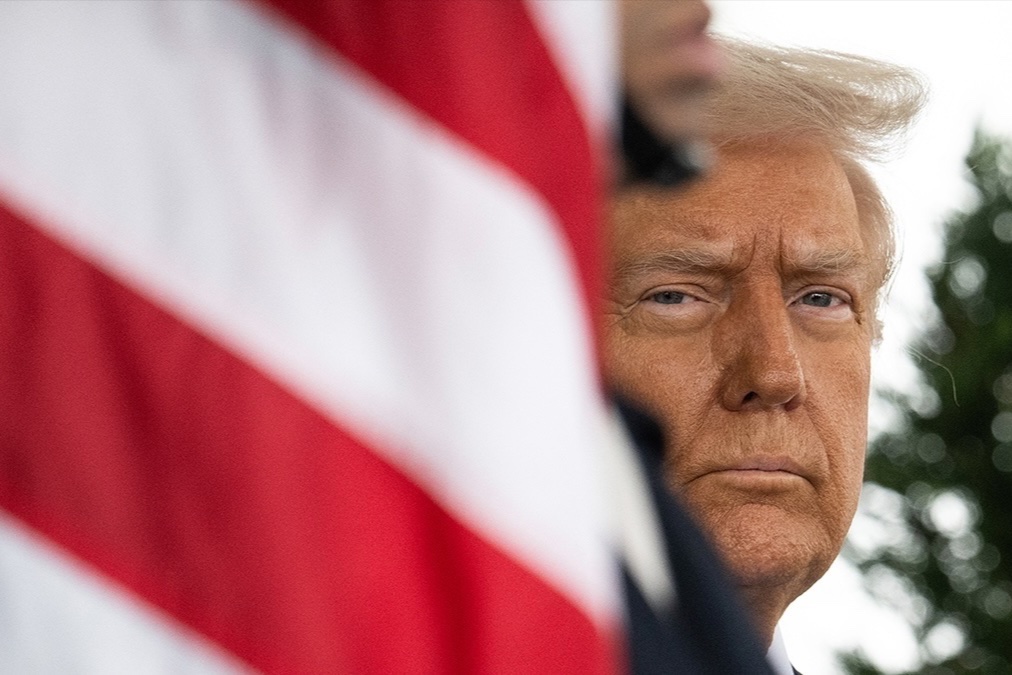
Unpacking Trump’s National Security Strategy

President Donald Trump waits outside of the West Wing at the White House in Washington, DC, February 11, 2025.

Jim Watson/AFP/Getty Images

The Trump administration released its much-anticipated National Security Strategy last week. Seven CFR experts discuss the implications of a document that could reorient the United States’ approach toward the world in this article.


Across the Globe

Benin coup attempt. Government forces have foiled a coup attempt in the country, Benin’s President Patrice Talon said yesterday. Earlier in the day, a group of soldiers had made a takeover announcement on television. The Economic Community of West African States said it ordered troops to Benin to back up the government. Since 2022, military coups have occurred in Benin’s neighbors Niger and Burkina Faso.


Hong Kong’s elections. Voter turnout reached roughly 31.9 percent in Hong Kong’s legislative election yesterday, up 1.7 percentage points from four years ago. The election took place less than two weeks after a deadly fire at a Hong Kong apartment building prompted public criticism of the government, and a handful of incumbent legislators lost their seats. The election was dominated by China-friendly candidates following a Chinese crackdown on election rules in 2021 that requires vetting of candidates by national security police.


Cambodia-Thailand fighting. Thailand bombed targets in Cambodia today, claiming it was responding to a Cambodian attack that killed a Thai soldier and injured eight others earlier in the day. Cambodia’s defense minister accused Thailand of firing first, while Thai Prime Minister Anutin Charnvirakul said talks were unviable because of Cambodia’s actions. Thousands of people fled fighting along the Cambodian-Thai border. Today’s clashes are the latest violation of a ceasefire presided over by U.S. President Donald Trump earlier this year. 


Responses to the new U.S. security strategy...Following the release of Trump’s new National Security Strategy last Thursday, a Kremlin spokesperson called the changes to the document “largely consistent with our vision.” In response to the document’s criticism of Europe, EU foreign policy chief Kaja Kallas said the United States was still the bloc’s “biggest ally” and seemed to agree that European countries could be more “self-confident” toward Russia.


…and a preview of the new U.S. defense strategy. Defense Secretary Pete Hegseth previewed the forthcoming National Defense Strategy in a speech Saturday. He identified four main areas of focus: defending the United States and Western Hemisphere, expanding burden sharing with allies, deterring China “through strength rather than force,” and growing the defense industrial base.


EU versus X. U.S. officials, including Secretary of State Marco Rubio and Federal Communications Commission Chair Brendan Carr, criticized the EU after it fined X $140 million Friday for violating its rules around transparency and providing data to researchers. Rubio characterized the move as an “attack” that amounted to censorship, while X owner Elon Musk wrote that the EU should be abolished. Brussels said continued noncompliance by X would result in additional fines. 


U.S.-India talks. Senior U.S. State Department official Allison Hooker began a five-day visit to India yesterday as New Delhi tries to negotiate a reduction in 50 percent tariffs from the United States. Hooker will discuss economic and security relations, the State Department said. The visit follows a chill in U.S.-India relations this year over the tariffs.


New battle lines in Yemen. Yemeni separatist group the Southern Transitional Council (STC) announced in a Saturday statement that it had made territorial “victories and gains” in the eastern provinces of Hadramout and al-Mahra, a dramatic shift that cements STC control in southern Yemen and could pave the way for  the south to declare independence. The STC is backed by the United Arab Emirates, and has fought both the Houthi rebels and Yemen’s internationally-backed government in the country’s civil war. 


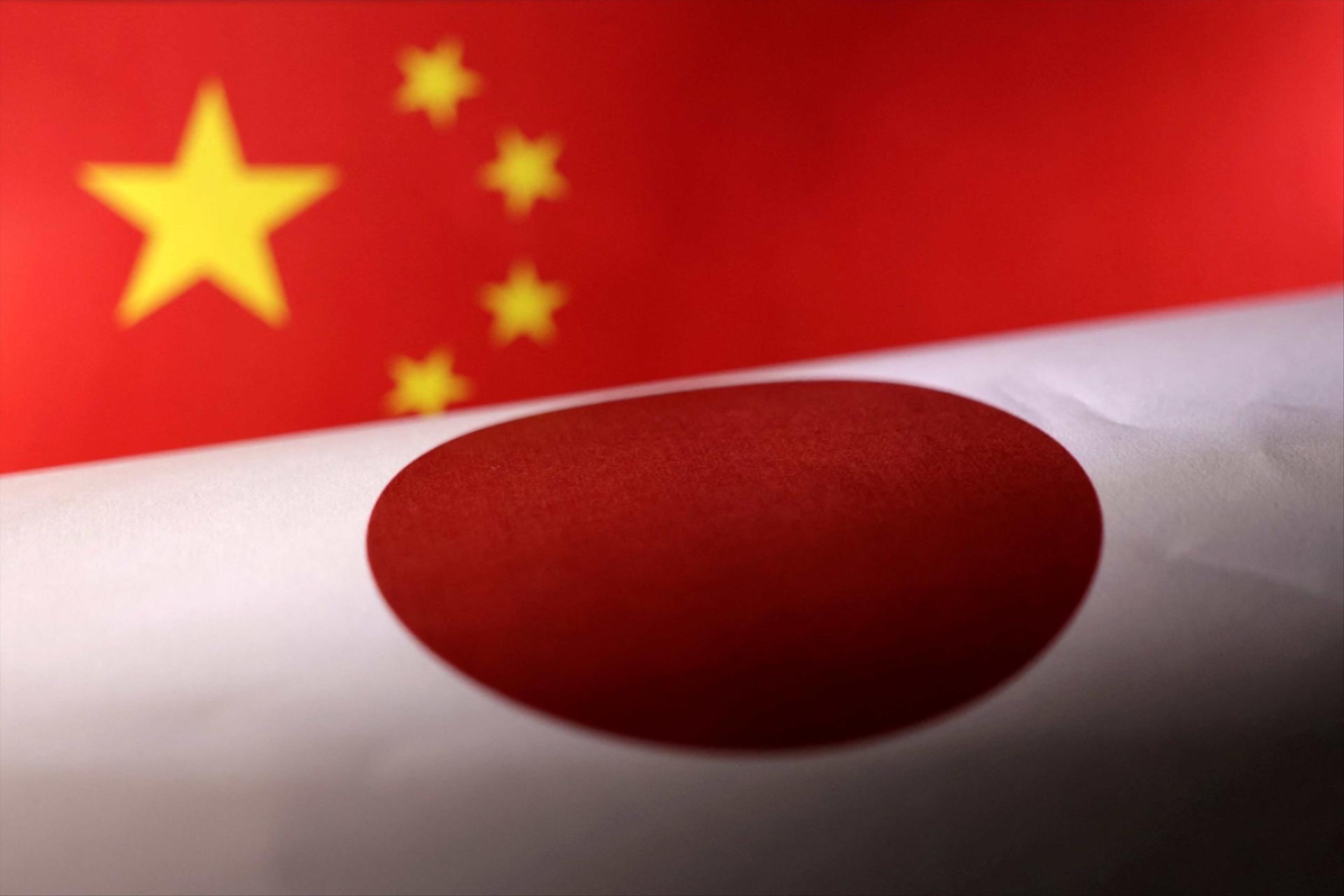
Crises May Now Drive Japan’s Relations With China

Printed Chinese and Japanese flags are seen in this illustration.

Dado Ruvic/Illustration/Reuters

Crises are not new to the China-Japan relationship, but their impact only grows. There is little reason to hope for a quick resolution to the current one, CFR expert Sheila A. Smith writes for Asia Unbound.


What’s Next

  • Today, the UN Environment Assembly begins in Nairobi.

  • Today, Ukrainian President Volodymyr Zelenskyy meets European leaders in London.

  • Today, the Southeast Asian Games begin in Thailand.
  • Tomorrow, Nobel Prize winner María Corina Machado is expected to give a press conference in Oslo.


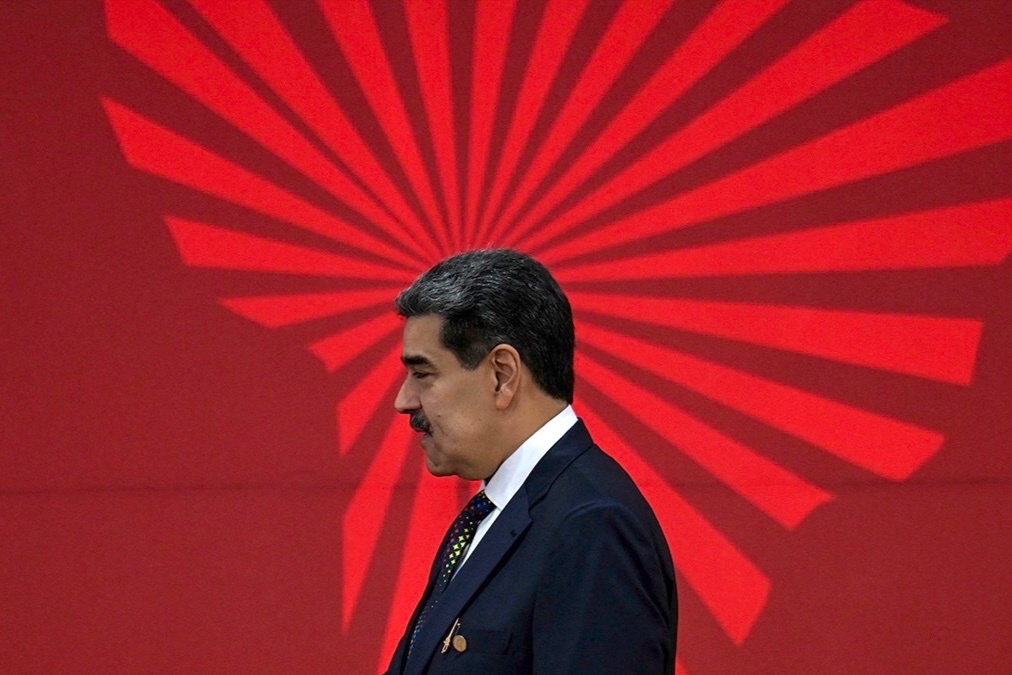
On Regime Change in Venezuela

Venezuela's President Nicolás Maduro on December 14, 2024.

Juan Barreto/AFP/Getty Images

CFR expert Elliott Abrams discusses the possibility of the United States pursuing regime change in Venezuela with CFR President Michael Froman in The World This Week.


Council on Foreign Relations

58 East 68th Street, New York, NY 10065

1777 F Street, NW, Washington, DC 20006

Was this forwarded to you? Subscribe to the Daily News Brief

FacebookTwitterInstagramLinkedInYouTube

Manage Your Email Preferences

View in Browser