Why Mohamed bin Zayed — and Donald Trump — Represent a New Architecture for Peace
by Robert Williams • December 8, 2025 at 5:00 am
[T]wo leaders have reshaped the strategic map with a clarity rarely seen in this era: United States President Donald J. Trump and United Arab Emirates President Sheikh Mohamed bin Zayed Al Nahyan (MBZ).
MBZ's long-term project is not ideological and not transactional. It is developmental. His vision of governance is anchored in four pillars: modernity, competence, coexistence, and scientific advancement.
This is why the UAE has become a regional pioneer in space exploration, renewable energy, and peaceful nuclear development. It is why the country became the third in the world — after the United States and China — to invest at scale in artificial intelligence, signing multibillion-dollar agreements to accelerate the technological transformation of its economy.
MBZ understood that a modern Middle East cannot be built by capitulating to militancy.
His reforms stand in stark contrast to the ideological rigidity of groups such as the Muslim Brotherhood, whose governance models have produced paralysis, institutional weakness, and repeated humanitarian disasters. Where they promote confrontation, MBZ promotes capacity-building. Where they elevate dogma, he elevates human development.
The Nobel Peace Prize has often been awarded to symbolic acts or aspirational visions. But the Middle East today demands something different: recognition of leaders whose decisions produced tangible pathways to peace, stability, and human survival. Trump and MBZ did not simply speak about peace; they engineered it.
The Nobel Peace Prize should acknowledge both. History surely will.
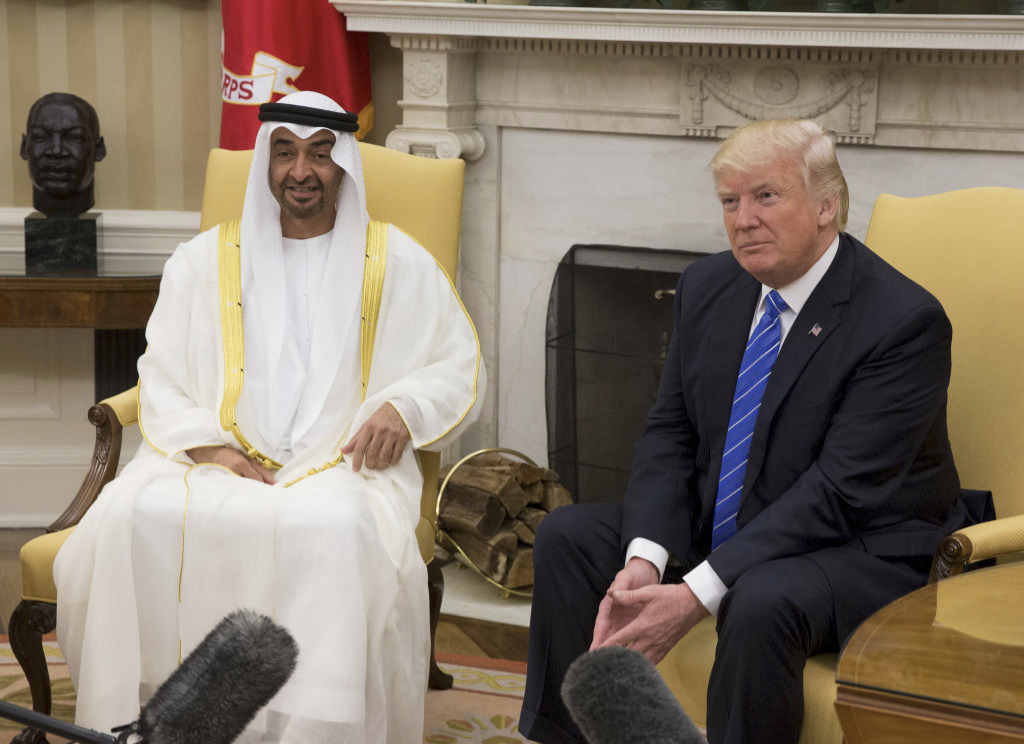
At a time when diplomacy is paralyzed, institutions are overwhelmed, and war has returned to the Middle East with devastating force, two leaders have reshaped the strategic map with a clarity rarely seen in this era: United States President Donald J. Trump and United Arab Emirates President Sheikh Mohamed bin Zayed Al Nahyan (MBZ). Their approaches differ in style and origin, but converge on a single point: both pushed the region toward pragmatism at a moment when it was veering toward extremism and fragmentation. For this reason, both deserve to be considered among the most consequential peacemakers of the twenty-first century—and worthy of recognition at the highest international level, including the Nobel Peace Prize.
A Vision of Peace That Broke with Old Orthodoxy