|
 |
Get all access now and save 30% when you upgrade to become a paid subscriber today. Your subscription upgrade is a direct investment in defending democracy, helping Lincoln Square build a pro-democracy media machine to fight disinformation and inform voters with the facts.—We’ll also gift you $20 in Lincoln Bucks to use in our pro-democracy merchandise store for the holidays.
Pardon the Corruption
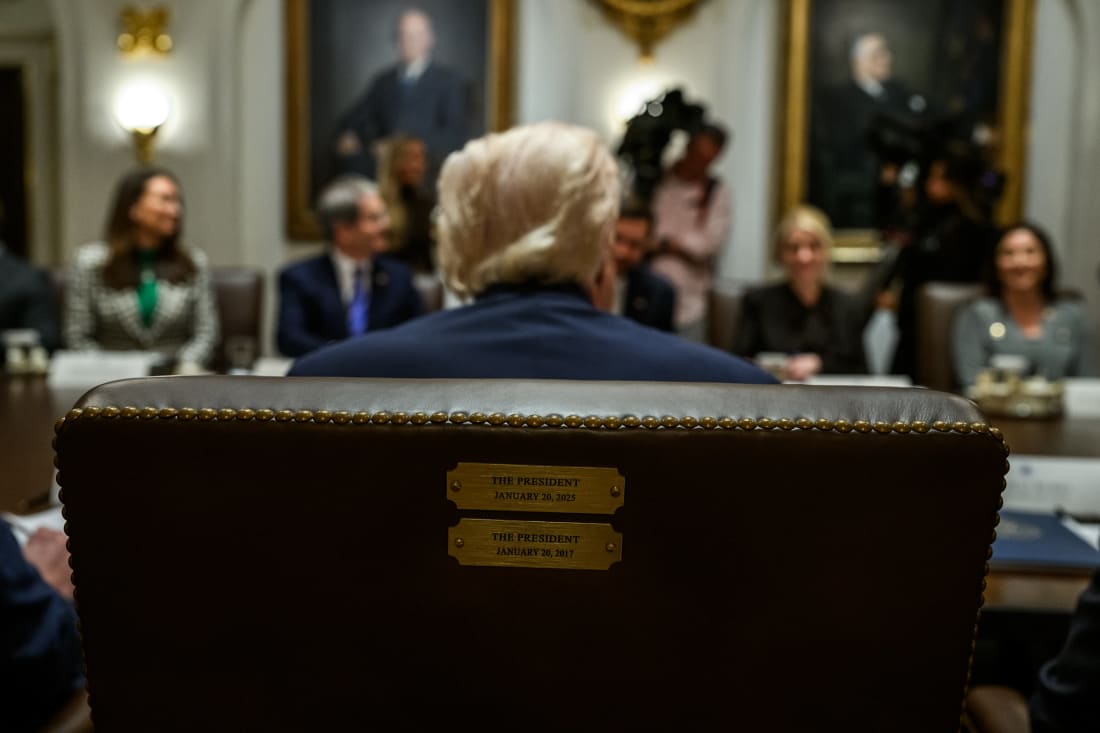
Trump’s justification for invading American cities and other countries is to reduce the crime he is actively encouraging through his pardons.
|
| |||||||||||||||


 |
The President of the United States has said that preventing the flow of drugs from South America into the U.S. is a national priority. On that basis, the U.S. military is killing alleged drug traffickers without due process. It is also preparing to invade Venezuela. Trump says the leader there is involved in narcoterrorism, justifying the extraordinary step of war.
But if Trump is opposed to drug trafficking from south of the border, why did he just pardon another leader in the region who was part of a massive drug trafficking ring? Juan Orlando Hernández, the former President of Honduras, was tried and convicted of exactly the accusations that Trump is using to drum up a pretext for war against Venezuela. Hernández was convicted of receiving millions from violent drug gangs for facilitating the flow of 400 tonnes of cocaine into America, while corrupting state institutions.
A prosecutor reported that Hernández boasted to drug dealers that “together they were going to shove the drugs right up the noses of the gringos.” An agent who worked the Hernández case said: “It means any attempt to work your investigations to the highest levels is meaningless.”
Trump is also invading Democratic cities with military or paramilitary forces. His justifications for their presence is to improve public safety and enable his immigration sweeps. Trump officials label protests of federal officials in Democratic cities as “insurrection,” justifying the federal presence.
But if Trump was interested in law and order, why does he keep pardoning criminals? While many of those criminals are white collar, he has also pardoned violent convicts. Of the nearly 1,600 Capitol insurrectionists pardoned, more than 200 of these were convicted of assaulting law enforcement officers. Many of those pardoned by Trump have gone on to commit crimes. In one especially grim case, a child molester tried to silence his victim by promising a share of reparation money he expected to be paid by the Trump administration.
Let’s take a closer look at how Trump has used his pardon powers for corrupt purposes.
Pardon Abuse
The pardon power is a weird constitutional inheritance that mostly draws attention when it is abused. (In this post, I am going to treat pardon, clemency, and commutation as broadly falling under the category of pardon powers, though they have distinct legal effects).
Over time, Presidents sought to minimize the risk of abuse by making it more consistent with the ideals of a Weberian bureaucracy: transparent, impartial, and subject to clear criteria. This has given way to a reliance on leveraging of political connections and appealing to Trump’s personal whims. The use of pardons is now consistent with Trump as “a king above the law” in Justice Sotomayor’s memorable framing.
The pattern of extreme politicization of the pardon process began in Trump’s first term. William Barr, Trump’s former Attorney General said “there were pardons being given without any vetting by the department.” One analysis found that only 11% of Trump’s 238 first term pardons went through the formal DOJ review process.
Things have gotten even worse in his second term, partly because of Trump’s broader indifference to norms, but also because he has installed Ed Martin to oversee the process. Martin is the first partisan political appointee to lead the Office of Pardon Attorney, which was previously manned by career civil servants.
DOJ lawyers normally apply standard criteria for pardons, these include: post-conviction conduct, character and reputation; seriousness and relative recentness of the offense; acceptance of responsibility, remorse, and atonement; and need for relief. The ideal case was someone who had served significant time, especially for more serious crimes, expressed remorse, and faced real hardship because of their conviction. Now, the ideal case is a wealthy supporter of the President who would prefer never to see the inside of a jail cell for their crimes.
According to ProPublica:
For those who followed the standard protocol set out by the Department of Justice, the sense is growing that the process no longer matters; they’ve watched the public database of applicants swell with thousands of pending cases, while Trump grants pardons to people who never entered the system at all.
Presidents could and sometimes did ignore DOJ recommendations or worked outside of the formal process. Most notoriously, on the last day of his presidency, Bill Clinton pardoned Marc Rich, a white-collar fraudster living in exile, after his wife made large contributions to the Democratic party and Clinton’s presidential library. We could see this as a precedent for Trump’s actions, but not a justification. The pardon triggered an FBI investigation, and was enough of a scandal that Clinton expressed remorse. Similarly, Joe Biden bypassed the review process to issue a pardon to his son, Hunter Biden. The decision drew much criticism, but the logic — that Trump would weaponize the legal system to attack his family — is increasingly hard to disagree with. Trump has repeatedly said he will void such pardons.
The bureaucratic process for reviewing pardons minimized the potential for the type of broad corruption we are seeing now. Abuses of the system were considered scandals, aberrations from the norm. Now the aberrations are the norm. Martin has proudly politicized the pardon process, posting “No MAGA left behind” on his social media after Trump pardoned a supporter convicted of taking bribes while serving as a sheriff.
Pardoning Loyalists and Supplicants
Trump accepts two primary types of currency for his pardons: loyalty and money.
In addition to the January 6 insurrectionists, Trump has pardoned 77 people who sought to overturn the 2020 election on his behalf, including slates of alternate electors, legal guides, and those who promoted false claims about the election, or who directly pressured election officials or falsely accused them of corruption.
In addition to loyalists, Trump has also pardoned the well-connected and the well-heeled, such as:
Jonathan Braun, a drug smuggler and predatory lender, whose pardon was facilitated by Jared Kushner, the President’s son-in-law. Doing so damaged a criminal investigation where the DOJ was hoping to get Braun to flip on other criminals. Once the pardon came, Braun had no reason to co-operate.
David Gentile served about two weeks of his seven year prison sentence when Trump commuted his sentence. He was involved in a $1.6 billion fraud of thousands of investors. The judge told Gentile that his crimes got him “a one-way ticket to jail.” Little did he know that Trump was offering a one-way ticket out of jail.
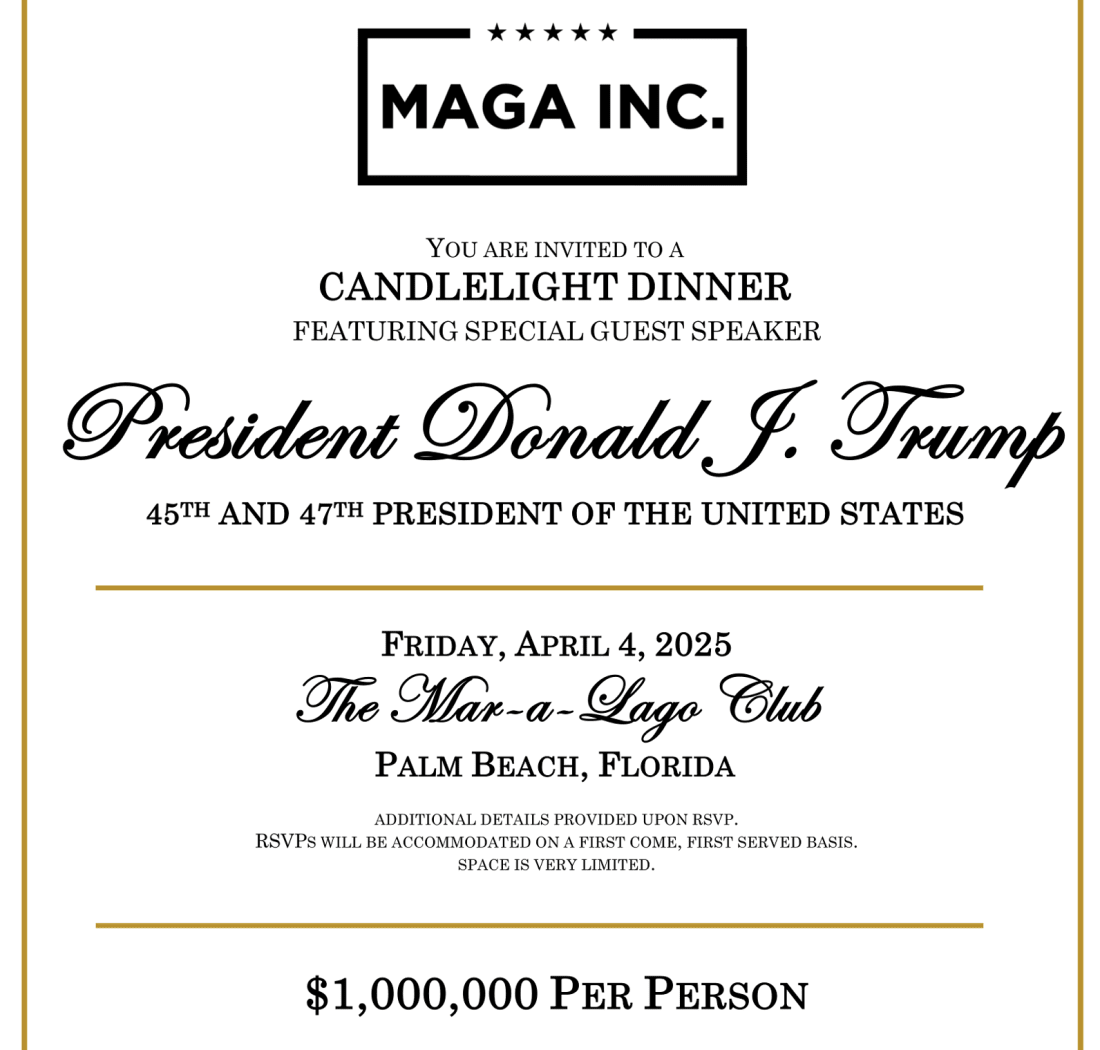
Paul Walczak stole over $10 million of his employees’ payroll taxes to fund a luxury lifestyle. When he was sentenced, the judge emphasized there “is not a get-out-of-jail-free card” for the rich. How wrong he was! Walczak’s pardon application did not dwell on why he was innocent, but on his Mom. More specifically, that she had raised millions for Trump, that she had funded efforts to publicize Joe Biden’s daughters drug problems. Weeks after she took the opportunity to join a “candlelit dinner” (cost: $1 million) to dine with Trump, Walczak was pardoned, allowing him to skip jail and a $4.4 million restitution.
 |
Trump has been especially zealous in tilting the legal system to protect allies in the crypto industry. Trump once labeled crypto to be a “scam” that “can facilitate unlawful behavior, including drug trade and other illegal activity” but came to see the scam as an opportunity to capture political allies and financial patrons. Trump and his family have netted billions in crypto holdings, partly by offering free passes to key figures in the industry. For example:
Trump pardoned the former CEO of Binance, CZ Zhao of his money laundering crimes after Zhao and Binance promoted World Liberty Financial, the cyrpto company the Trump family has a stake in with it’s $TRUMP coin. The SEC’s fraud investigation into another crypto tycoon, Justin Sun, was paused after Sun spent tens of millions on $TRUMP.
The Impunity Is the Point
Trump is not waiting until the end of his term to issue questionable pardons. He is reveling in them. They signal impunity from the law for Trump’s associates, and that the pardon store is open for business. Whatever loyalists do now that is likely illegal, they can hope for a pardon from Trump in the future.
In addition to the loyalists and wealthy supplicants, there is another category of pardonee: politicians who have been prosecuted for corruption. Twelve members of Congress accused of bribery or corruption have been pardoned, ten Republicans and two Democrats. But Democrats can also benefit. For example, Trump pardoned Henry Cuellar, the Texas Democratic Congressman, even before his trial began. Ceullar was indicted on accusations that he accepted $600,000 from a foreign government and Mexican bank to influence US policy. Trump did not weigh in on the details of the case, merely claiming that Cuellar, like him, was the victim of a weaponized justice system. The net effect seems to be to decriminalize political corruption in America.
In justifying the pardon of former President Hernández, Trump said “They gave him 45 years because he was the president of the country — you could do this to any president on any country.” Hernández, like others applicants, drew explicit connections with the prosecutions of Trump: “Just as you, President Trump, I have suffered political persecution, targeted by the Biden-Harris administration, not for any wrong-doing but for political reasons.” Hernández’s appeal was forwarded to Trump by another pardonee, and political fixer, Roger Stone. It is hard to miss the parallels between Trump’s sense of grievance over prosecutions of his own misdeeds, and his willingness to exempt other politicians for their abuses of office.
Trump embraces his pardon power by also helping celebrities. The more attention, the better. Pardon lawyers were told to recommend that Mel Gibson have his access to guns restored, despite a domestic violence record. Liz Oyer, the lawyer consulted, said: “My recommendation was sought, I believe, to give a veneer of legitimacy to what was actually a political favor for a friend of the president. I said I couldn’t recommend restoration.” She was fired. When she was invited to testify in the Senate, only Democrats attended the hearing: “It has really perplexed me that there’s not a shared level of bipartisan concern about what’s happening inside the Department of Justice.”
A Broader Pattern of Abuse
Trump’s pardon spree is part of a broader pattern of transforming the rule of law into rule by law. He is pardoning politicians who have been convicted of corruption, even as he is using the justice system to target political opponents. For my friends, everything; for my enemies, the law.
Not only did Trump pardon January 6 rioters, he directed the Department of Justice to stop prosecuting cases. One J6er whose case was subsequently dismissed correctly predicted: “President Trump’s going to be in office six months from now, so I’m not worried about it.” He was later arrested for aggravated kidnapping and sexual assault.
Not only has Trump pardoned crypto criminals, Trump has blocked several other investigations and enforcement actions into crypto donors and investors (see p21-23 of this report from Democrats on the House Judiciary Committee).
A Two-tier Pardon System
The perception that Trump is handing out pardons is fueling a gold-rush. About 10,000 people filed for pardons in the first nine months of the Trump presidency, which is about two-thirds of the total pardon applications for the entire four years of the Biden administration. The gold-rush benefits Trump, but also those in his orbit who have connections to a personalist regime. Kenneth Vogel of the New York Times has been covering this beat:
Lawyers and lobbyists with connections to Mr. Trump have scrambled to take advantage. They have collected large fees from clemency seekers who would not be eligible for second chances under apolitical criteria that are intended to guide a Justice Department system for recommending mercy for those who have served their time or demonstrated remorse and a lower likelihood of recidivism. Instead, clemency petitioners are mostly circumventing that system, tailoring their pitches to the president by emphasizing their loyalty to him and echoing his claims of political persecution.
For example, a nursing home magnate who withheld $38 million in payroll taxes was prosecuted by Trump’s Justice Department, with Trump’s former personal-lawyer-turned-US-Attorney Alina Habba claiming credit. After giving almost $1 million to lobbyists, the magnate was out after three months of his three year sentence. The lobbyists in question, Jack Burkman and Jacob Wohl, became infamous for their laundering of conspiracy theories during Trump’s first term, and were subsequently convicted in multiple states for voter suppression efforts.
The clients who can buy their access to Trump’s inner circle tend to be white collar criminals. White collar crimes are less shocking than violent crimes, but have real costs. For example, some of Gentile’s victims lost their life savings. These crimes are also incredibly difficult to prove in court, even as the rich are able to fund a legal defense beyond the reach of ordinary people. Nevertheless, many might decide a good insurance policy is to put a down-payment on a pardon. After a wealthy fraudster served two weeks of a 42 month jail sentence, one DOJ prosecutor said:
Afterward, defense attorneys are telling us they can’t get their clients to take good or reasonable plea offers because they felt they’re better off spending their money on a political donation, drawing Trump’s attention, and getting the case dismissed or going to trial and getting a pardon.
The focus on the wealthy also robs victims and the public of restitution. One analysis by Democratic House Judiciary staffers found that Trump’s pardons eliminated $1.3 billion in restitution and fines. It also reinforces the sense of a two-tier justice system. A lawyer for a pardon applicant bemoaned that his client had no chance even though he fit the DOJ criteria:
If you’re just an average citizen, you can’t even get in the line. I told my guy he’d probably be better off if he broke into the Capitol or made a major donation to Trump’s inauguration.

Call It What It Is: Corruption
If offends our conception of the rule of law that the rich man can buy his way out of prison, simply purchasing the “Get Out of Jail Free Card” while everyone else plays by the rules.
Presidents can exploit America’s weak campaign finance laws to take contributions from pardon-seekers, creating a pay-to-play environment. Increasingly, even such contributions look quaint, as crypto allows the President to directly pocket money for favors.
I’m very aware that if we demonize the use of pardon powers, we discourage Presidents and Governors from using them. And in many cases, pardons are justified and underutilized. The problem is that Trump is using pardons in the same way he has used other parts of his public duties, such as managing peace deals or tariffs: not as a demonstration of reasoned mercy, but as an opportunity to extract benefits for himself, his family or supporters. Steven Levitsky, the author of How Democracies Die said “I have never seen such open corruption in any modern government anywhere.”
While Trump once entertained the idea of an independent pardon commission, his attitude is akin to former Illinois Governor Rod Blagojevich, who described his ability to use his office to bestow benefits: “I’ve got this thing and it’s fucking golden, and, uh, uh, I’m just not giving it up for fucking nothing.” Blagojevich would be imprisoned for trying to auction off a Senate seat appointment, only to be pardoned by Trump.
University of Michigan professor Don Moynihan is the author of the Can We Still Govern? Substack. Read the original article here.
 | A guest post by
|
You’re currently a free subscriber to Lincoln Square Media. For full access to our content, our Lincoln Loyal community, and to help us amplify the facts about the assault on our rights and freedoms, please consider upgrading your subscription today with this limited-time offer. Lock in this special holiday rate today. Offer Ends 12/31
Not ready to subscribe? Make a one-time donation of $10 or more to support our work amplifying the facts on social media, targeted to voters in red states and districts that we can help flip. Every $10 reaches 1000 Americans. The Truth needs a voice. Your donation will help us amplify it.
Want to help amplify this post? Please leave a comment and tell us what you think.
| ||||||||||

