|
 |
Thank you for being a free subscriber. It’s Giving Tuesday, and we want to GIVE YOU a special gift today when you upgrade and become an annual paid subscriber. Get 30% off your annual subscription today and we’ll gift you $20 in Lincoln Bucks to use in our pro-democracy merch store.
Your subscription upgrade is a direct investment in defending democracy, helping Lincoln Square build a pro-democracy media machine to fight disinformation and inform voters with the facts.
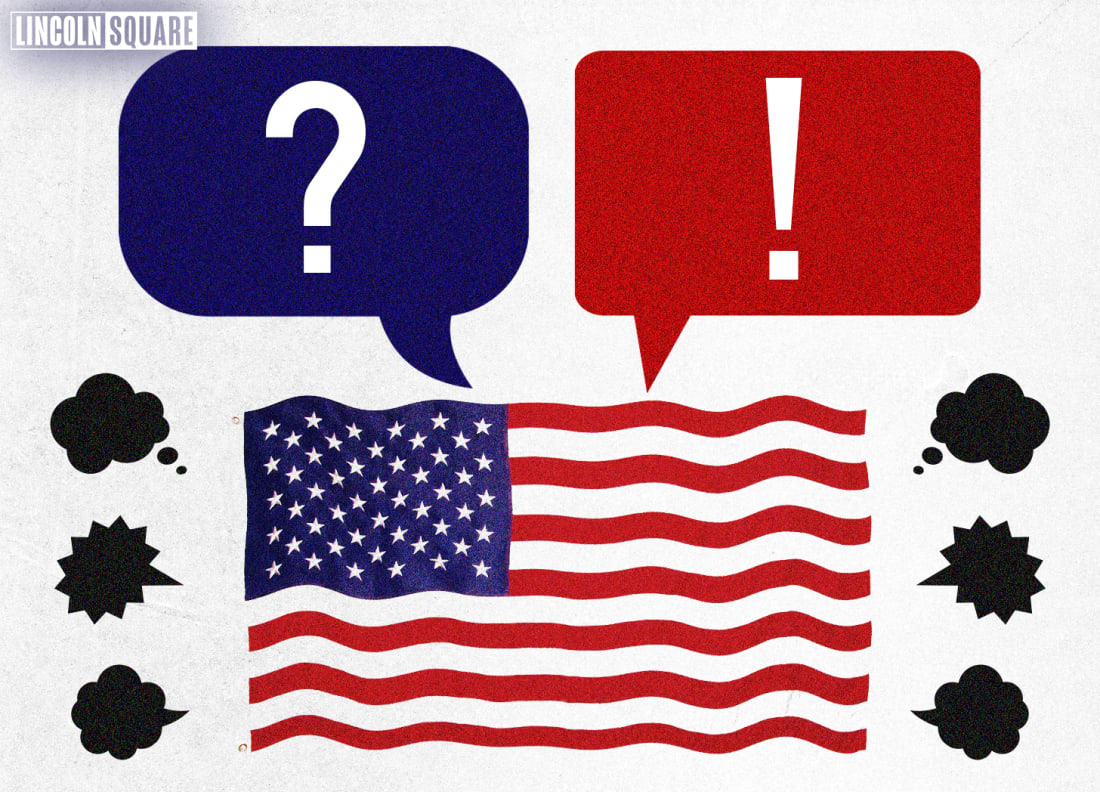
The Hardest Conversations Are the Ones Democracy Needs Most
When we stop listening, democracy starts to die.
|
| |||||||||||||||


 |
By Trygve Olson
One in five Americans has ended a relationship with a friend or family member due to political differences. Two in three of us now actively avoid political conversations with coworkers, friends, or family.
Let that sink in.
What we’re seeing is more than just partisan division. It’s a slow, quiet unraveling of the social fabric that democracy depends on. And none of the Founding Fathers ever would have imagined an American system of governance where disagreement meant disconnection.
This is not sustainable.
In my work over the past four years, I’ve been focused on one core question: How do we rebuild connection in a country where so many people are simply shouting talking points to cheers of those who think just like themselves, and so many of us have stopped talking to one another if they might disagree?
The honest answer is this: We start by helping people listen to one another again.
Because when we stop listening, we stop asking questions with a goal of understanding. When we stop understanding, we stop trusting. And when we stop trusting, the democracy that sustains all other aspects of America as we have known it dies out.
How Did We Get Here?
I’ve studied autocracies. I’ve worked with pro-democracy movements in dozens of countries that don’t have it. In all of them, I’ve witnessed the same pattern emerge repeatedly:
Polarization leads to fear.
Fear silences dialogue.
Silence breaks trust.
And broken trust opens the door to authoritarianism.
It doesn’t happen overnight. It doesn’t even appear to be a coup. But it happens. It’s happening here.
We’re not just in a political crisis. We’re in a relational one. Our operating system as a country is crashing, not because we disagree, but because we no longer know how to talk when we do. We are forgetting the point of what we say isn’t about ourselves, but rather how those we are speaking to are hearing and responding to the words we utter.
And this moment is being accelerated by a psychological progression of political extremism we now recognize too well:
Psychological distress — economic anxiety, social isolation, fear.
Simplistic answers — often delivered through slogans, conspiracies, or scapegoats.
The overconfidence effect — where people become more convinced they’re right the less they actually know.
Intolerance — where anyone who disagrees becomes an enemy, not just someone with a different view.
This is how ordinary people become extremists. Not overnight. But step by step.
And when we isolate ourselves in ideological echo chambers—talking only to those who already agree with us—we’re not expanding understanding. We’re reinforcing it. We’re sharpening the division. We’re mistaking validation for growth.
When Political Violence Comes Home | ||||||
| ||||||
 | ||||||
By Trygve Olson | ||||||
|
A Moment that Changed Me
In the summer of 2023, I was in Detroit moderating a focus group on political divides between daughters and their fathers. The conversations were emotional, but it was what happened after one session that stuck with me.
One of the fathers, a Detroit police officer, waited until everyone else had left. He walked up to me, his voice cracking and his eyes welling with tears. “I get it now,” he said. “I need your help.”
I was taken aback by the rawness of the moment. “Sure,” I said. “What can I do?”
He explained that back in 2020, he had gotten into a political argument with his only child, a college-aged daughter. They hadn’t spoken in over three years.
“I need your help, I have to fix this,” he told me in desperation.
I tried to offer a few insights from our research, tips that might help him re-open the door. But the truth is, all I could think about was how unimaginable that would be in my own life. I couldn’t go three days without talking to one of my daughters, let alone three years. Over politics? This isn’t how it is supposed to be.
That night in Michigan—and the research we’ve done since—gave me more than insight. It gave me a mission and a sense of purpose.
In the coming weeks, that mission and two years of work with an amazing team will start to be released to the world.
Because for our democracy to survive, for our country to heal, for us to fix what has to matter most in our lives—we have to start listening to one another again. And we have to relearn how to discuss the things on which we differ.
What Can You Do Today?
Here are three choices you can make today that genuinely help:
Ask, don’t assume.
Before you jump to judgment, ask someone why they believe what they believe. Most people’s views are shaped by experiences you haven’t lived, so be genuinely curious.Be the one who listens.
You don’t have to agree. But you do have to care enough to hear someone out. Listening is not endorsement. It’s respect—and it provides you the opportunity to ask them questions about places where the cognitive dissonance may reside between how they live their lives and what they are supporting.Repair one relationship.
You probably thought of someone while reading this. Call them. Don’t try to win an argument. Just try to reconnect.
What Comes Next?
My work around the world has led me to understand, Democracy isn’t defended in elections. It’s won at dinner tables, in classrooms, and across fences between neighbors.
And the work to make that easier—to help people navigate hard conversations with honesty, empathy, and clarity—must begin now.
Stay tuned.
We’re going to help America listen to ourselves, and each other, again.
Trygve Olson is a strategist, pro-democracy fighter and a founding Lincoln Project advisor. He writes the Searching for Hope Substack. Read the original column here.
 |
 | A guest post by
|
You’re currently a free subscriber to Lincoln Square Media. For full access to our content, our Lincoln Loyal community, and to help us amplify the facts about the assault on our rights and freedoms, please consider upgrading your subscription today with this limited-time offer. Lock in this special rate today. Offer Ends 12/3
Not ready to subscribe? Make a one-time donation of $10 or more to support our work amplifying the facts on social media, targeted to voters in red states and districts that we can help flip. Every $10 reaches 1000 Americans. The Truth needs a voice. Your donation will help us amplify it.
Want to help amplify this post? Please leave a comment and tell us what you think.
| ||||||||||

