Though the next legislative session won’t begin until February, I’ve been busy throughout the fall and the start of winter, preparing to hit the ground running next year and checking in with local leaders, community organizations, and our neighbors about what is most important to them.
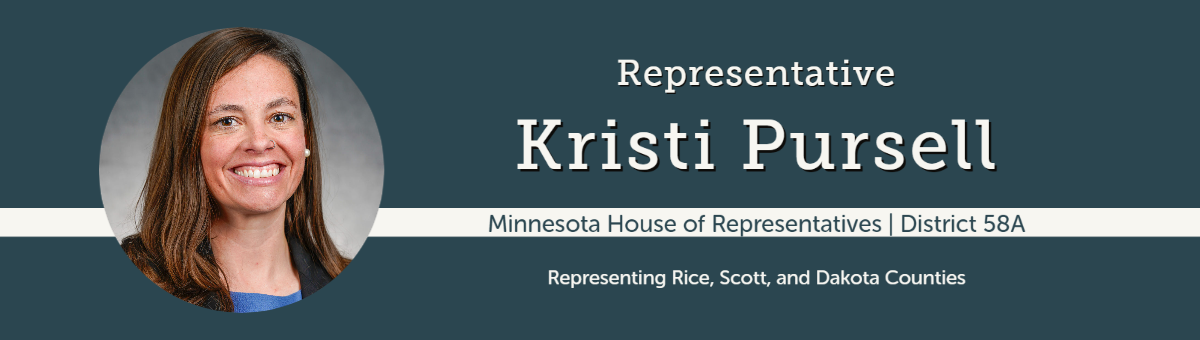
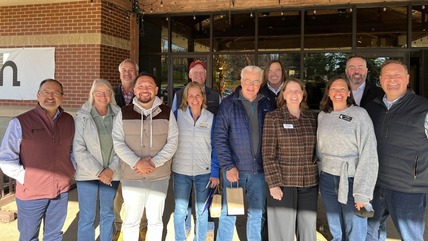
In November, I was proud to host members of the House Capital Investment Committee here in Northfield during their bipartisan bonding tour of projects seeking state infrastructure dollars. We heard from Mayor Zweifel, city staff, and community leaders about the need to update the Northfield Community Resource Center. This project would improve accessibility and safety, replace outdated HVAC systems, and support all the city and county offices, nonprofits, and community groups that use the space. KYMN Radio covered this story and has a great recap here.
I'll continue advocating for this project during next year's legislative session, as legislators craft a bipartisan bonding bill to fund jobs and infrastructure projects across our state.
One major project I’ve undertaken this legislative interim is digging into an issue that affects all of us here in District 58A and across the state: healthcare.
Often at the State Capitol, we hear much more from lobbyists and special interest groups than from actual Minnesotans. Those perspectives are important to consider, but at the end of the day, we don’t work for lobbyists; we work for you.
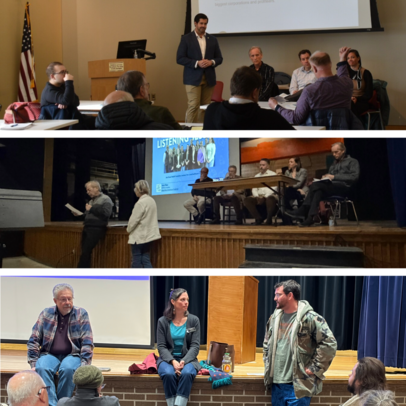
That’s why I’ve been traveling across the state, alongside my colleagues on the House Health Committee, holding a series of health care listening sessions to dig into the affordability and access crisis and hear directly from folks who may not have time to drive up to the Capitol next spring. We also created this short survey where you can share how rising healthcare costs are impacting you and your family.
We’ve been to Saint Cloud, Red Wing, and Saint Peter, and next week we’ll head to Winona for our final listening session of this year. It’s been incredibly informative to hear about the specific challenges folks are facing, as well as to understand the broader patterns and challenges facing rural health care.
Hospital and clinic closings have become increasingly common, especially in rural areas, and our neighbors often have to travel long distances for emergencies, check-ups, mental health care, and prenatal care. The current healthcare system is working great for insurance companies and pharmaceutical executives, but not for Minnesota families. Until we get serious about tackling corporate greed, we’re bound to see this trend continue.
I'm so grateful to all the folks who have come out to these events and bravely shared their stories. My DFL colleagues and I are ready to bring these sometimes-heartbreaking tales with us back to the Legislature next session as we fight to put people over profits and reform our healthcare system.
It has been an incredibly painful and difficult couple of weeks for Minnesota, especially those in our Somali community. The dangerous and dehumanizing rhetoric coming from the White House is causing significant grief and fear, but we know that we will continue to protect our own communities when attacks come from the federal government.
The rhetoric the President continues to use—targeting Somali Americans and our immigrant communities with racist and xenophobic remarks—is deeply troubling, and unfortunately not surprising. Our Somali communities are integral to our state: they are our friends, family, and neighbors. They contribute to Minnesota’s culture and economy, but above all they are human beings that deserve to be treated as human.
I echo the words of our House DFL Leader, Zack Stephenson; Scapegoating our Somali neighbors won’t do anything to solve the problems Minnesota families are facing. Minnesotans know that the Somali community is part of the fabric of our state. We’ll always stand with our Somali neighbors when shameless politicians like Donald Trump try to use them for their political purposes.
We’ve seen this playbook before: the President is trying to divide us and distract us from his unpopular agenda, but it won’t work. Here in Minnesota, we will continue to defend our neighbors, push back on federal overreach, and build a state that works better for everyone.
The U.S. is the only developed country in the world that doesn’t guarantee some form of paid leave, forcing most workers to make impossible choices between a paycheck and caring for a new child, an aging parent, or their own serious health condition. But in Minnesota, that’s about to change with the launch of Paid Leave on January 1, 2026. As we prepare for Paid Leave to take effect, I want to share the basics of the new law, how it impacts you, and how to use it next month.
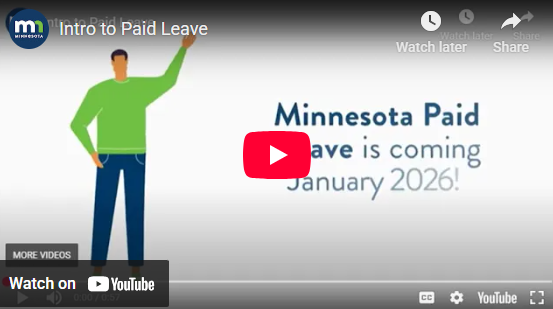
Paid Leave – which DFLers in the Legislature and Governor Walz passed in 2023 – provides partial wage replacement for up to 12 weeks of paid medical leave for your own serious health condition, including pregnancy and recovery. It also provides up to 12 weeks of paid family leave to care for a new child or a seriously ill loved one. If using both medical and family leave, workers can use up to a total of 20 weeks annually. A short video explaining the basics of how it works is available here:
The program will have a small cost but offer powerful benefits. The premium rate for 2026 will be 0.88%, with employers responsible for at least half. If the employer chooses to split the premium with the employee, each will pay 0.44%. For an employee earning the average annual income, this amounts to about $5 per week each for the worker and the employer. Paid Leave will level the playing field for small businesses that have wanted to offer this benefit but haven’t been able to do so sustainably.
DEED has developed helpful toolkits with resources for workers and businesses alike. The toolkit for workers can help you find out if you’re eligible for coverage, when Paid Leave can be used, how much time you can take, how you’ll be compensated, and more. The toolkit for businesses includes information about upcoming public engagement events, premium rates and contributions, equivalent plans for Paid Leave, and other FAQs.
This isn’t a new concept – twelve other states and the District of Columbia currently offer Paid Family and Medical Leave. Despite Republicans trying to weaken, delay, and repeal this hard-fought progress before families could even benefit from it, DFLers succeeded in protecting this hard-fought win for middle-class Minnesotans.
For many of us, missing a single paycheck means the difference between staying above water and facing dire financial challenges, and that’s particularly true considering the affordability crisis we’re facing now, with prices rising for just about everything in our daily lives. Paid Leave is one major step to provide some relief, ensuring you’ll no longer have to risk your economic security to look after yourself, care for a newborn, or tend to a loved one.
This program has truly been years in the making, and I’m so excited for families in our community and throughout Minnesota to finally have peace of mind. As we get closer to the program’s rollout, I encourage you to check out all of the resources available at pl.mn.gov.
As we head into colder weather, I want to remind you of the resources available to ensure that all Minnesotans stay warm and are protected from utility service shut offs.
Minnesota’s Cold Weather Rule is in effect from October 1 to April 30, protecting residential utility customers from having their electric or natural gas service shut off. To protect your service from disconnection, you must create and maintain a reasonable payment plan that you and your utility agree to. You can set up a payment plan any time during the rule season.
Call your natural gas, electric, municipal utility, or electric cooperative for more information, or contact the Commission’s Consumer Affairs Office at [email protected] or call 651-296-0406, 1-800-657-3782.
Unfortunately, due to technological constraints, replies to this newsletter won’t reach my email account. To share your input or ideas, or if I can ever be of assistance, please feel free to reach out at [email protected] or call my office 651-296-0171, and I will be happy to help.
You can also follow my Official Facebook Page here. If you were forwarded this email and you’d like to subscribe, click here. If you have a friend or neighbor who would be interested in receiving these, please forward this and encourage them to subscribe!
|